 how-to
Avoiding Costly Emergency Home Repairs: A 7-Step Guide
Table of Contents
- Why Avoiding Costly Emergency Home Repairs Matters
- Step 1: Understand the Cost of Deferred Maintenance
- Step 2: How to Detect Hidden Water Leaks in Walls Before They Spread
- Step 3: Create Your Seasonal Home Maintenance Schedule
- Step 4: Build an Emergency Fund and Contingency Budget
- Step 5: Assess Average Cost of Emergency Home Repairs and Prioritize Urgently
- Step 6: DIY Assessment vs. Professional Inspection
- Step 7: Implement a Post-Repair Audit and Long-Term Prevention Plan
- Avoiding Costly Emergency Home Repairs Starts With Systems
- Frequently Asked Questions
Last Updated: September 30, 2026
Why Avoiding Costly Emergency Home Repairs Matters
The difference between a $500 repair and a $15,000 emergency comes down to one thing: timing. Small problems ignored become big disasters. A slow water leak turns into structural rot. A worn HVAC belt becomes a complete system failure requiring replacement.
Homeowners delay action on minor issues, then face catastrophic bills when those problems compound. The cost of deferred maintenance isn't just financial, it's the stress of juggling contractors, dealing with emergency service premiums, and watching your home's value decline.
Avoiding costly emergency home repairs starts with understanding what you're protecting against. Your home is your largest asset. Without a plan for maintenance and early detection, you're essentially gambling that nothing will break at the worst possible time.
This guide walks you through seven concrete steps to prevent emergencies before they happen. You'll learn how to spot hidden damage, build a realistic budget, and create systems that catch problems early. The goal isn't perfection, it's staying ahead of the curve so repairs stay manageable and predictable.
Step 1: Understand the Cost of Deferred Maintenance
Deferred maintenance is the practice of postponing necessary repairs and upkeep. It always costs more later. Always.
Here's why: small problems rarely stay small. A roof shingle that leaks today becomes water damage in your attic in six months. That water damage becomes mold. Mold spreads to walls, insulation, and framing. Now you're not fixing a roof, you're replacing structural components.
The pattern holds across every home system:
- Plumbing: A slow drip wastes water and rots wood. Ignored long enough, it becomes a burst pipe that floods your basement.
- HVAC: A clogged filter strains the system. Strain becomes inefficiency. Inefficiency becomes failure mid-winter when repair costs triple.
- Electrical: Loose connections create heat. Heat creates fire risk and equipment damage.
- Foundation: Small cracks allow water entry. Water freezes and expands. Expansion becomes structural movement.
The math is brutal. A $200 fix today becomes a $3,000 fix in two years. A $500 prevention measure saves $20,000 in emergency repairs later. This isn't theory, it's how home systems degrade.
Step 2: How to Detect Hidden Water Leaks in Walls Before They Spread
Water is your home's silent enemy. It moves through walls unseen, causing damage for months before you notice anything. By then, the problem has often grown severe.
Hidden water leaks typically show themselves through indirect signs first. Look for soft spots in drywall, discoloration that spreads over weeks, or a musty smell in one room that doesn't go away. These are your early warning signals.
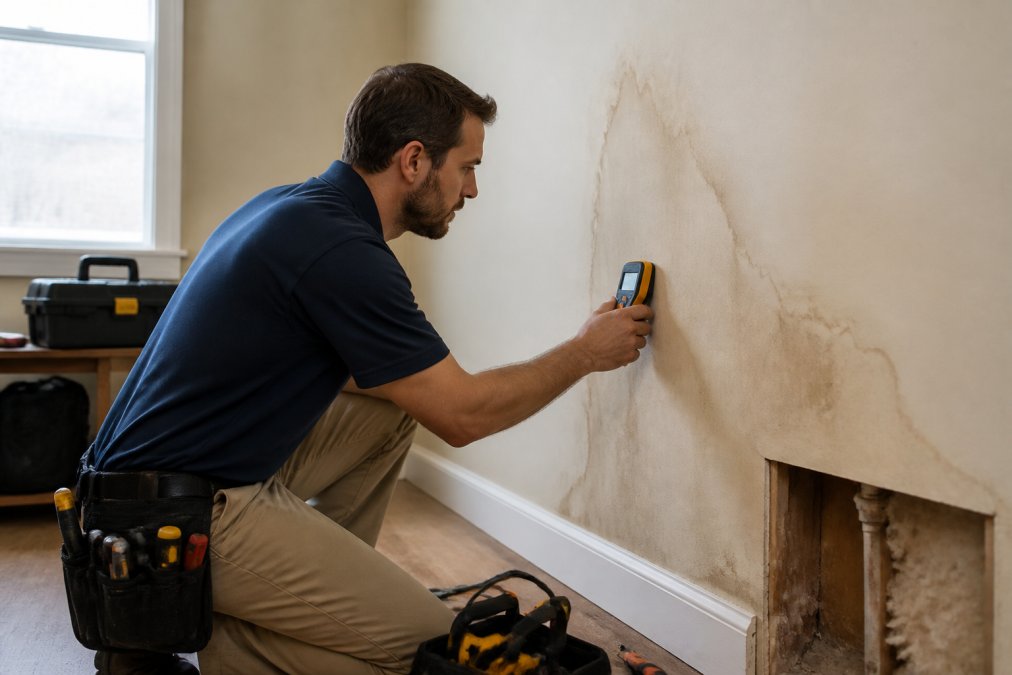
The most effective detection method is a moisture meter, an inexpensive tool you can buy for $20-40. Run it along walls near plumbing, under windows, and around the foundation. High moisture readings (above 16% for most materials) indicate a problem developing.
Check these high-risk zones regularly:
- Exterior walls below windows and doors
- Walls adjacent to bathrooms and kitchens
- Basement walls and corners where water collects
- Areas around HVAC condensation lines
- Attic spaces under roof penetrations
If you find elevated moisture, don't panic. Document it with photos and measurements, then call a professional. Early detection means small repairs. Delayed detection means structural replacement.
Step 3: Create Your Seasonal Home Maintenance Schedule
A seasonal home maintenance schedule is your defense against emergencies. It ensures you check critical systems before problems develop.
The schedule works because it aligns with how weather stresses your home.
Spring (March-May):
- Inspect roof for winter damage and missing shingles
- Check gutters and downspouts for debris and proper drainage
- Inspect exterior caulking and weatherstripping around windows and doors
- Test HVAC cooling system before peak season
- Check basement and crawl space for water intrusion signs
Summer (June-August):
- Monitor HVAC performance and filter condition
- Check exterior paint and wood for cracks or rot
- Inspect deck and outdoor structures for safety issues
- Test sump pump if you have one
- Check grading around foundation to ensure water slopes away
Fall (September-November):
- Clean gutters and downspouts thoroughly
- Seal gaps around windows, doors, and utility penetrations
- Have chimney inspected and cleaned if you use it
- Drain exterior water lines and shut off outdoor faucets
- Inspect attic for roof leaks and proper ventilation
Winter (December-February):
- Monitor heating system performance
- Check for ice dams on roof edges
- Inspect basement for moisture during thaw cycles
- Check weatherstripping and caulk for gaps
- Document any new cracks or settling issues
Step 4: Build an Emergency Fund and Contingency Budget
Most homeowners are caught off guard by repair costs because they haven't budgeted for them. Emergency fund planning prevents financial stress when problems arise.
Calculate your emergency fund target:
- Multiply your home's value by 1-2%
- This is your baseline emergency reserve
- A $400,000 home needs $4,000-$8,000 set aside
Build the fund gradually:
- Set aside $200-500 per month if possible
- Treat it like a non-negotiable bill
- Keep it in a separate account so you don't spend it
- Don't touch it for non-emergencies
Create a contingency budget for known upcoming work:
- If you know your roof is 18 years old, budget for replacement in the next 2-3 years
- If your HVAC system is past 12 years, plan for eventual replacement
- If your foundation has small cracks, budget for monitoring and potential repair
Step 5: Assess Average Cost of Emergency Home Repairs and Prioritize Urgently
Understanding typical repair costs helps you prioritize what matters most. Not all problems are equally urgent, and budgeting helps you decide where to focus.
Prioritize repairs in this order:
- Safety issues (immediate): Electrical hazards, gas leaks, structural instability, mold growth
- System failures (urgent): Heating, cooling, plumbing, roof leaks
- Damage prevention (important): Water intrusion, foundation cracks, pest entry points
- Efficiency improvements (defer if needed): Insulation, weatherstripping, HVAC upgrades
Step 6: DIY Assessment vs. Professional Inspection
Knowing when to assess a problem yourself versus calling a professional separates cost-effective maintenance from expensive mistakes.
DIY assessment works for:
- Visual inspections (roof condition, exterior damage, gutter debris)
- Moisture checks with a meter
- Filter changes and basic maintenance
- Documentation and photo records
- Identifying which systems need professional attention
Professional inspection is necessary for:
- Electrical system evaluation
- Gas line inspection
- Structural assessment
- HVAC system diagnostics
- Plumbing issues below surface level
- Mold testing and remediation planning
- Foundation crack evaluation
Step 7: Implement a Post-Repair Audit and Long-Term Prevention Plan
After any repair, conduct a post-repair audit. This step separates homeowners who prevent future problems from those who repeat the same cycles.
The post-repair audit includes:
- Request a written summary of what was done and why
- Ask what caused the problem (poor maintenance, age, design flaw, weather event)
- Understand what maintenance prevents recurrence
- Get a timeline for when to expect similar issues on other systems
- Photograph the repair work for your records
Build your long-term prevention plan:
- Document every repair and its cause
- Identify patterns (water problems on one side of house, electrical issues in certain circuits)
- Create a maintenance checklist based on your home's specific vulnerabilities
- Schedule annual professional inspections for critical systems
- Adjust your contingency budget based on what you've learned
Avoiding Costly Emergency Home Repairs Starts With Systems
Emergency repairs feel inevitable until you implement systems to prevent them. The seven steps above work because they replace guesswork with structure. You know what to check, when to check it, and what to do when you find a problem.
Frequently Asked Questions
What are the most common signs of hidden home damage that lead to costly emergency repairs?
Early warning signs include discoloration on walls or ceilings, soft spots in flooring, unusual odors, peeling paint, and visible mold. Water damage hidden behind walls often shows as slightly bulging drywall, musty smells, or unexplained increases in water bills. HVAC problems typically announce themselves through inconsistent temperatures, strange noises, or reduced airflow. Catching these early through routine inspections prevents structural integrity issues that can cost thousands to repair.
How does a seasonal home maintenance schedule help avoid emergency repairs?
A structured seasonal maintenance schedule ensures you address roof inspections, HVAC servicing, plumbing checks, and gutter cleaning before problems escalate. Spring and fall inspections catch issues like missing shingles or clogged gutches before winter damage occurs. Regular checkups on your home's major systems, electrical, plumbing, heating, identify wear patterns and allow you to plan repairs during off-season when contractors have availability and pricing is often lower. This proactive approach prevents small issues from becoming emergency situations.
What should I budget for if I want to avoid being caught off guard by emergency home repairs?
Financial experts recommend maintaining an emergency fund equal to 1-3% of your home's value annually for unexpected repairs. For a $400,000 home, that's $4,000-$12,000 per year set aside. Beyond this emergency reserve, create a contingency budget for capital improvements you know are coming (roof replacement, HVAC replacement, foundation work). Separate these two accounts: one for true emergencies, one for planned major work. This dual approach prevents debt and ensures you can handle both surprise failures and anticipated system replacements.
Is a home maintenance membership better than saving money for emergency repairs myself?
A membership model provides predictable, flat-rate pricing and professional accountability, eliminating the stress of juggling multiple contractors and guessing what repairs will cost. You receive proactive seasonal tune-ups that catch problems early, reducing the likelihood of expensive emergencies. Unlike self-saving, a membership ensures work is performed by licensed professionals with guarantees backing their labor. The trade-off is predictable monthly costs versus variable emergency expenses. For busy professionals who value time savings and peace of mind, membership provides a reliable solution.