 listicle
Benefits of Hiring Local NJ Handyman Services
Table of Contents
- Why Local Handyman Services Beat the Contractor Shuffle
- Finding a Handyman Near Me Within 5 Mi: Why Proximity Matters
- Cost of Handyman Services Per Hour vs. the Hidden Price of DIY
- DIY vs Professional Home Repair: When to Pick Up the Toolbelt
- The Home Maintenance Checklist for Homeowners That Prevents Emergency Calls
- How to Vet a Local Handyman Before You Hand Over the Keys
- Frequently Asked Questions
Last Updated: October 2, 2026
Why Local Handyman Services Beat the Contractor Shuffle
The benefits of hiring local NJ handyman services start with a simple advantage: one relationship instead of ten. A local handyman near me within 5 mi knows your home's quirks, your neighborhood's building codes, and how to get a job done without a week of phone tag. This guide from Lone Eagle Home Services breaks down what that convenience is actually worth. Building this level of trust often extends to more specialized projects, where hiring local custom carpenters ensures that your unique vision for custom cabinetry or trim work remains consistent with the established character of your home.
The contractor shuffle looks like this: call a plumber for the leak, an electrician for the outlet, a carpenter for the trim, and a painter for the touch-ups. Each one schedules separately, bills separately, and leaves you coordinating it all.
A single local service provider handles the general upkeep list in one visit. U.S. Census Bureau data on homeowner maintenance spending shows how much American households pour into property upkeep each year, and most of that money goes further when one trusted team manages it.
Finding a Handyman Near Me Within 5 Mi: Why Proximity Matters
Proximity is not a minor detail. A handyman near me within 5 mi arrives faster, knows the local housing stock, and can return for follow-up work without charging a travel premium.
But in New Jersey, proximity carries a second, less obvious benefit: regulatory fluency. Home improvement work in this state is governed at two levels, a statewide Home Improvement Contractor (HIC) registration administered by the Division of Consumer Affairs, and municipal construction permits issued town by town. A provider who works your street regularly already knows which of your neighbors' towns require a permit for a water heater swap, which ones want a separate electrical subcode inspection, and which ones let a like-for-like fixture replacement slide. A handyman driving in from two counties away learns those rules on your dime.
Older homes in Morris County have specific quirks: aging wiring, original plumbing, and finishes that need a careful hand. A provider who works your street regularly has seen those problems before, and has already pulled the permits to fix them.
- Faster response: Emergency calls get answered in hours, not days
- Local code knowledge: Familiarity with municipal permit requirements and inspection timelines
- Lower travel overhead: Less windshield time built into your bill
- Repeat visits: The same technician who fixed it last time
- HIC registration on file: A legitimate local operator can show a current registration number, which out-of-area fly-by-night crews often cannot
New Jersey Division of Consumer Affairs Home Improvement Contractor registration lookup lets you confirm a registration number in under a minute. Do it before the first visit, not after the first invoice.
The difference between a handyman 5 miles away and one 50 miles away shows up in the details. Local expertise means fewer surprises, and in a state where every town writes its own permit rules, fewer surprises is the whole ballgame.
Cost of Handyman Services Per Hour vs. the Hidden Price of DIY
The cost of handyman services per hour is easy to compare against a free Saturday. That comparison misses the real math.
DIY carries hidden costs: tools you buy once, mistakes you fix twice, and hours you never get back. A botched repair can also lower property value when it comes time to sell.
| Factor | DIY Approach | Local Handyman |
|---|---|---|
| Upfront cost | Tools and materials | Flat-rate labor |
| Time investment | Your weekends | Scheduled visit |
| Risk of rework | High on complex jobs | Backed by experience |
| Warranty | None | Workmanship guarantee |
For simple tasks like tightening a hinge, DIY wins. For anything involving water, wiring, or structural work, the hourly rate is cheaper than the repair bill.
DIY vs Professional Home Repair: When to Pick Up the Toolbelt
DIY vs professional home repair comes down to risk, not pride. Some jobs reward a homeowner's effort. Others punish it.
Pick up the toolbelt for painting, caulking, swapping light fixtures, and assembling furniture. These are low-risk and forgiving.
Call a professional for anything behind a wall. Water leaks, gas lines, and electrical panels are not learning opportunities. A common mistake is underestimating how much damage a small mistake can cause.
That binary gets you most of the way. The harder question, the one most guides skip, is whether the job is routine or urgent, because the answer changes who you should call.
Routine work is anything you can schedule a week out: a sticking door, a running toilet, a cracked caulk line, a gutter that needs clearing before the leaves drop. This is the handyman's home turf. One visit, one invoice, several small jobs knocked out at once.
Urgent work is anything that will get worse by tomorrow: an active leak, a dead sump pump ahead of a storm, a furnace that quit in January, a downed gutter pulling away from the fascia. Some of these a handyman can handle. Others need a licensed trade, and knowing the difference saves you both money and a second call.
- Handyman-appropriate emergencies: burst supply line shut off at the valve, clogged main drain, storm-loosened flashing, failed sump pump replacement, dead outlets on a single circuit
- Call a licensed trade: anything involving the electrical panel, gas appliance connections, sewer line excavation, or structural framing
- Call your utility first: downed power lines, gas odors, or water main breaks on the street side of the meter
Seasonal timing sharpens the call. Fall is when gutters, downspouts, and exterior caulk need attention before the first freeze. Winter is when pipe insulation and heating checks pay for themselves. Spring is drainage and roof inspection. Summer is deck and exterior paint.
The rule is simple: if the job could flood, burn, or collapse, hand it off. If it could wait until next week, batch it with the rest of your list and let one local provider handle it in a single trip.
The Home Maintenance Checklist for Homeowners That Prevents Emergency Calls
A home maintenance checklist for homeowners turns reactive panic into routine upkeep. The goal is catching small problems before they become expensive ones.
- Replace HVAC filters every 1-3 months
- Test smoke and carbon monoxide detectors monthly
- Clear gutters before and after fall
- Inspect the roof for loose shingles each spring
- Flush the water heater annually
- Check caulk around windows and doors each season
- Test sump pump before heavy rain season
- Seal driveway cracks before winter
How to Vet a Local Handyman Before You Hand Over the Keys
Vetting separates a reliable independent contractor from a gamble. Ask these questions before anyone touches your home.
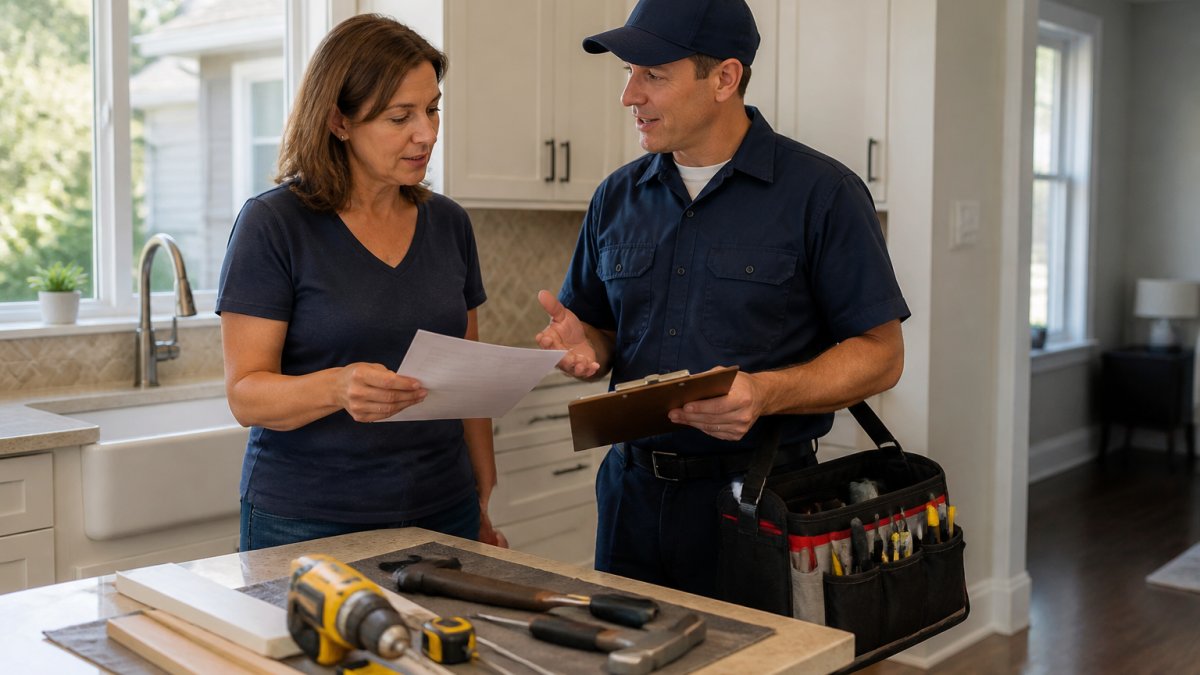
- Verify licensing and insurance. Ask for proof, then check it. New Jersey Division of Consumer Affairs contractor registration maintains the state registry.
- Request references from nearby jobs. A provider who works your area can name recent clients.
- Get a written estimate. Flat-rate beats vague hourly guesses.
- Confirm the workmanship guarantee. Ask what happens if the repair fails.
- Check reviews on multiple platforms. Look for consistency, not just star ratings.
Frequently Asked Questions
What is the difference between a handyman and a general contractor?
A handyman handles smaller repairs and maintenance tasks like patching drywall, fixing leaks, or assembling furniture. A general contractor manages large-scale projects such as room additions or structural renovations, often pulling permits and coordinating subcontractors. In New Jersey, general contractors must register with the state Division of Consumer Affairs, while handymen typically work on jobs under a certain dollar threshold. Knowing which one you need prevents overpaying for simple fixes or hiring an underqualified pro for major work.
How do I find a reliable handyman near me within 5 mi?
Start with neighbor referrals on platforms like Nextdoor, then cross-check reviews on Google and Yelp. Ask specifically about punctuality, communication, and whether the pro carries liability insurance. A local handyman within 5 miles can usually respond faster to emergencies and knows the building codes and permit requirements specific to your municipality. Request a written estimate and confirm the scope of work before any job begins.
Is it cheaper to hire a handyman or do home repairs myself?
It depends on the task. Painting a single room or tightening a loose cabinet hinge is reasonable DIY territory. But electrical work, plumbing repairs behind walls, and anything requiring a permit usually cost more in the long run if done wrong. The cost of handyman services per hour often outweighs the risk of water damage, failed inspections, or injury. Factor in your time, tool rentals, and the likelihood of a callback repair when comparing.
Do local handymen in this area require specific licensing?
New Jersey does not issue a statewide handyman license, but anyone performing home improvement work must register with the Division of Consumer Affairs under the Home Improvement Contractor Registration Act. That registration requires proof of insurance and a clean record. For electrical, plumbing, or HVAC work, the state requires a separate trade license. Always ask for the registration number and verify it online before hiring.
Managing a home shouldn't feel like a second job. Lone Eagle Home Services gives Morris County homeowners one trusted team for seasonal tune-ups, on-demand repairs, and vendor coordination, all backed by flat-rate pricing and digital service reports after every visit. Skip the contractor shuffle and get proactive care that prevents small problems from becoming expensive ones. See Plans today and hand off the maintenance list for good.