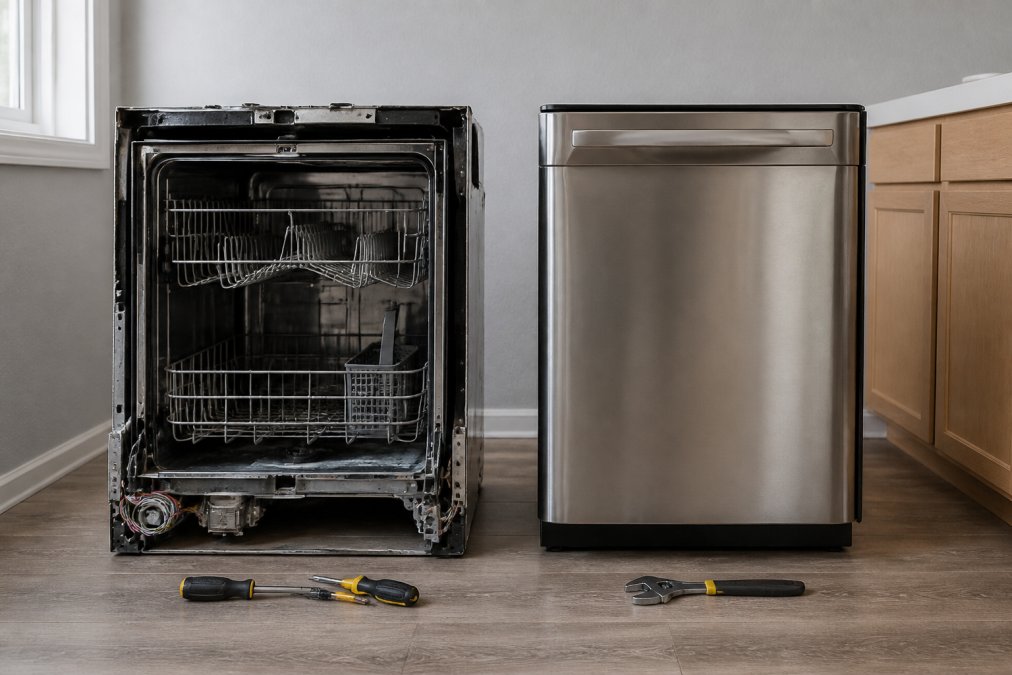
 comparison
Fix or Replace Appliances? 2026 Cost Guide
Table of Contents
- Repair Cost vs Replacement Cost: A Side-by-Side Comparison
- The 50% Rule Explained (And When to Ignore It)
- Average Lifespan of Household Appliances
- Hidden Costs of Replacement: Supply Chain, Installation, and Disposal
- When to Repair Your Appliance
- When to Replace Your Appliance
- Benefits of Proactive Home Maintenance
- Frequently Asked Questions
Last Updated: September 24, 2026
Repair Cost vs Replacement Cost: A Side-by-Side Comparison
Deciding whether it's cheaper to fix or replace appliances comes down to one question: will the repair buy you enough extra years to justify the bill? This guide from Lone Eagle Home Services breaks down real repair versus replacement math, the limits of the 50% rule, and the hidden costs most homeowners miss.

What a Service Call Actually Costs
A service call covers travel, diagnosis, and a written estimate. The average appliance repair bill lands between $100 and $400 once parts and labor are included, based on HomeAdvisor's appliance repair cost data. Refrigerators and built-in ovens sit at the high end because the technician often needs two visits.
The Real Price of a New Unit
A replacement unit carries a sticker price plus delivery, haul-away, and installation. Installation costs alone often add $100 to $250 for built-in models that need plumbing or electrical work. That gap between the repair quote and the true replacement cost is where most homeowners get the math wrong.
The 50% Rule Explained (And When to Ignore It)
The 50% rule says you should replace an appliance when the repair cost exceeds half the price of a new unit. It's a useful starting point, not a verdict.
Where the Rule Breaks Down
The rule fails in three situations:
- High-efficiency units. A repair that keeps a modern, efficient appliance running often beats the energy savings you'd lose by buying a cheaper replacement.
- Built-in and specialty models. Custom cabinetry and non-standard sizes turn a simple swap into a renovation.
- Warranty coverage. If a part is still under warranty, your out-of-pocket repair cost may be far below the rule's threshold.
Average Lifespan of Household Appliances
Most major appliances last 10 to 15 years with consistent preventative maintenance, though small appliances often fail sooner. Knowing the average lifespan of household appliances tells you whether a repair is buying real time or just delaying the inevitable.
| Appliance | Typical Lifespan | Repair Usually Worth It? |
|---|---|---|
| Refrigerator | 10-15 years | Yes, under 8 years old |
| Dishwasher | 9-12 years | Yes, under 7 years old |
| Washing machine | 10-13 years | Yes, under 8 years old |
| Dryer | 10-13 years | Yes, under 8 years old |
| Oven and range | 13-15 years | Yes, under 10 years old |
How Appliance Age Changes the Math
Age shifts the cost-benefit analysis fast. A repair on a unit in its first five years is almost always the right call. Past year ten, each fix competes against the remaining life of every other component in the machine.
Hidden Costs of Replacement: Supply Chain, Installation, and Disposal
Replacement costs more than the price tag. Supply chain and parts availability now drive lead times, and some models ship weeks after you order. That delay matters when a refrigerator fails and you're storing food in coolers.
When to Repair Your Appliance
Repair is usually the better call when three conditions line up: the unit is in the front half of its expected lifespan, the failure traces to a single component rather than a system, and the replacement part is actually obtainable. Miss any one of those and the repair quote starts to look like a down payment on a new machine.
Run the Parts-Availability Check First
This is the step most guides skip, and it is the one that wastes the most money. Manufacturers typically stock replacement parts for seven to ten years after a model is discontinued. Once that window closes, a failed control board or sealed compressor can make an otherwise repairable appliance effectively unfixable, no matter how new it looks.
- Is the part in stock, or backordered? A backordered part can mean weeks without a working refrigerator.
- Is this an OEM part or an aftermarket substitute? Aftermarket parts are cheaper but may not carry the same warranty or fit.
Appliance-Specific Repair Thresholds
Generic age rules are too blunt. What counts as a smart repair depends on the machine:
- Refrigerator. Sealed-system failures (compressor, evaporator) are the expensive ones, often $400 to $800 or more. A door gasket, ice maker, or thermostat is a straightforward repair at almost any age.
- Dishwasher. Drain pumps, float switches, and door latches are cheap, common fixes. A failed control board on a unit past year eight is usually the tipping point.
- Washing machine. Front-loaders with failed bearings or tub seals are labor-heavy; top-loaders with a bad lid switch or drain pump are quick wins.
- Dryer. Heating elements, thermal fuses, and belts are inexpensive and worth replacing well into the unit's teens. A failed motor or drum bearing is a different conversation.
- Oven and range. Igniters, bake elements, and thermostats are routine. A cracked control board on a gas range with obsolete electronics often is not.
The Smart-Appliance Wrinkle
Modern appliances increasingly rely on integrated circuit boards, touch panels, and Wi-Fi modules rather than mechanical switches. These fail differently: a single failed relay on a control board can disable an entire machine, and the board itself may cost $200 to $500 before labor. Mechanical parts wear predictably and can be swapped individually.
When Repair Clearly Wins
Repair is the obvious answer when the appliance is a built-in or matches custom cabinetry, when the part is still under a manufacturer or extended warranty, or when the unit is a high-efficiency model whose energy performance you would struggle to match at the same price point. In each case, the true replacement cost is higher than the sticker price suggests, and the repair is buying real, usable time.
When to Replace Your Appliance
Replace when the repair no longer buys enough usable life to justify its cost, but 'enough' depends on the appliance, its age, and what a replacement actually costs once you add everything the sticker price leaves out. Most guides stop at the 50% rule. That rule is a starting point, not a decision.
A Decision Framework You Can Actually Run
Work through these four questions in order. The first 'no' is usually your answer.
- Is the part still available? If the manufacturer has discontinued it and no aftermarket equivalent exists, repair is off the table regardless of cost.
- Is the repair cost under half the true replacement cost? Not the sticker price, the all-in number below.
- Will the repair add at least two more years of service? If the fix addresses one failure in a machine already showing wear elsewhere, the answer is often no.
- Has the appliance failed more than once in the past 12 months? Repeat failures signal a machine at the end of its service life. Three breakdowns in a year means you are funding a losing battle.
Calculate the True Replacement Cost
The sticker price is the smallest part of the number. Build the real figure before you compare it to a repair quote:
- Purchase price of a comparable unit.
- Delivery, often $50 to $100, sometimes free with purchase.
- Installation, $100 to $250 for built-ins that need plumbing or electrical work; more if carpentry is required.
- Haul-away and disposal, many retailers charge $25 to $50 to remove the old unit, and some municipalities require disposal at a designated facility rather than curbside.
- Fit adjustments, if the new unit does not match your existing cutout or doorway, add carpentry or cabinet modification.
Supply Chain and Lead Times
Replacement is not instant. Popular models and built-in sizes can ship weeks after you order, and a refrigerator failure does not wait for delivery. If you are storing food in coolers in the meantime, the cost of the delay is real. Factor lead time into the repair-versus-replace call: a repair you can schedule this week may beat a replacement that arrives next month, even if the math slightly favors new.
Energy Efficiency: A Real but Modest Factor
Older appliances generally draw more power than modern efficient models, and a replacement can lower monthly utility costs over time. The savings are real but usually modest, enough to tip a close call, not enough to justify replacing a working appliance on its own. Treat efficiency as a tiebreaker, not the deciding vote.
Disposal and Recycling Logistics
Most guides ignore this, but getting rid of the old unit is part of the replacement cost. Retailers often bundle haul-away with delivery for a fee; independent haulers charge separately. Refrigerators and freezers contain refrigerant that must be recovered properly, and many municipalities prohibit leaving them at the curb. Confirm the disposal path before you buy, or you may be stuck storing a dead appliance in your garage.
ENERGY STAR guidance on appliance efficiency
Benefits of Proactive Home Maintenance
Preventative maintenance is the cheapest way to avoid the repair-or-replace decision entirely. Seasonal tune-ups catch worn parts before they fail, extend appliance longevity, and protect the long-term value of your home.
ENERGY STAR guidance on appliance efficiency
Frequently Asked Questions
What is the 50% rule for appliance repair?
The 50% rule says you should replace an appliance when the repair cost exceeds half the price of a new unit. If a repair quote comes in at $400 and a comparable replacement costs $800, replacement makes more financial sense. The rule works as a quick filter, but it ignores appliance age, energy efficiency, and whether the unit is still under warranty. A 12-year-old refrigerator with a $350 repair might still fail the rule once you factor in higher energy consumption and likely follow-up repairs.
At what age should you replace an appliance instead of repairing it?
Most major appliances last between 10 and 15 years, so replacement usually becomes the smarter call once a unit passes the 10-year mark and needs a repair costing more than 30% of its replacement price. Refrigerators, dishwashers, and washing machines tend to fall in this range. If your appliance is 8 years old or newer and the repair is straightforward, fixing it typically delivers better long-term value. Age alone is not the deciding factor, but it shifts the math quickly.
Is it worth repairing a 10-year-old refrigerator?
It depends on the repair. A $150 fix for a faulty door seal or thermostat on a 10-year-old refrigerator is usually worth doing, since the compressor and sealed system are still likely in good shape. A $600 compressor replacement on the same unit is not, because you are halfway to a new refrigerator that will use less energy and carry a fresh warranty. Get a professional diagnosis first, then compare the quote against replacement cost and the unit's remaining expected lifespan.
How much does the average appliance repair cost?
Most appliance repairs involve a diagnostic fee plus parts and labor. Diagnostic fees commonly run $75 to $125, and the total bill for a typical fix often lands between $200 and $400 depending on the appliance and part. Refrigerator and oven repairs sit at the higher end because parts cost more and the work takes longer. Always ask whether the diagnostic fee is credited toward the repair if you approve the work, since that can save you real money on the final invoice.
Does appliance maintenance prevent the need for early replacement?
Regular maintenance extends appliance lifespan by catching worn components before they fail completely. Cleaning refrigerator coils, replacing washing machine hoses, and descaling a dishwasher can add years to a unit's service life and lower energy consumption. The benefits of proactive home maintenance go beyond the appliance itself: fewer emergency service calls, smaller repair bills, and better performance from equipment you already own. A seasonal tune-up schedule is one of the cheapest ways to delay a major replacement purchase.
The real cost of the repair-or-replace decision isn't the bill in front of you. It's the reactive cycle of emergency calls, rushed purchases, and contractors who never show. Lone Eagle Home Services breaks that cycle with proactive seasonal tune-ups, one trusted team for every repair, and flat-rate pricing backed by confirmed appointments and digital service reports. Get started with Lone Eagle Home Services and stop guessing whether it's cheaper to fix or replace.