 how-to
How Long Does a Home Maintenance Inspection Take?
Table of Contents
- How Long Does a Home Maintenance Inspection Take? The Short Answer
- What to Expect During a Home Maintenance Visit
- Home Maintenance Inspection Checklist: What Gets Evaluated
- Key Factors That Change How Long an Inspection Takes
- Inspection Time vs. Report Delivery: Two Separate Timelines
- Finding a Reliable Handyman Near Me for Ongoing Maintenance
- How to Prepare Your Home Before the Inspector Arrives
- Conclusion
- Frequently Asked Questions
Last Updated: September 21, 2026
How Long Does a Home Maintenance Inspection Take? The Short Answer
A home maintenance inspection usually takes 2 to 4 hours for an average single-family house, most often closer to 3. That window covers a full walkthrough, from the roof line down to the crawl space.
What to Expect During a Home Maintenance Visit
A home maintenance visit is a room-by-room, system-by-system evaluation of your property's condition. The inspector works through the house in a set order, checking each major component and noting anything that needs repair or monitoring. How the clock splits across that sequence determines whether your visit lands at 2 hours or 4.
- Exterior walkthrough (20-30 min): roof, siding, gutters, grading, driveway, walkways
- Attic and roof structure (15-25 min): framing, insulation, ventilation, signs of leaks
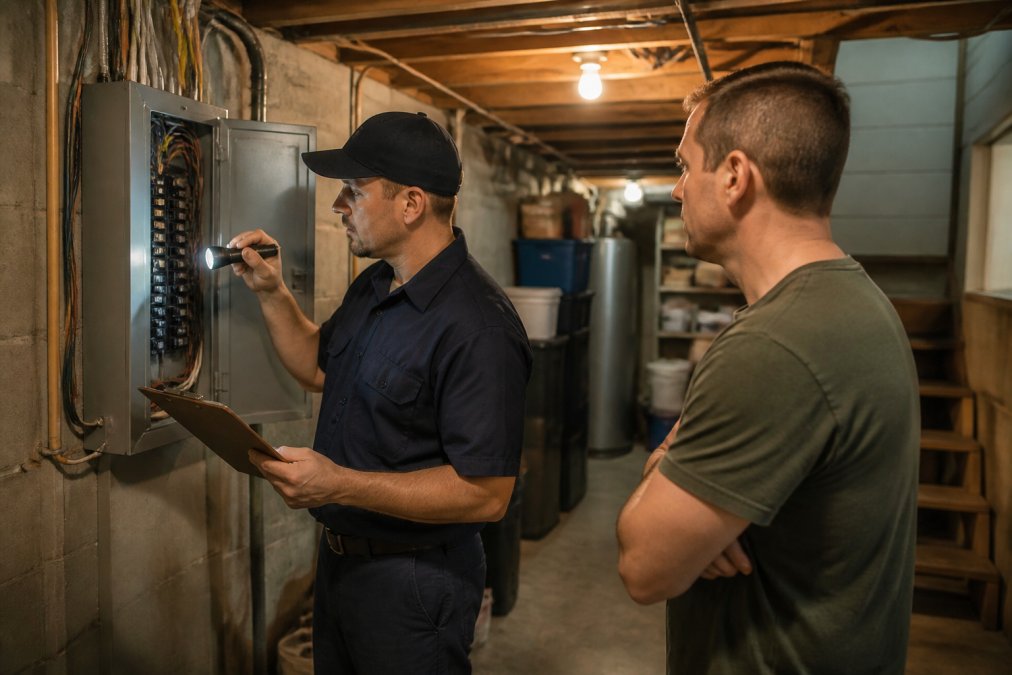
- Electrical (20-30 min): main panel, outlets, GFCI protection, visible wiring
- Plumbing (20-30 min): water heater, supply lines, drains, fixtures, shut-off valves
- HVAC (20-30 min): furnace, air conditioner, filters, ductwork, thermostat function
- Interior rooms (30-45 min): walls, ceilings, floors, windows, doors, stairs
- Crawl space or basement (15-30 min): foundation, moisture, structural supports
- Final walkthrough and notes (10-20 min): summary of findings with the homeowner
How the Timeline Shifts by Property Type
Generic '2 to 4 hours' estimates lump every home together. In practice, property type changes the schedule before the inspector arrives:
- Condominium (under 1,200 sq ft): 1.5 to 2 hours. No roof, attic, exterior grading, or crawl space. The inspector focuses on the interior, panel, in-unit HVAC, and shared-wall penetrations; exterior and roof coverage falls to the HOA and is excluded from the report.
- Townhome (1,200-2,000 sq ft): 2 to 3 hours. You gain a roof section and small exterior, but shared walls limit side evaluation, and attic access is often a scuttle rather than a full stair, adding setup time.
- Single-family home (2,000-3,000 sq ft): 2.5 to 4 hours. Full exterior, roof, attic, crawl space or basement, and all systems. This is the widest range because system count varies so much.
- Single-family home over 4,000 sq ft: 4 to 6 hours, or two inspectors. Multiple HVAC zones, two water heaters, a detached structure, or a pool each add time.
What Actually Slows an Inspector Down
Three things reliably extend a visit beyond the estimate:
- Access problems. A locked gate, blocked panel, or buried crawl space hatch forces the inspector to wait or skip the area. Skipped areas still appear in the report as 'not inspected,' which is worse than a slow visit.
- Defect documentation. A home with 40 findings takes longer to photograph and annotate than one with 8. The inspector is building the evidence file that becomes your report.
- Homeowner questions mid-inspection. Asking about the HVAC while the inspector is on the roof breaks their sequence and adds time. Save questions for the wrap-up.
Home Maintenance Inspection Checklist: What Gets Evaluated
A home maintenance inspection checklist covers the property's core systems and safety items, catching small problems before they become expensive repairs. It is also the best predictor of visit length, each item carries a rough time cost, and the sum produces the 2-to-4-hour window.
- Roof and gutters (15-25 min): shingles, flashing, drainage, debris. Walked from the ground or from the roof depending on pitch and safety.
- Foundation (15-30 min): cracks, settling, water intrusion, grading slope. Crawl space or basement access drives the variance here.
- Electrical panel (15-25 min): capacity, breaker condition, labeling, grounding. Removing the dead front and testing breakers is the slow part.
- HVAC systems (20-40 min): age, service history, filter condition, airflow. Each additional system adds roughly 15-20 minutes.
- Plumbing (20-30 min): leaks, water pressure, water heater condition, shut-offs. Running fixtures at every tap adds up.
- Attic and insulation (15-25 min): ventilation, moisture, pest activity. Access type, scuttle vs. stair, changes the setup time.
- Windows and doors (15-25 min): seals, operation, weatherstripping. Count matters; a home with 30 windows takes longer than one with 12.
- Safety items (10-15 min): smoke detectors, carbon monoxide alarms, handrails. Quick, but never skipped.
The Checklist-to-Timeline Connection
Add the low ends of those ranges and you get roughly 2 hours; add the high ends and you get roughly 4. That is the same 2-to-4-hour window every article quotes, arrived at from the bottom up. When a visit runs long, two or three categories almost always landed at the high end: an extra HVAC system, a crawl space instead of a slab, or a roof that required a full walk.
Specialized Checks That Extend the Checklist
Standard checklists stop at the systems above. Specialized inspections add time on top and are the most common reason a visit stretches past the quoted window:
- Sewer scope: 30 to 45 minutes. A camera is fed through the main line to check for root intrusion, bellies, and cracks.
- Radon test: 15 to 30 minutes on-site for placement, plus 48 to 96 hours of passive collection before the device is retrieved and sent to a lab.
- Mold or air quality sampling: 30 to 60 minutes. Surface samples are faster than air samples, which require pump setup and lab turnaround.
- Chimney inspection: 30 to 45 minutes. Level 1 is visual; Level 2 adds a video scan and takes longer.
- Well and septic evaluation: 1 to 2 hours. Water testing, pump cycling, and tank inspection each run on their own clock.
Key Factors That Change How Long an Inspection Takes
The biggest driver of inspection length is the size and complexity of your home's systems. Square footage matters, but age, condition, and add-on services also move the clock.
Home Size and Square Footage
A general rule of thumb is roughly 30 to 45 minutes per 1,000 square feet for a standard inspection. That ratio holds for most homes in good condition.
- Under 1,500 sq ft: usually 1.5 to 2.5 hours
- 1,500 to 2,500 sq ft: usually 2 to 3 hours
- 2,500 to 4,000 sq ft: usually 3 to 4 hours
- Over 4,000 sq ft: 4 hours or more
Property Age and Condition
Older homes take longer. A house built before 1980 has more components that need close attention: older wiring, galvanized pipes, and original windows. Each one adds inspection time.
Specialized Inspections and Ancillary Services
Specialized inspections add time and often need separate scheduling. Common add-ons include sewer scope (30 to 45 minutes), radon test (setup plus lab turnaround), mold or air quality sampling (30 to 60 minutes), chimney inspection (30 to 45 minutes), and well and septic evaluation (1 to 2 hours). Bundle them with a standard visit and plan for a full day; schedule them separately and each gets its own window.
Inspection Time vs. Report Delivery: Two Separate Timelines
The on-site assessment and the report are two different clocks. The visit takes 2 to 4 hours. The written report usually arrives within 24 to 48 hours after the walkthrough.
What affects report turnaround time:
- Number and severity of findings
- Photo processing and annotation
- Lab results, if samples were sent out
- Inspector workload and scheduling
Finding a Reliable Handyman Near Me for Ongoing Maintenance
Searching for a handyman near me usually returns a long list of names with little to separate them. The problem is not finding someone. It is finding someone who shows up, does quality work, and stands behind it.
Here is what to check before you hire:
- Licensing and insurance: ask for proof, not a verbal promise
- Reviews and references: look for consistent patterns, not one glowing post
- Flat-rate vs. hourly: flat-rate pricing removes the guesswork
- Communication: confirmed appointments, clear arrival windows
- Accountability: what happens if the work fails?
How to Prepare Your Home Before the Inspector Arrives
Preparation shortens the visit and improves the report. Most of the work is simple access and cleanup that takes about an hour.
Clear the path:
- Unlock gates and leave the side yard accessible
- Move boxes away from the electrical panel and water heater
- Clear attic access and crawl space hatches
- Trim shrubs away from the exterior and AC unit
- Secure pets in a crate or a separate room
- Gather maintenance records and warranty paperwork
Conclusion
The 2-to-4-hour window is a starting point, not a promise. Home size, age, condition, and add-on services all shift the timeline, and the report adds another day or two.
Frequently Asked Questions
What is the difference between a real estate inspection and a home maintenance inspection?
A real estate inspection supports a property transaction and focuses on identifying defects for negotiation. A home maintenance inspection is proactive, scheduled by the current owner to catch small issues before they become expensive repairs. The maintenance version typically takes 2 to 4 hours on site and covers HVAC systems, plumbing, electrical panels, and structural components. It is not tied to a sale, so the scope can be tailored to your home's specific needs and seasonal concerns.
How long does it take to receive a home maintenance inspection report?
Report delivery varies by provider. Some inspectors deliver a digital deficiency report within 24 hours, while others take 2 to 3 business days. Ask about turnaround time before booking. A thorough report includes photos, component evaluations, and prioritized recommendations. If you need results quickly for a real estate transaction or insurance deadline, confirm the report timeline upfront. Maintenance-focused visits often include a digital summary you can reference for future planning.
Do I need to be present during a home maintenance inspection?
You are not required to be present, but attending the walkthrough has advantages. You can ask questions about specific systems, point out concerns you have noticed, and get real-time explanations of any issues found. If you cannot attend, provide access instructions and a list of your concerns. A reputable inspector will document findings thoroughly and follow up with a report. For busy homeowners, a trusted maintenance partner can coordinate access and summarize results.
How often should I schedule a professional home maintenance inspection?
Most professionals recommend a maintenance inspection once a year, ideally before a major season change. Homes in climates with harsh winters benefit from a fall inspection to check heating systems, insulation, and exterior seals. Older homes or those with complex systems may need twice-yearly visits. Regular inspections help you catch small problems early, extend the life of HVAC and plumbing systems, and maintain your home's structural integrity over time.