 how-to
How to Create a Home Maintenance Checklist
Table of Contents
- Why a Home Maintenance Checklist Matters
- Step 1: Assess Your Home's Systems and Structure
- Step 2: Build Your Seasonal Home Maintenance Schedule
- Step 3: Organize Monthly Home Maintenance Tasks
- Step 4: Gather Essential Home Maintenance Tools
- Step 5: Create a Digital System to Track and Document
- Step 6: Schedule Professional Inspections and Tune-Ups
- Common Mistakes to Avoid When Maintaining Your Home
- Frequently Asked Questions
Last Updated: September 26, 2026
Why a Home Maintenance Checklist Matters
A home maintenance checklist is your roadmap to preventing small problems from becoming expensive disasters. Without one, homeowners typically react to emergencies rather than prevent them. You call the plumber only when water leaks. You schedule the HVAC technician after the system fails mid-winter.
The difference between proactive and reactive maintenance is significant. Preventative maintenance catches issues early, protects your property value, and spreads costs across the year instead of hitting you with surprise bills. A well-organized home maintenance checklist transforms maintenance from chaotic scrambling into a manageable system.
At Lone Eagle Home Services, we understand the demands of property upkeep. Homeowners who track their maintenance systematically, know what needs attention each season, schedule professionals in advance, and document completed work often find greater success.
This guide walks you through building your own home maintenance checklist from scratch, whether you manage it on paper, in a spreadsheet, or through a digital system. You'll learn how to assess your home's systems, organize tasks by season, and create accountability that actually works.
Step 1: Assess Your Home's Systems and Structure
Before you can maintain your home, you need to understand what you're maintaining. Your property consists of interconnected systems that require different types of care. Start by identifying each major system in your home.
Document these core systems:
- HVAC (heating, ventilation, air conditioning)
- Plumbing (supply lines, drains, fixtures)
- Electrical system (panel, wiring, outlets)
- Roofing and siding
- Foundation and structural integrity
- Windows and doors
- Appliances (water heater, furnace, refrigerator)
- Exterior features (gutters, downspouts, landscaping)
Walk through your home with a notebook or phone. Take photos of your HVAC unit, water heater, electrical panel, and foundation. Note the year of installation if visible. Check your home inspection report if you have one, it often lists the age of major systems.
For each system, identify what maintenance it requires. Your roof needs inspection annually. Your HVAC filter needs replacement every 1-3 months. Your plumbing system benefits from annual inspection. Your electrical system should be checked for hazards periodically.
Step 2: Build Your Seasonal Home Maintenance Schedule
Seasonal maintenance prevents weather-related damage and keeps systems running efficiently. Your home needs different attention in spring, summer, fall, and winter. Organize your home maintenance checklist by season so you know exactly what to tackle each quarter.
Spring Tasks
Spring is your reset season. Winter takes a toll on homes. Gutters fill with debris. Siding gets dirty. Landscaping needs attention.
Spring maintenance priorities:
- Clean gutters and downspouts thoroughly
- Inspect roof for winter damage or missing shingles
- Check exterior caulking and weatherstripping around windows and doors
- Power wash siding and deck
- Inspect foundation for new cracks
- Test outdoor faucets and irrigation systems
- Service air conditioning system before summer demand
- Inspect attic for leaks or pest damage
- Check basement or crawlspace for water intrusion
- Trim tree branches away from roof and siding
Spring is also when many homeowners schedule professional inspections. An HVAC tune-up in April ensures your air conditioning runs efficiently all summer. A plumbing inspection catches issues before they become emergencies.
Summer Tasks
Summer brings heat stress to your home's systems. Focus on keeping systems running smoothly and protecting your property from sun damage.
Summer maintenance priorities:
- Replace HVAC filter (typically every 1-3 months)
- Inspect and maintain outdoor furniture and structures
- Check for pest activity in attic, basement, or crawlspace
- Monitor indoor humidity and ventilation
- Test smoke and carbon monoxide detectors
- Inspect deck or patio for damage
- Check grading around foundation to ensure water drains away
- Maintain lawn and landscaping for curb appeal
- Inspect exterior paint for peeling or damage
- Check window screens for damage
Summer is when many homeowners notice small problems, a leaky faucet, a cracked window seal, or a loose board. Document these during your summer walkthrough. Small repairs now prevent structural damage later.
Fall Tasks
Fall prepares your home for winter stress. Cold temperatures, snow, and ice test your home's structural integrity and weatherproofing.
Fall maintenance priorities:
- Clean gutters and downspouts again (leaves are heavy)
- Inspect and seal basement or crawlspace for cold air leaks
- Weatherstrip doors and windows
- Caulk gaps around exterior trim and foundations
- Drain and shut off outdoor faucets
- Have furnace serviced and inspected before heating season
- Inspect chimney and have it cleaned if you use it
- Trim tree branches that could break under snow load
- Check attic insulation and ventilation
- Inspect weather stripping and caulk around all exterior openings
Fall is critical for plumbing system preparation.
Winter Tasks
Winter maintenance focuses on safety and preventing freeze damage. Snow and ice create hazards. Cold temperatures stress systems.
Winter maintenance priorities:
- Monitor roof for ice dams and remove snow buildup
- Keep gutters clear of ice and debris
- Check basement or crawlspace for water leaks or condensation
- Test heating system regularly
- Replace furnace filter as needed (more often with heat running)
- Inspect plumbing for leaks (cold stress can reveal problems)
- Check for drafts around doors and windows
- Monitor foundation for new cracks
- Inspect attic for ice dam formation
- Test smoke and carbon monoxide detectors (batteries drain faster in cold)
Step 3: Organize Monthly Home Maintenance Tasks
Seasonal tasks happen four times per year. Monthly tasks happen consistently. These smaller, regular actions keep your home running smoothly between seasonal deep maintenance.
Monthly home maintenance tasks to track:
- Replace HVAC filter (typically monthly or every 3 months depending on system)
- Test smoke and carbon monoxide detectors
- Check for visible leaks under sinks and around toilets
- Inspect basement or crawlspace for water or pest activity
- Walk exterior and note any damage or issues
- Check attic for leaks after rain
- Monitor utility bills for unusual spikes (sign of system problems)
- Inspect appliances for proper operation
- Check grading around foundation after heavy rain
- Document any repairs or professional service calls
Step 4: Gather Essential Home Maintenance Tools
You don't need a professional contractor's toolkit to maintain your home. A basic set of tools lets you handle common maintenance tasks and respond to minor issues quickly.
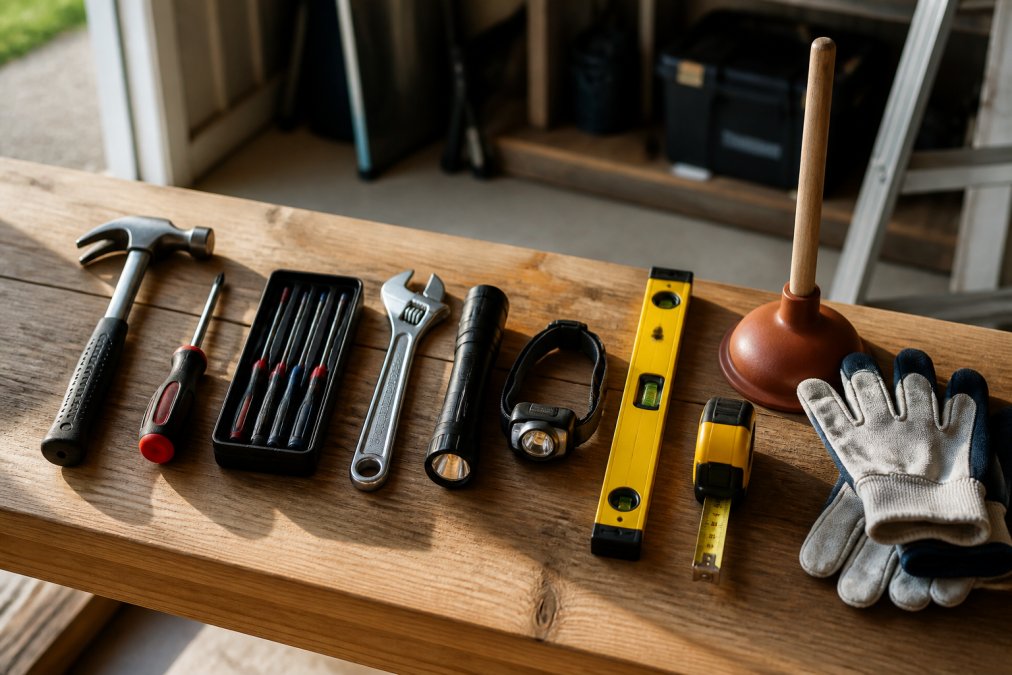
Essential home maintenance tools:
- Hammer and nails (various sizes)
- Screwdriver set (Phillips and flathead)
- Adjustable wrench
- Flashlight or headlamp
- Level
- Tape measure
- Utility knife
- Caulk gun and caulk
- Weather stripping and weatherization supplies
- Plunger (for sinks and toilets)
- Pipe wrench or adjustable pliers
- Safety glasses and work gloves
- Step ladder
- Socket wrench set
- Drywall patch kit
Step 5: Create a Digital System to Track and Document
Paper checklists work, but digital systems are more powerful. They remind you when tasks are due. They store documentation. They track what was done and when. They're searchable when you need historical records.
Digital tracking options:
- Spreadsheet (Google Sheets or Excel) with dates and notes
- Project management app (Asana, Monday.com, or Notion)
- Home maintenance app (Homebase, eMaint, or similar)
- Calendar reminders tied to your phone or email
- Simple document with dates and checkboxes
Step 6: Schedule Professional Inspections and Tune-Ups
Some maintenance requires professional expertise. HVAC systems need annual servicing. Plumbing systems benefit from periodic inspection. Roofs need professional evaluation. Electrical systems should be checked by licensed electricians.
Professional services to schedule annually:
- HVAC inspection and filter replacement (spring and fall)
- Plumbing inspection (check for leaks, pressure issues, and code violations)
- Electrical inspection (identify hazards and code violations)
- Roofing inspection (check for damage, leaks, and structural issues)
- Foundation inspection (look for new cracks or settling)
- Chimney inspection and cleaning (if applicable)
- Water heater inspection and flush
Common Mistakes to Avoid When Maintaining Your Home
Most homeowners make predictable mistakes that undermine their maintenance efforts. Knowing these pitfalls helps you build a better system.
Frequently Asked Questions
What are the most important items to include in a home maintenance checklist?
A complete home maintenance checklist covers HVAC system maintenance, plumbing inspections, electrical safety checks, roofing and siding inspection, gutter cleaning, filter replacement, appliance servicing, smoke detector testing, weather stripping, and foundation inspection. Prioritize tasks that affect structural integrity, safety, and energy efficiency. Most homeowners should also track warranty expiration dates and contractor information for each system to stay organized and prevent costly reactive repairs.
How often should I perform seasonal home maintenance schedule tasks?
Seasonal maintenance occurs four times per year, aligned with spring, summer, fall, and winter transitions. Spring focuses on exterior preparation and HVAC servicing. Summer includes pressure washing and landscaping upkeep. Fall requires gutter cleaning and weatherization. Winter involves heating system checks and foundation inspection. Monthly maintenance tasks like filter replacement and appliance checks happen between seasons. This routine preventative maintenance prevents small issues from becoming expensive problems.
What essential home maintenance tools should every homeowner own?
Essential home maintenance tools include a multi-bit screwdriver, hammer, adjustable wrench, flashlight, level, tape measure, caulk gun, utility knife, socket set, and plunger. For more advanced work, add a cordless drill, stud finder, and pressure washer. Keep a fire extinguisher, carbon monoxide detector, and smoke detectors accessible. Store tools in a clearly labeled cabinet or toolbox. Having these on hand lets you complete routine maintenance and minor repairs without waiting for contractor availability.
How do I prioritize monthly home maintenance tasks when I'm busy?
Break monthly home maintenance tasks into quick wins (10-15 minutes) and larger projects (1-2 hours). Quick wins include filter replacement, thermostat checks, and smoke detector testing. Larger tasks involve appliance inspections and plumbing checks. Assign one quick task per week rather than cramming everything into one day. Use a digital calendar to send reminders. If managing multiple systems feels overwhelming, consider a membership-based service that handles seasonal tune-ups and preventative maintenance so you stay focused on what matters most.