 how-to
How to Prevent Water Damage in Older Homes
Table of Contents
- Signs of Water Damage in Older Homes You Should Never Ignore
- How to Detect Hidden Water Leaks in Walls Before They Spread
- When to Replace Old Plumbing Pipes Instead of Patching Them
- Step-by-Step: How to Prevent Water Damage in Older Homes
- Seasonal Maintenance Checklist to Prevent Water Damage
- Common Mistakes That Lead to Costly Water Damage Repairs
- Frequently Asked Questions
Last Updated: September 25, 2026
Signs of Water Damage in Older Homes You Should Never Ignore
Older homes hide their problems well. A slow leak can run behind a wall for months before you notice anything. By then, the repair bill has grown far beyond a simple fix.
Visible Warning Signs: Stains, Warping, and Musty Odors
Start with what you can see and smell. These signals rarely lie:
- Brown or yellow ceiling stains, especially after rain
- Paint that bubbles or peels without reason
- Floors that warp, cup, or feel uneven underfoot
- A musty, earthy smell that won't go away
- Baseboards that swell or pull away from the wall
Hidden Indicators: Rising Water Bills and Soft Spots
Not all signs are visible. Some show up in your wallet.
How to Detect Hidden Water Leaks in Walls Before They Spread
Finding a leak before it spreads saves thousands in repairs, and you don't need to tear open walls.
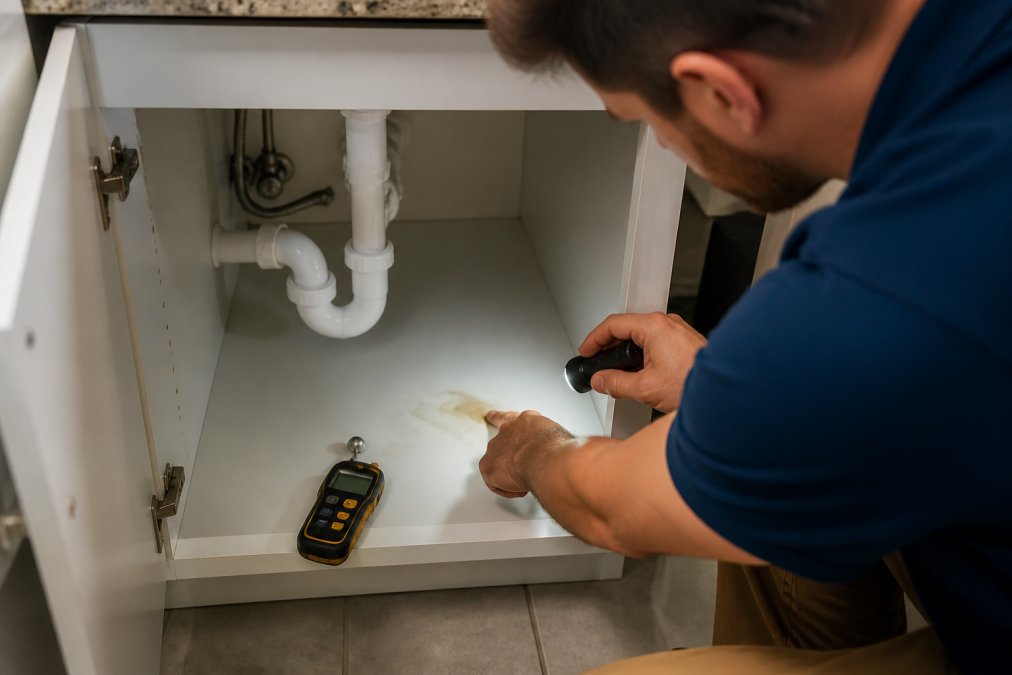
Tools and Techniques for Non-Invasive Leak Detection
A few affordable tools make hidden leaks visible:
- Moisture meter: Press it against walls and floors to find damp spots.
- Infrared thermometer: Cool patches on a warm wall often mean hidden moisture.
- Flashlight: Check under sinks, behind appliances, and in dark corners.
- Food coloring: Drop it in toilet tanks. If color appears in the bowl without flushing, the flapper is leaking.
Check these areas first: under sinks, around toilets, behind the washing machine, and near the water heater. These spots fail first in older homes.
When to Replace Old Plumbing Pipes Instead of Patching Them
Patching works for isolated problems. But old pipes often fail in clusters, and repeated patches add up fast.
Pipe Materials and Their Expected Lifespans
Knowing your pipe material tells you what's coming:
| Pipe Material | Typical Lifespan | Common Failure Sign |
|---|---|---|
| Galvanized steel | 40-50 years | Rusty water, low pressure |
| Copper | 50-70 years | Pinhole leaks, green stains |
| Brass | 40-70 years | Cracks at joints |
| Polybutylene | 10-25 years | Sudden bursts |
| PEX | 40-50 years | Rarely fails early |
If your home still has galvanized steel or polybutylene, replacement should be on your radar. Both materials have well-known failure patterns.
Step-by-Step: How to Prevent Water Damage in Older Homes
Prevention in an older home is not the same as in a new build. The systems that fail first have already run for decades, so address them by age and risk, a flat checklist treats a 1920s galvanized supply line the same as a 2015 PEX line, and it shouldn't.
- Map your systems by age before you touch anything. Write down the approximate install year for your roof, water heater, supply pipes, drain lines, sump pump, and washing machine hoses. Anything past 80% of its expected service life moves to the top of your list. A water heater at year 10 of a 10-to-12-year life is a higher priority than a roof at year 12 of a 25-year life, even though the roof looks worse.
- Inspect the roof and attic twice a year, and after every major storm. Look for missing or lifted shingles, cracked flashing around chimneys and vents, and dark staining on attic sheathing. In older homes, the most common entry point is not the field of the roof, it is the flashing and the penetrations.
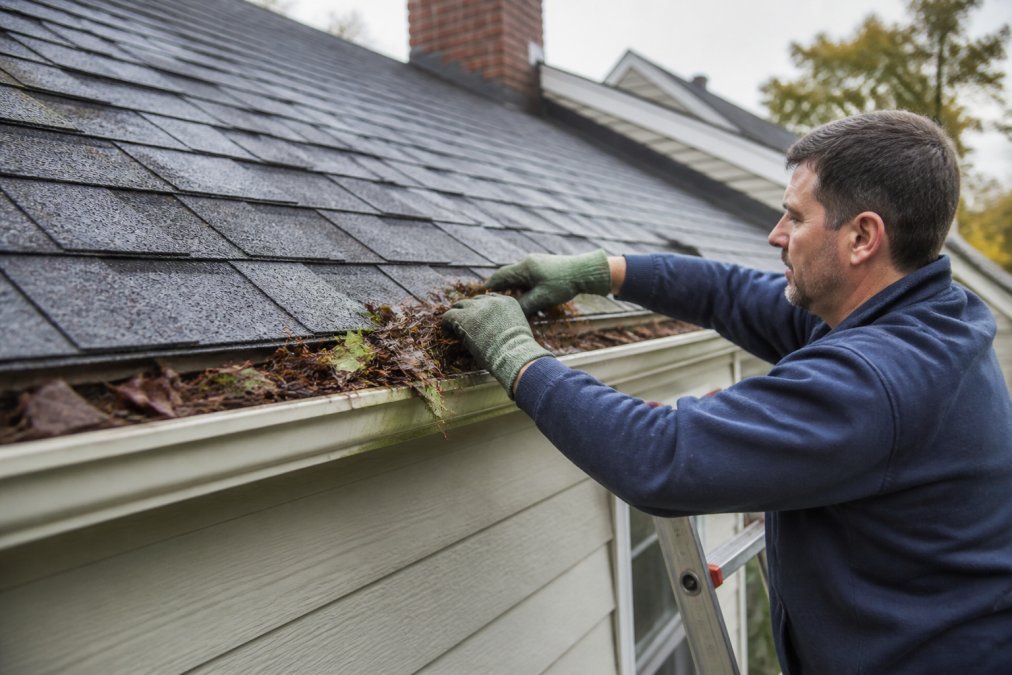
- Clean gutters and downspouts each spring and fall. Clogged gutters push water against the fascia and into the foundation. Confirm downspouts discharge at least 6 feet from the foundation and that the ground slopes away from the house.
- Check under every sink, behind every toilet, and around the washing machine monthly. Look for drips, mineral staining, and soft cabinet floors. Replace rubber washing machine hoses with braided stainless steel, rubber hoses are a leading cause of sudden, high-volume failures.
- Test the sump pump before storm season and again mid-season. Pour water into the pit and confirm the float triggers the pump. A pump that has sat idle for a year is the single most common cause of a flooded basement during the first heavy rain.
- Seal basement cracks and monitor for new ones. Hairline cracks can be filled with hydraulic cement. Horizontal cracks, stair-step cracks in block walls, or any crack wider than a quarter inch point to a structural or drainage issue and warrant a professional evaluation.
- Flush the water heater once a year. Sediment buildup shortens tank life and raises energy costs. If your unit is past its warranty period, budget for replacement rather than waiting for a leak.
- Winterize outdoor pipes and exposed interior runs before the first freeze. Shut off and drain hose bibs, insulate pipes in unheated basements, garages, and crawl spaces, and know where your main shutoff is.
- Watch your water bill and your water meter. A sudden jump with no change in habits, or a meter that moves with everything off, means water is escaping somewhere.
How to Prioritize When Everything Needs Attention
Most older homes have more than one deferred item. Don't rank by "what looks worst", rank by three factors:
- Failure probability: How close is the system to the end of its expected life?
- Consequence of failure: A burst supply line behind a wall causes far more damage than a slow drain leak under a sink.
- Cost of prevention vs. cost of repair: Replacing a $30 washing machine hose prevents a repair that can run into the thousands.
Where DIY Stops and a Professional Starts
Safe, cheap DIY tasks include cleaning gutters, testing a sump pump, replacing washing machine hoses, flushing a water heater, and sealing hairline cracks. Anything involving the main water line, gas appliances, electrical work near water, or structural cracks should go to a licensed professional, an inspection almost always costs less than a repair caused by a DIY mistake.
Seasonal Maintenance Checklist to Prevent Water Damage
Timing matters as much as the tasks, but it also depends on where you live: a checklist built for a cold-winter climate will miss the failure modes that matter in a hot, humid one, and vice versa. The list below is organized by season, with notes on how priorities shift by climate.
Spring
- Clean gutters and downspouts
- Inspect the roof for winter damage, especially flashing and penetrations
- Test the sump pump and clear the pit
- Check the basement for dampness after the first heavy rain
- Inspect the AC condensate line and drain pan before cooling season
Summer
- Check caulking around windows, doors, and tubs
- Look for signs of insect or rodent damage near pipes and vents
- Inspect the water heater for rust or moisture at the base
- Confirm the washing machine hoses are not bulging or cracked
Fall
- Disconnect and drain outdoor hoses
- Insulate exposed pipes in the basement, garage, and crawl space
- Clean gutters again after leaf drop
- Have the heating system serviced before the first cold snap
- Locate and tag the main water shutoff
Winter
- Keep cabinet doors open during cold snaps to warm interior pipes
- Watch for ice dams on the roof and icicles along the eaves
- Check for frozen pipe symptoms: no water, frost on the pipe, or a bulging line
- If you travel, leave the heat on and have someone check the home weekly
How Climate Changes the Checklist
The same home in two regions has two failure profiles. Cold-winter climates face frozen and burst pipes, ice dams, and snowmelt through roof penetrations; hot, humid climates face AC condensate overflow, mold in unconditioned spaces, and foundation movement from soil expansion; heavy spring rain shifts priority to grading, drainage, and sump capacity. Adjust the list to your region's risks.
Budgeting for the Checklist
A seasonal checklist is only useful if it is funded.
Maintenance vs. Capital Improvements: A Tax Distinction Worth Knowing
Not every dollar you spend on an older home is treated the same at tax time.
Common Mistakes That Lead to Costly Water Damage Repairs
Most water damage isn't bad luck, it's skipped steps and delayed action.
Other common errors:
- Ignoring small stains. They rarely stay small.
- Patching old pipes repeatedly. At some point, replacement is cheaper.
- Skipping gutter cleaning. Clogged gutters are a leading cause of basement flooding.
- Not testing the sump pump. A dead pump during a storm means a flooded basement.
- Leaving for months without a check-in. Empty homes hide leaks until they're severe.
Frequently Asked Questions
What are the most common causes of water damage in older homes?
The most common causes are aging plumbing pipes, worn pipe fittings, deteriorated roof flashing, clogged gutters, and failing water heater connections. In older homes, galvanized steel pipes corrode from the inside out, and cast iron drain lines crack over time. Basement seepage through cracked foundations and failed sump pumps also rank high. Regular inspections and proactive replacement of aging components are the best ways to prevent water damage before it starts.
How often should I inspect my home for hidden water leaks?
Inspect visible plumbing areas monthly and schedule a professional inspection annually. Check under sinks, around toilets, and near the water heater every month for moisture or discoloration. If your home is over 30 years old, consider a professional leak detection inspection every six months. Early detection of hidden water leaks in walls can save thousands in structural repairs and mold remediation.
Are older plumbing systems more prone to sudden failure?
Yes. Galvanized steel pipes commonly used before the 1960s corrode internally and can burst without warning. Polybutylene pipes, popular from the late 1970s through the mid-1990s, become brittle and fail suddenly. If your home still has these materials, a plumber should assess them. Replacing old plumbing pipes proactively costs far less than emergency repairs and water damage restoration after a burst pipe.
Does homeowners insurance cover water damage from aging pipes?
Most standard homeowners insurance policies cover sudden and accidental water damage, such as a pipe that bursts without warning. However, damage from gradual leaks, deferred maintenance, or known corrosion is typically excluded. Review your policy carefully and document all maintenance. Proactive care and timely replacement of aging systems reduce the risk of claim denials and out-of-pocket repair costs.