 how-to
Why Your HVAC Makes Noise When Starting: 7 Causes
Table of Contents
- What Normal HVAC Startup Sounds Actually Sound Like
- Loose or Rattling Components in the Condenser Housing
- Fan Motor, Blower Wheel, and Bearing Issues Behind the Noise
- Compressor Malfunctions and Refrigerant Line Pressure Problems
- Electrical Control Problems: Contactor, Start Capacitor, and Power Supply
- Debris in the Condenser Unit and Ductwork Expansion Noise
- DIY vs. Professional: When HVAC Noise Means Call a Technician
- Benefits of Professional HVAC Tune-Ups for a Quieter System
- Frequently Asked Questions
Last Updated: September 19, 2026
What Normal HVAC Startup Sounds Actually Sound Like
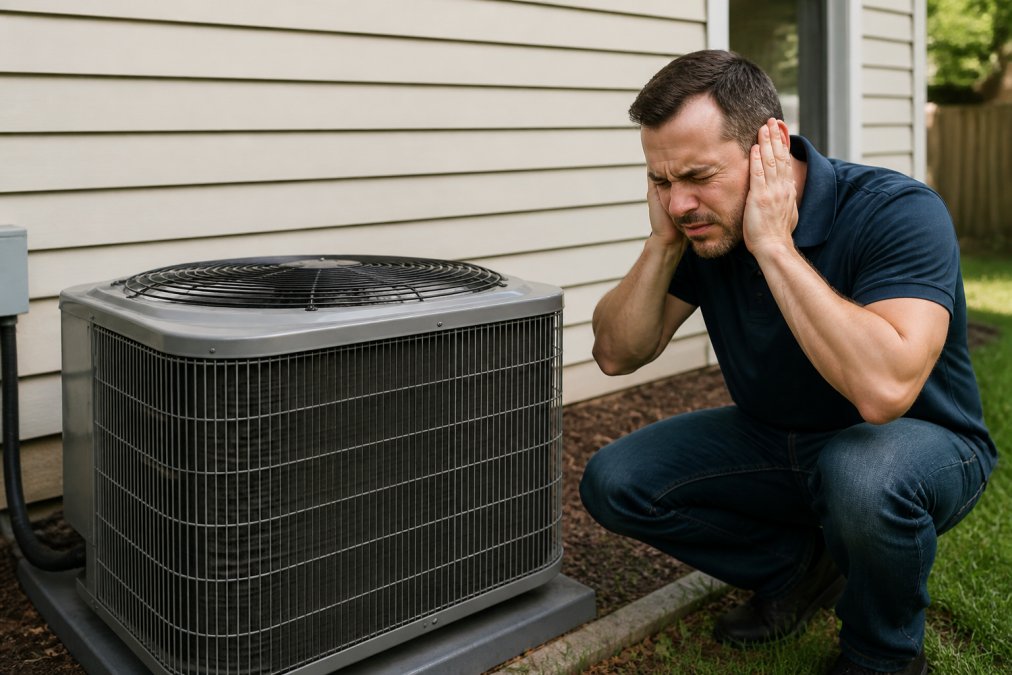
Every HVAC system produces some HVAC noise when it starts. A soft whoosh of air, a low hum from the condenser, and a brief click from the thermostat are all normal parts of the startup cycle. If you're wondering why your HVAC system makes noise when starting, the answer usually comes down to which sound you're hearing and how long it lasts.
Normal startup sounds include:
- A single click as the thermostat signals the system
- A low hum as the compressor and fan motor engage
- A soft whoosh of air moving through the ductwork
- Light ticking as metal ducts warm up and expand
Abnormal sounds are louder, sharper, or repetitive. Grinding, rattling, buzzing, and hissing all point to specific problems.
Loose or Rattling Components in the Condenser Housing
Rattling is the most common startup noise, and it's usually the easiest to fix. Loose screws, a bent fan guard, or a panel that isn't seated properly will vibrate every time the system kicks on.
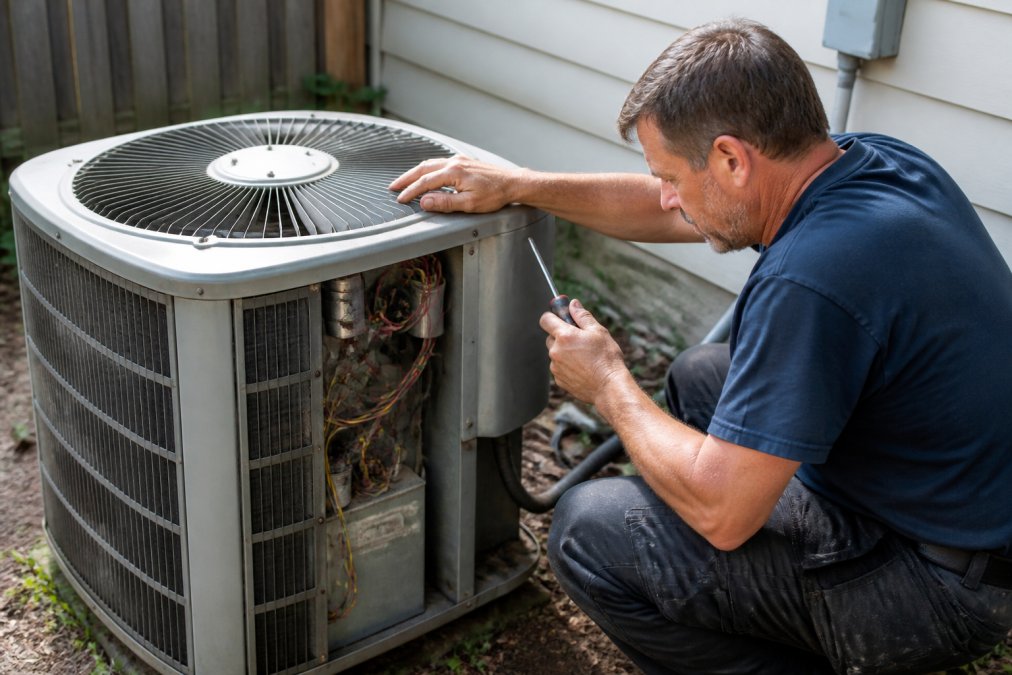
Start with the power off at the breaker. Then check these spots:
- Screws on the condenser housing and access panels
- The fan guard on top of the unit
- Any misaligned components touching the cabinet
- Small debris like twigs or pebbles sitting inside the unit
Fan Motor, Blower Wheel, and Bearing Issues Behind the Noise
A grinding or scraping sound points to the fan motor, blower wheel, or motor bearings. These parts spin thousands of times per hour, and worn bearings will grind against the shaft as the system reaches full speed.
Watch for these signs:
- Grinding that appears only during the startup cycle
- A scraping sound from the indoor blower wheel
- Vibration you can feel through the floor near the air handler
- Fan blades that wobble or spin unevenly
Compressor Malfunctions and Refrigerant Line Pressure Problems
A loud buzzing or hissing at startup often traces back to the compressor or the refrigerant lines. The compressor is the heart of the system, and it pulls the most power during the first few seconds of the startup cycle.
Signs to watch for:
- Hissing that continues after startup
- Buzzing that stops when the compressor kicks in
- Ice forming on the refrigerant lines
- The system short-cycling on and off
Electrical Control Problems: Contactor, Start Capacitor, and Power Supply
Clicking that repeats without the system starting is an electrical problem. The electrical contactor, the start capacitor, and the power supply all play a role in the startup cycle, and any one of them can fail.
Here's how to tell them apart:
| Symptom | Likely Part | What It Means |
|---|---|---|
| Repeated clicking, no startup | Contactor | Switch is worn or pitted |
| Hum then click, motor won't turn | Start capacitor | Capacitor has lost its charge |
| Clicking plus dimming lights | Power supply | Voltage drop at the breaker |
| Buzzing from the air handler | Electrical controls | Loose wiring or relay issue |
Debris in the Condenser Unit and Ductwork Expansion Noise
Debris and ductwork expansion create two very different sounds, but both are common. Leaves, grass clippings, and small twigs collect inside the condenser housing and rattle against the fan blades. Clearing them out is a five-minute job that prevents bigger problems.
A quick check:
- Power off at the breaker
- Remove the top grille and clear visible debris
- Check the fan blades for nicks or bends
- Listen for ticking near the ducts after startup
- Note whether the noise fades within two minutes
DIY vs. Professional: When HVAC Noise Means Call a Technician
Step 1: Is the noise new, or has it always been there?
- Always been there since the system was installed → likely normal startup sound. No action needed.
- New within the last few weeks → continue to Step 2.
Step 2: Does the noise stop within 60-90 seconds of startup?
- Yes, and it's a soft tick or pop → ductwork expansion. DIY-friendly.
- Yes, but it's grinding or scraping → bearing or fan blade issue. Call a technician.
- No, it continues the whole run cycle → continue to Step 3.
Step 3: What does it sound like?
- Rattle → loose panel, screw, or debris in the condenser. Power off at the breaker and inspect. DIY-friendly.
- Single click, then normal operation → normal thermostat or contactor engagement. No action.
- Repeated clicking with no startup → contactor or capacitor failure. Call a technician.
- Buzzing from the outdoor unit → compressor struggling to start. Call a technician.
- Hissing → possible refrigerant leak. Power off and call a technician.
- Metal-on-metal grinding → bearing or blower wheel failure. Power off and call a technician.
Step 4: How old is the system?
| System Age | Most Likely Startup Noise Source | Typical Repair vs. Replace Math |
|---|---|---|
| 0-5 years | Loose panel, debris, duct expansion | Repair is almost always the right call; parts may be under warranty |
| 6-10 years | Capacitor, contactor, fan bearings | Repair makes sense if the quote is a fraction of replacement cost |
| 11-15 years | Blower motor, compressor start components | Get a repair quote and a replacement quote side by side |
| 16+ years | Compressor, multiple worn components | Replacement usually wins once you factor in efficiency loss and repeat repairs |
Step 5: Can you safely reach the part?
For homeowners who want one trusted point of contact instead of juggling contractors, ENERGY STAR guidance on HVAC maintenance offers a solid baseline for what a seasonal tune-up should include. Lone Eagle Home Services handles that coordination for members, from the first diagnostic visit through the final repair.
Benefits of Professional HVAC Tune-Ups for a Quieter System
A tune-up isn't just about a quieter startup today. It's about keeping the noise from coming back next season. Most guides stop at "schedule maintenance" without telling you what to check between visits. Here's the full picture.
What a technician actually does during a tune-up
A typical seasonal visit covers:
- Motor bearings and fan blades (lubrication, torque check, blade inspection)
- Capacitor and contactor testing with a multimeter
- Refrigerant line pressure checks against manufacturer spec
- Debris clearance in the condenser unit
- Thermostat calibration and safety shut-off testing
- A digital service report after the visit
The between-visit checklist that stops noise from returning
- Inspect the outdoor unit monthly. Look for leaves, grass clippings, and twigs around the base and inside the top grille. Clear them before they reach the fan blades.
- Check the air filter every 30 days. A clogged filter restricts airflow, which makes the blower work harder and can produce a startup hum that sounds like a failing motor. Replace or clean per the manufacturer's recommendation.
- Listen at startup once a week. Stand near the outdoor unit when it kicks on. Catching a new rattle in week one is cheaper than catching it in month six.
- Look at the condensate drain line. Algae and debris cause clogs that trigger safety shut-offs and short cycling, which can sound like repeated clicking at startup.
- Check the thermostat batteries and schedule. A dying battery can cause the system to click on and off without fully starting.
- Note any new sound in a log. Date, time, sound description, and weather. Technicians diagnose faster when you can describe the pattern.
- Trim vegetation back 2 feet from the outdoor unit. Restricted airflow raises head pressure and makes the compressor work harder at startup.
Why this matters for system life
What to ask for in the service report
When the technician finishes, ask for these specifics in writing:
- Capacitor microfarad readings (compared to the rated value on the part)
- Contactor pitting notes
- Refrigerant pressures (suction and liquid line)
- Any component flagged as "watch" versus "replace now"
Frequently Asked Questions
Should I turn off my AC if it's making noise?
Yes. If your HVAC system makes grinding, screeching, or loud banging sounds when starting, shut it off at the thermostat and then at the breaker. Running a unit with a failing compressor, worn motor bearings, or a bad start capacitor can turn a repair into a full system replacement. Short buzzing or a brief hum during the startup cycle is normal, but any new or worsening HVAC noise warrants a shutoff until a technician inspects it.
What does an HVAC compressor sound like when it's going bad?
A failing compressor often produces a loud clicking, buzzing, or grinding noise at startup, sometimes followed by a hard shut-off. You may also hear a hissing sound from refrigerant lines if pressure is off. These are signs of mechanical failure or electrical control problems rather than normal operation. If the noise repeats every startup cycle, stop running the system and schedule a diagnostic visit before the compressor seizes completely.
What are some normal sounds that an HVAC system makes?
A soft hum from the blower wheel, a gentle whoosh of air through the ductwork, and a brief click from the electrical contactor are all normal during the startup cycle. Ductwork expansion and contraction can also produce light ticking as metal warms up. These sounds stay consistent and quiet. Anything that rattles, grinds, buzzes loudly, or gets worse over time is not normal and points to a component issue worth diagnosing.
Can a dirty air filter cause HVAC noise?
Yes. A clogged filter restricts airflow, which can make the blower wheel work harder and produce a whistling or rumbling sound at startup. It also strains the fan motor and raises the risk of overheating. Check your filter monthly and replace it every one to three months depending on pets and dust. If noise continues after a fresh filter, the issue is likely deeper in the system and needs a technician to inspect.