 how-to
How Often to Service Home HVAC Systems
Table of Contents
- How Often Should You Service Your HVAC System
- Spring vs. Fall Maintenance Tasks
- HVAC Maintenance Checklist for Seasonal Tune-Ups
- Benefits of Annual HVAC Tune-Ups
- Signs Your HVAC Needs Repair
- HVAC Filter Replacement Frequency and Impact
- Creating Your HVAC Service Schedule
- Frequently Asked Questions
Last Updated: September 23, 2026
How Often Should You Service Your HVAC System
Your heating and cooling system runs year-round. Most homeowners don't think about it until something breaks. That's the problem. How often should you service home HVAC systems? The answer is straightforward: twice a year, ideally in spring and fall. But the real value isn't in following a calendar, it's in understanding why this schedule matters and what happens when you skip it.
Homeowners who stick to a regular HVAC service frequency often avoid emergency calls and mid-season breakdowns. Their energy bills can stay lower, and their systems may last longer.
Think of your HVAC system like your car. You don't wait for the engine to fail before changing the oil. You don't ignore warning lights. The same logic applies to heating and cooling. Regular professional inspection catches small problems before they become expensive ones.
Spring vs. Fall Maintenance Tasks
Spring and fall maintenance serve different purposes, but the specific tasks vary significantly depending on your system type. A heat pump requires different checks than a gas furnace, and a ductless mini-split has its own critical maintenance points.
For Gas Furnace Systems:
Spring maintenance prepares your air conditioning for heavy use:
- Cleaning condenser coils to improve airflow
- Checking refrigerant levels
- Testing thermostat calibration
- Inspecting electrical connections for safety
- Verifying the blower motor runs smoothly
- Clearing debris from outdoor units
Fall maintenance gets your heating ready for winter:
- Inspecting the furnace heat exchanger for cracks or corrosion
- Testing gas connections and pressure
- Cleaning the evaporator coils
- Verifying the system cycles properly
- Testing safety controls and limit switches
- Checking the pilot light or ignition system
For Heat Pump Systems:
Heat pumps operate year-round in heating and cooling modes, so maintenance is more continuous.
Spring maintenance focuses on cooling efficiency:
- Cleaning outdoor condenser coils (critical, heat pumps are sensitive to airflow restriction)
- Checking refrigerant charge
- Inspecting reversing valve operation (the component that switches between heating and cooling)
- Testing defrost cycle controls
- Verifying electrical connections on the outdoor unit
Fall maintenance ensures winter heating performance:
- Testing the reversing valve again under heating conditions
- Checking auxiliary heat strips or backup heating elements
- Inspecting the outdoor unit for ice buildup potential
- Verifying refrigerant levels haven't dropped
- Testing thermostat settings for both heating and cooling modes
Heat pumps are more sensitive to refrigerant loss than furnaces, so refrigerant checks are critical both seasons.
For Ductless Mini-Split Systems:
Ductless systems have indoor wall-mounted units and outdoor compressors, requiring specialized attention.
Spring and fall maintenance includes:
- Cleaning the indoor unit filters (these clog faster than central system filters)
- Inspecting the refrigerant lines for damage or leaks
- Checking the outdoor compressor for debris and airflow obstruction
- Testing the wireless remote controls and sensors
- Verifying condensate drainage from indoor units
- Inspecting electrical connections at both indoor and outdoor units
Ductless systems don't have ductwork to leak, but their refrigerant lines are exposed and vulnerable to physical damage.
Why System Type Matters:
A technician trained only on furnaces may miss critical heat pump checks. A contractor unfamiliar with mini-splits won't know that those indoor filters need more frequent attention. When you schedule service, confirm your technician is experienced with your specific system type. If you're unsure what you have, check your equipment nameplate or ask during your first tune-up. Mismatched maintenance is nearly as bad as skipped maintenance, you'll think you're covered when you're actually missing system-specific wear points.
HVAC Maintenance Checklist for Seasonal Tune-Ups
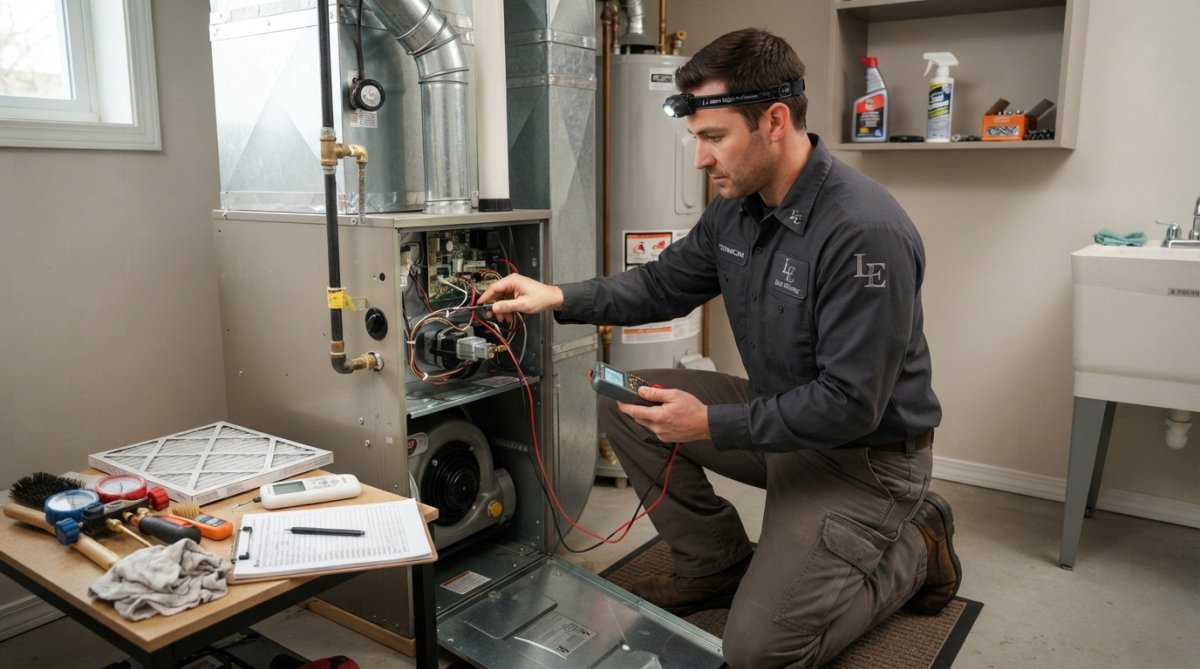
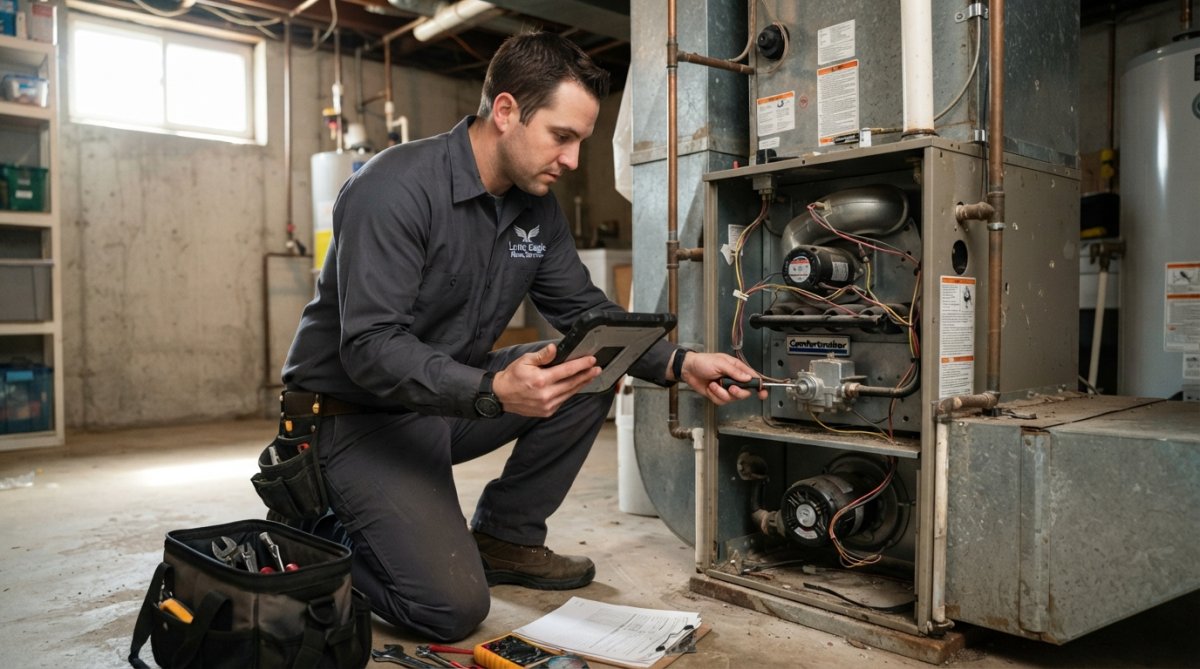
A professional HVAC service frequency inspection covers specific components. Here's what a complete tune-up includes.
| Task | Purpose | Frequency |
|---|---|---|
| Filter replacement | Maintain airflow and indoor air quality | Every 1-3 months |
| Coil cleaning | Improve efficiency and prevent ice buildup | Twice yearly |
| Refrigerant check | Ensure proper cooling performance | Twice yearly |
| Electrical inspection | Prevent hazards and system failure | Twice yearly |
| Thermostat test | Verify accurate temperature control | Twice yearly |
| Ductwork inspection | Check for leaks and blockages | Annually |
| Safety controls | Confirm system shuts down properly | Twice yearly |
A professional technician runs through this checklist during a tune-up. They don't just look, they measure, test, and document everything. You get a digital service report showing exactly what was checked and what was found.
Many homeowners try DIY maintenance. Replace the filter yourself. That's fine. But the rest requires professional equipment and expertise. A technician has gauges to measure refrigerant. They have tools to test electrical safety. They know what normal looks like and what signals trouble.
Benefits of Annual HVAC Tune-Ups
Regular maintenance delivers concrete benefits. This isn't theory. It's measurable.
Energy efficiency improves. A clean system uses less energy. Dirty coils force the compressor to work harder. That means higher utility bills. A tune-up restores efficiency. Your monthly costs drop.
System longevity extends. HVAC equipment is expensive. A new furnace or air conditioner costs significant money. Regular maintenance adds years to your system's life. Most units last 15-20 years with proper care. Without it, they fail much sooner.
Emergency repairs decrease. Preventative care stops small problems from becoming catastrophic ones. A worn belt gets replaced before it snaps. A refrigerant leak gets sealed before your system loses cooling. You avoid the 2 a.m. emergency call when temperatures are extreme.
Performance stays consistent. Your system heats and cools evenly. The thermostat works accurately. Airflow reaches every room. No hot spots. No cold zones. Consistent comfort year-round.
Warranty protection remains valid. Many manufacturers require proof of regular maintenance. Skip tune-ups, and your warranty may not cover repairs. Keep up with service, and you're protected.
Signs Your HVAC Needs Repair
Some problems can't wait for your scheduled tune-up. Certain signs mean you need immediate service.
Call a technician right away if you notice:
- No heat or cooling when you need it
- Strange noises from the furnace or air handler
- Burning smells coming from vents
- Weak airflow despite closed vents
- Refrigerant leaking (oily spots around outdoor unit)
- System cycling on and off constantly
- Thermostat not responding to adjustments
- Visible rust or corrosion on equipment
These aren't things to monitor. They're things to fix immediately. Ignoring them risks complete system failure. In winter, that means no heat. In summer, that means no cooling. Neither is acceptable.
HVAC Filter Replacement Frequency and Impact
The filter is the easiest maintenance task you can do yourself, and the most important one between professional tune-ups. But the replacement frequency isn't one-size-fits-all. It depends on your system type, age, and operating conditions.
Why Filter Condition Matters:
A clogged filter restricts airflow. Your system works harder. Energy use climbs. Performance drops. Indoor air quality suffers. Dust and allergens circulate instead of being captured.
Check Your Filter Monthly:
Replacement Frequency by System Type and Age:
New systems (0-5 years old):
- Standard 1-inch fiberglass filters: Every 1-2 months
- Pleated 1-inch filters: Every 2-3 months
- 4-inch or 5-inch filters: Every 6-12 months
- Ductless mini-splits: Every 2-4 weeks (indoor filters clog faster due to proximity to living spaces)
Older systems (10+ years old):
- Standard filters: Every 1 month or less
- Pleated filters: Every 4-8 weeks
- 4-inch filters: Every 3-6 months
Factors That Accelerate Filter Clogging:
- Pets in your home: Pet hair clogs filters 2-3 times faster than pet-free homes. If you have dogs or cats, check filters every 2 weeks during shedding season.
- Dust levels in your area: Homes near construction, unpaved roads, or agricultural areas see filters clog faster. Desert climates with blowing dust require more frequent changes.
- System runtime: Homes that run their HVAC continuously (24/7) clog filters faster than homes that cycle on and off. If you live in a climate with extreme temperatures, expect shorter filter life.
- Filter quality: A high-quality pleated filter lasts longer than a cheap fiberglass filter. A MERV-13 filter captures more particles but also clogs faster than a MERV-8. Balance filtration needs against replacement frequency.
- Humidity and moisture: Humid climates can cause filters to retain moisture and clog faster. Coastal areas with salt air may see filters degrade more quickly.
Filter Type Recommendations:
- Standard fiberglass (MERV-4): Cheapest, but clogs fastest. Good only if you replace monthly.
- Pleated (MERV-8 to MERV-11): Better filtration, longer life. Recommended for most homes.
- High-efficiency (MERV-13+): Excellent air quality, but can restrict airflow in older systems. Check your equipment manual before upgrading.
- Washable/reusable filters: Lower long-term cost, but require regular cleaning. Not recommended for systems over 10 years old, as they can restrict airflow.
Track Your Replacements:
Creating Your HVAC Service Schedule
Build a schedule and stick to it. This is how you avoid emergency repairs.
Frequently Asked Questions
Is annual HVAC maintenance really necessary?
Yes. Annual or bi-annual professional HVAC service prevents small issues from becoming expensive repairs, improves energy efficiency, and extends your system's lifespan. Skipping maintenance can void your manufacturer warranty and lead to emergency breakdowns during peak heating or cooling seasons when service costs are highest. Most manufacturers recommend at least one professional tune-up per year.
What is included in a standard HVAC tune-up?
A professional tune-up typically includes a thorough inspection of your heating and cooling components, filter replacement, checking refrigerant levels, cleaning condenser and evaporator coils, verifying electrical connections, testing thermostat calibration, inspecting the blower motor and ductwork, and checking the condensate drain. The technician will also assess airflow and overall system performance to identify potential issues before they cause failures.
What happens if you don't service your HVAC system?
Neglecting maintenance causes dust and debris to accumulate in your system, reducing airflow and forcing your equipment to work harder. This decreases energy efficiency, driving up utility bills, and accelerates wear on critical components like the compressor and blower motor. Over time, your system will fail unexpectedly, often during extreme weather when emergency repairs are most expensive. You may also lose warranty coverage if the manufacturer requires documented preventative maintenance.
How often should I replace my HVAC filter?
Standard 1-inch filters should be replaced every 1 to 3 months, depending on household factors like pets, allergies, and air quality. Thicker filters (4 to 5 inches) can last 6 to 12 months. Check your filter monthly and replace it when it appears visibly dirty or clogged. A clean filter maintains proper airflow, improves indoor air quality, reduces strain on your system, and helps maintain energy efficiency.