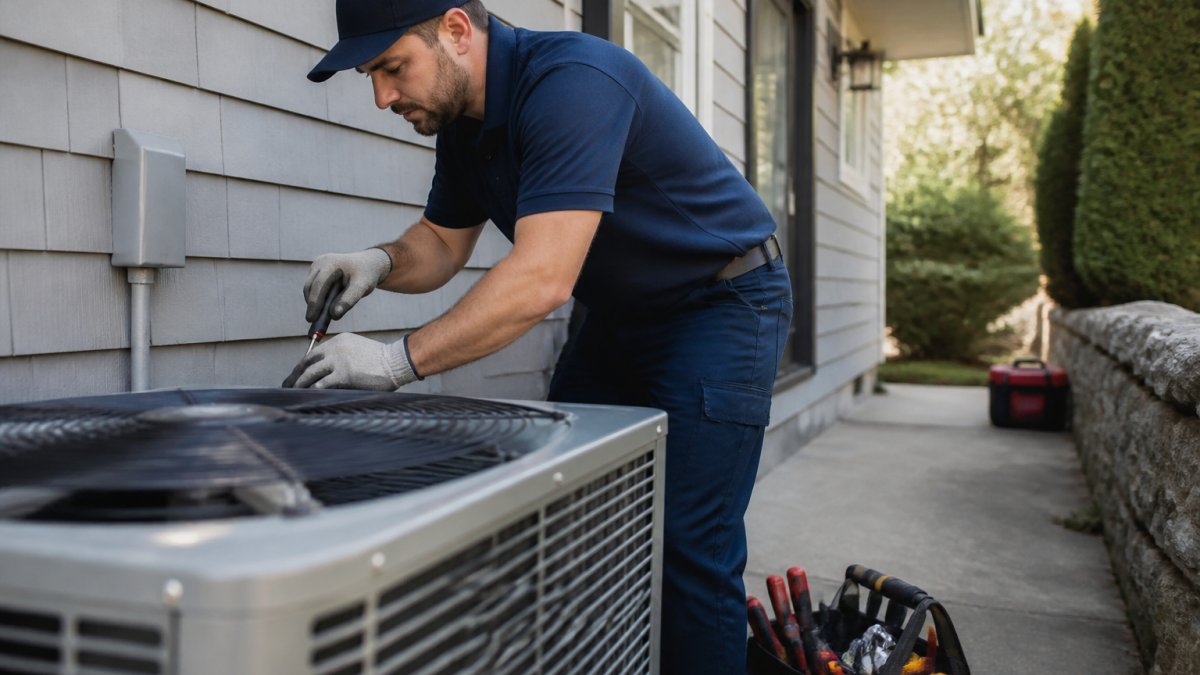
 comparison
Is Home Maintenance Subscription Worth It?
Table of Contents
- What Is a Home Maintenance Subscription?
- Home Warranty vs Home Maintenance Plan: Key Differences
- The Real Cost: Average Cost of Home Maintenance Per Year
- Membership Model vs. Emergency Fund: The Financial Reality
- Common Services Included and What's Actually Excluded
- How to Winterize a Vacation Home: Seasonal Maintenance Value
- The Hidden Traps: Service Fees, Contract Terms, and Cancellation Policies
- Should You Sign Up? Who Benefits Most
- Frequently Asked Questions
Last Updated: September 29, 2026
What Is a Home Maintenance Subscription?
A home maintenance subscription is a membership model that bundles routine upkeep, seasonal tune-ups, and on-demand repairs into a predictable monthly or annual fee. Instead of calling different contractors for each problem, you pay a flat rate for ongoing access to a dedicated team.
The core appeal is predictability: you know what you're paying, you don't hunt for contractors, and a trusted team handles the work with accountability.
Home maintenance subscriptions sit between warranties, insurance, and traditional handyman services. Understanding which is which matters because they solve different problems.
Home Warranty vs Home Maintenance Plan: Key Differences
A home warranty is insurance-like coverage that kicks in when major systems fail. You pay an annual fee (typically $400-$600), and when your water heater dies or your HVAC compressor fails, the warranty company covers the repair cost (minus a service call fee).
A home maintenance plan is proactive. You pay monthly or annually for scheduled visits, seasonal inspections, and preventative work to catch small problems before they become expensive.
Lone Eagle Home Services operates as a maintenance subscription model, conducting scheduled tune-ups and seasonal preparations to prevent expensive failures.
Some homeowners use both: a maintenance subscription to extend system life, and a warranty as a safety net for catastrophic failures.
| Service Type | When It Pays | What It Covers | Cost Model |
|---|---|---|---|
| Home Warranty | System failure occurs | Major system replacement/repair | Annual fee + per-call charges |
| Maintenance Plan | Routine upkeep needed | Seasonal checks, filter changes, inspections | Monthly or annual subscription |
| Lone Eagle Home Services | Proactive homeowners | Dedicated team, flat-rate repairs, vendor coordination | See pricing page |
If your home is older, a warranty makes sense. If you want to prevent problems and coordinate repairs with a single team, a maintenance subscription wins.
The Real Cost: Average Cost of Home Maintenance Per Year
Industry guidance suggests homeowners budget 1-2% of their home's value annually for maintenance and repairs. For a $500,000 home, that's $5,000-$10,000 per year.
Without a maintenance plan, a small HVAC issue becomes a $2,500-$4,000 compressor failure. A routine seasonal inspection ($200-$400) would have caught it.
A clogged gutter causes $3,000-$8,000 in foundation damage. A quarterly gutter cleaning ($50-$100) prevents it.
Prevention feels invisible, but preventing 2-3 major failures often covers the subscription cost multiple times over.
Homeowners who invest in routine maintenance report lower emergency repair costs. Small problems are cheap to fix; big problems are expensive.
Membership Model vs. Emergency Fund: The Financial Reality
The emergency fund approach: set aside $200-$300 monthly. When something breaks, you pay out of pocket with no middleman or recurring fees.
The subscription approach: pay $200-$300 monthly to a service provider for priority scheduling, a dedicated team, flat-rate pricing, and vendor coordination.
Frequent small repairs: A subscription wins with flat-rate labor savings. Rare major failures: An emergency fund may suffice. Seasonal maintenance: A subscription is cheaper than per-visit rates. Unpredictable emergencies: You need insurance or a warranty; a subscription reduces likelihood through prevention.
The real advantage of a subscription is often psychological and operational: you don't find contractors, negotiate pricing, or coordinate vendors. That convenience has value.
Lone Eagle Home Services bundles contractor coordination into a predictable fee structure backed by a dedicated team.
Common Services Included and What's Actually Excluded
Usually included:
- Seasonal HVAC inspections and filter replacements
- Gutter cleaning and inspection
- Plumbing system checks
- Electrical outlet and switch inspection
- Water heater flushing
- Winterization preparation
- Minor repairs and adjustments
- Digital service reports after each visit
Frequently excluded:
- Major system replacement (HVAC unit, water heater, roof)
- Foundation or structural repairs
- Electrical panel upgrades
- Plumbing overhauls beyond inspection
- Appliance repairs (covered under manufacturer warranty instead)
- Pest control or termite treatment
- Asbestos or mold remediation
The gap between "included" and "excluded" is where surprises happen. A homeowner might assume their maintenance plan covers a water heater replacement, only to discover it doesn't. The subscription covered the inspection that identified the problem, but not the $1,500 replacement.
This is where a dedicated team matters. At Lone Eagle Home Services, the approach is to identify problems early and coordinate solutions transparently. When a repair falls outside the membership scope, the team connects you with vetted vendors and manages the project. You're not left scrambling for contractors; you have a single point of contact.
The practical lesson: read the service agreement carefully. Understand what's covered, what costs extra, and what requires outside specialists. The best subscriptions are transparent about these boundaries upfront.
How to Winterize a Vacation Home: Seasonal Maintenance Value
Vacation homes create a unique maintenance challenge. The property sits empty for months. Systems don't get regular use. Seasonal transitions require specific preparation to prevent costly damage.
Winterization is the most critical seasonal maintenance task for homes in cold climates. Here's what it typically involves:
Plumbing protection: Drain exterior faucets, shut off exterior water supply, insulate exposed pipes, drain and winterize irrigation systems.
HVAC preparation: Service the heating system, replace filters, check thermostat settings for vacancy mode, ensure the system can maintain minimum temperature to prevent pipe freezing.
Interior protection: Drain water heater if the home will be completely unheated, open cabinet doors under sinks to allow air circulation, leave interior doors open to promote even temperature distribution.
Moisture control: Run dehumidifiers or leave doors/windows cracked slightly to prevent mold growth from stagnant air.
Exterior inspection: Clear gutters, trim branches away from roof, check for gaps or cracks where pests could enter, inspect roof for damage.
This isn't optional. A frozen pipe in a vacation home can cause $5,000-$15,000 in water damage before anyone notices. A heating system failure can lead to burst pipes throughout the property. Mold growth in an unoccupied home spreads quickly and becomes expensive to remediate.
Homeowners who own vacation properties often find that seasonal maintenance subscriptions justify themselves through prevention alone. A single winterization visit catches problems that could have caused major damage.
The value proposition is especially strong for part-time homeowners. You're not there to notice small issues. A professional team conducting quarterly or seasonal inspections catches problems early. For Morris County homeowners who maintain vacation properties elsewhere, this proactive approach prevents the expensive emergencies that plague absentee owners. Routine oversight often reveals hidden plumbing vulnerabilities, making professional drain unblocking a critical component of long-term property preservation for those managing multiple residences.
The Hidden Traps: Service Fees, Contract Terms, and Cancellation Policies
This is where the subscription model reveals its vulnerabilities. The marketing emphasizes flat-rate pricing and predictability. The fine print often tells a different story.

Service fees: Many subscriptions advertise a monthly rate but tack on a "service call fee" for each visit. You're paying $25/month for membership, then $75 per visit. The math gets murky fast.
Before signing, ask directly:
- What's included in the monthly fee, and what costs extra?
- Is there a minimum contract term?
- What's the cancellation policy, and are there early termination fees?
- Do you serve my vacation home address, or only my primary residence?
- Are parts included at cost, or is there a markup?
- What happens if I'm unhappy with the work?
Should You Sign Up? Who Benefits Most
The subscription model isn't universal. It works brilliantly for some homeowners and wastes money for others.
You should subscribe if:
You should skip it if:
Frequently Asked Questions
Are home maintenance subscriptions actually worth the monthly cost?
It depends on your home's age, your schedule, and how you calculate value. A home maintenance subscription makes financial sense if you'd spend more than the annual membership cost on routine maintenance and contractor callout fees. For busy professionals managing multiple repair vendors, the peace of mind and priority scheduling often justify the cost. However, if your home is new, well-maintained, and you have time to manage contractors yourself, setting aside an emergency fund may be cheaper. Compare the subscription's annual cost against your actual maintenance spending over the past three years.
What is the difference between a home warranty and a home maintenance subscription?
A home warranty covers sudden failures of appliances and systems you've owned for a period of time, with a service call fee per claim. A home maintenance subscription provides scheduled, preventative care through regular visits and routine maintenance tasks. Warranties react to breakdowns; subscriptions prevent them. Subscriptions typically include seasonal tune-ups, filter replacements, and system inspections. Warranties exclude pre-existing conditions and often have high deductibles. For long-term cost control, subscriptions address the root cause through routine maintenance, while warranties protect against unexpected catastrophic failures.
How much should I budget annually for home maintenance?
The average cost of home maintenance per year ranges from 1-2% of your home's value for routine upkeep. A $400,000 home typically requires $4,000-$8,000 annually in maintenance, repairs, and system servicing. This includes HVAC filter replacements, gutter cleaning, inspections, and small repairs. Older homes (20+ years) trend toward the higher end; newer homes toward the lower end. A membership-based subscription can stabilize this cost through flat-rate pricing and predictable scheduling, eliminating surprise contractor callout fees and emergency repair markups.
What happens if I need to cancel my home maintenance subscription?
Cancellation policies vary significantly by provider. Some offer month-to-month flexibility with no penalty; others lock you into annual contracts with early termination fees. Before signing, review the contract terms carefully: look for the cancellation notice period required, any remaining balance obligations, and whether you get a refund for unused service. Ask directly about geographic availability limitations and whether the service covers your property type. Reputable providers offer transparent cancellation policies and may provide a trial period so you can evaluate service quality before committing long-term.