 comparison
Membership vs Hourly Handyman Services: 2026 Guide
Table of Contents
- Membership vs Hourly Handyman Services: Key Differences
- Handyman Hourly Rates 2026: What You'll Pay Per Visit
- Home Maintenance Subscription Benefits: More Than Just Convenience
- Cost Breakdown: Hourly Billing vs Flat-Rate Membership
- Long-Term ROI: How Proactive Care Saves You Money
- Contractual Exit Clauses: What to Know Before You Sign
- DIY vs Professional Trade-Off: When to Call a Pro
- Conclusion: Choosing the Right Model for Your Home
- Frequently Asked Questions
Last Updated: September 17, 2026
Membership vs Hourly Handyman Services: Key Differences
Membership vs hourly handyman services comes down to one question: do you pay for time on site, or for a system that keeps your home from breaking? Hourly billing charges per visit for labor. A home maintenance subscription charges a recurring fee for scheduled tune-ups, priority scheduling, and flat-rate repairs.
The hourly model is simple: you call when the faucet drips, and they bill hours worked plus a service call fee or trip charge. A home maintenance subscription charges a recurring fee for scheduled tune-ups, priority scheduling, and flat-rate repairs.
| Factor | Hourly Handyman | Membership Plan |
|---|---|---|
| Billing trigger | Per visit, per hour | Monthly or annual contract |
| Service call fee | Charged each visit | Usually waived for members |
| Scheduling | First available slot | Priority scheduling |
| Labor rate | Standard rate | Member-exclusive discounted labor |
| Scope | Whatever you call about | Defined service scope plus on-demand repairs |
Most homeowners choose based on how many small tasks pile up in a year.
Handyman Hourly Rates 2026: What You'll Pay Per Visit
Handyman hourly rates in 2026 typically range from about $45 to $125 per hour depending on your market, the trade, and whether the pro carries insurance and licensing. Dense metro areas cost more; rural ones less.
What drives the spread:
- Trade specialization. A general handyman charges less than a licensed electrician or plumber handling the same visit.
- Overhead expenses. Insured, uniformed, background-checked technicians cost more to run than a solo operator with a truck.
- Marketplace versus direct hire. Thumbtack shows averages around $45 to $50 per hour; Angi's guides run $50 to $125. Those are marketplace ranges, not guarantees.
Home Maintenance Subscription Benefits: More Than Just Convenience
Home maintenance subscription benefits go beyond skipping the scheduling hassle. Members get priority scheduling, discounted labor, and a documented service history. The bigger gain is what doesn't happen: the small leak that never becomes a flooded basement.
A typical membership program includes:
- Seasonal tune-ups timed to your climate and systems
- On-demand repairs at member-exclusive labor rates
- Vendor coordination for specialized work like HVAC, electrical, or roofing
- Digital service reports after every visit, for resale or insurance records
- A single point of contact instead of five contractors
Cost Breakdown: Hourly Billing vs Flat-Rate Membership
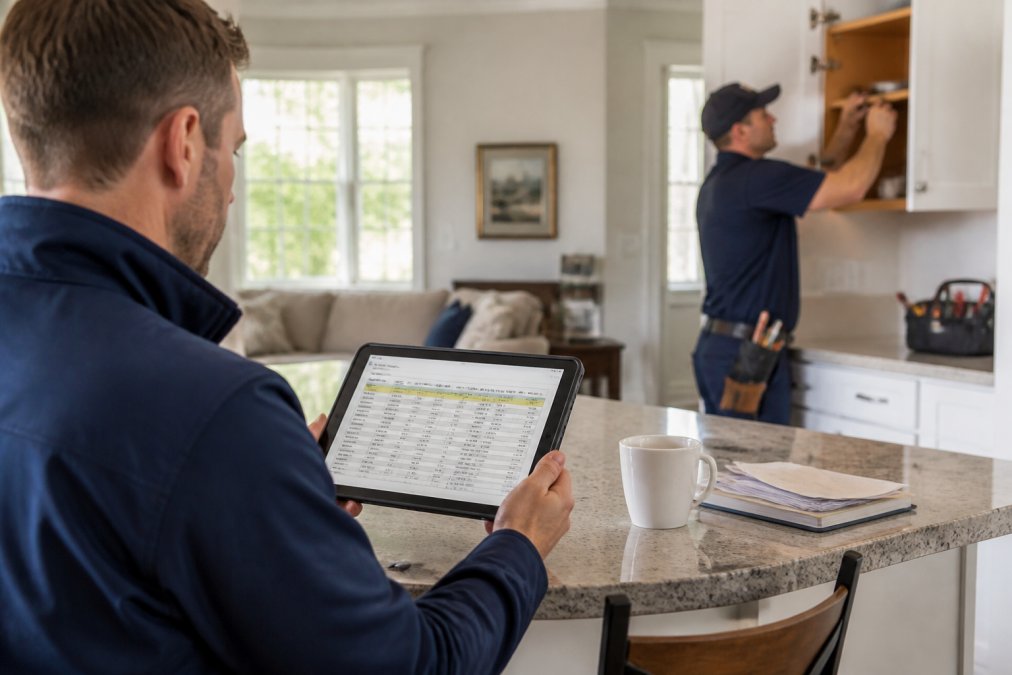
The honest cost comparison depends on volume. Hourly billing wins on a single small job; flat-rate membership wins once you book several visits a year.
| Scenario | Hourly Model | Membership Model |
|---|---|---|
| 1 small repair per year | Lowest total cost | Membership fee likely exceeds value |
| 3-4 visits per year | Service call fees add up | Comparable, with better scheduling |
| 5+ visits or seasonal upkeep | Highest total cost | Flat-rate pricing usually wins |
| Emergency repairs | Premium rates, long waits | Priority scheduling, defined rates |
How to Run the Math on Your Own Home
The useful version is a five-line worksheet:
- Count last year's visits. Tally every handyman, plumber, electrician, and HVAC call from bank and card statements. Most households underestimate by one or two visits.
- Add the service call fees separately. A $75 trip charge on four visits is $300 that never shows up in the hourly rate.
- Estimate hours per visit. A first-hour minimum means a 25-minute task still bills a full hour. Round up, not down.
- Add emergency premiums. After-hours, weekend, and holiday calls commonly run 1.5x to 2x the standard rate.
- Compare against the annual membership cost. Divide the membership's annual fee by the number of visits you actually used. That's your effective per-visit cost as a member.
The Break-Even Point
The break-even is usually between three and five visits per year, depending on your local hourly rate and how many visits carry a separate trip charge. Below three, hourly almost always wins. Above five, the retainer is usually cheaper. In the middle, it comes down to whether you value priority scheduling and documented service history enough to pay a small premium.
Where the Comparison Gets Misleading
Two traps show up in most comparisons:
- Comparing a membership's annual fee to a single repair. The real comparison is the annual fee versus your total annual spend across every visit, fee, and premium.
- Ignoring the cost of your own time. Scheduling, waiting on a window, chasing a no-show, and re-explaining the same issue to a new contractor is real overhead. A membership collapses that into one relationship.
The number that matters isn't the sticker price of either model. It's your total annual outlay plus the hours you spend managing it.
Long-Term ROI: How Proactive Care Saves You Money
Proactive maintenance pays back through avoided emergency repairs, that's the whole case for a membership. A slow drip under a sink is a cheap fix. Left for a year, it rots the cabinet, warps the floor, and invites mold.
The Three Buckets of ROI
The ROI math has three parts:
- Avoided emergency premiums. Emergency repairs cost more than scheduled ones because you pay for urgency, after-hours labor, and available parts, commonly 1.5x to 2x the standard rate on the same job.
- Extended equipment life. Seasonal tune-ups on HVAC, water heaters, and sump pumps keep systems running to their expected lifespan instead of failing early.
- Preserved home equity. Deferred maintenance shows up at inspection and in your sale price. A documented maintenance history is a negotiating asset.
A Five-Year Model You Can Actually Run
Walk through the same home twice, once on hourly, once on a membership, and count the events that differ.
The Systems Where Prevention Pays Most
Not every system rewards a tune-up equally. The clearest paybacks:
- HVAC. Filters, coils, and refrigerant checks. A neglected system runs longer, costs more to operate, and fails earlier.
- Water heater. Anode rod and sediment flush. Skipping these is the most common path to a mid-winter failure and a flooded utility room.
- Sump pump. A pre-season test is cheap. A failed pump during a storm is not.
- Exterior caulking and grading. Small water intrusion fixes prevent rot, mold, and foundation issues that are expensive to reverse.
- Gutters and drainage. Clogged gutters push water into fascia, soffits, and foundations.
What the Model Doesn't Capture
The ROI case is real, but not guaranteed. Two caveats:
- A newer home with few systems may not pay back. If you bought recently and everything is under warranty, hourly billing is often the better financial call for the first few years.
- The ROI depends on actually using the tune-ups. A membership you never schedule is just a retainer. The value comes from the visits, not the contract.
Contractual Exit Clauses: What to Know Before You Sign
What to check in any service agreement:
- Notice period. How many days' notice does cancellation require?
- Term length. Monthly rolling, annual contract, or multi-year?
- Refund policy. Do you get a pro-rated refund on unused months?
- Automatic renewal. Does the contract renew itself unless you opt out?
- Early termination fee. Is there a penalty for leaving before the term ends?
- Scope of work limitations. What's explicitly excluded from the membership?
If a provider won't put the exit terms in writing, that's your answer. Transparent providers publish them.
DIY vs Professional Trade-Off: When to Call a Pro
DIY makes sense for cosmetic, low-risk, reversible tasks. Call a pro for anything involving water, gas, electricity, or structural load. The trade-off isn't skill versus cost, it's risk versus savings.
Do it yourself when:
- The task is cosmetic and reversible (patching, painting, caulking, hanging)
- A mistake costs you time, not safety or thousands in damage
- You already own the tools and know the technique
Call a professional when:
- Water or gas lines are involved, where a small error causes major damage
- Electrical work needs a permit or inspection
- The job affects structural integrity or your home's major systems
- You're not confident, because a botched repair costs more than the original job
Conclusion: Choosing the Right Model for Your Home
The right model depends on your home, not on which option sounds cheaper. A newer, low-maintenance property with one or two annual fixes is well served by hourly billing. An older home, a second property, or a packed calendar points toward a membership.
See Plans.
Frequently Asked Questions
What is the average hourly rate for a handyman in New Jersey?
Handyman hourly rates in New Jersey typically range from $50 to $125 per hour, depending on the pro's experience and the job's complexity. Some services charge a first-hour minimum or trip charge. For example, Hourly Husbands starts at $145 for the first hour, which includes mobilization. Always confirm the rate and any additional fees before booking.
What are the primary benefits of a home maintenance subscription?
A home maintenance subscription offers predictable flat-rate pricing, priority scheduling, and proactive seasonal tune-ups that prevent small issues from becoming costly repairs. Members often get discounted labor rates and a dedicated team that knows their home. This eliminates the hassle of finding and vetting multiple contractors, saving time and reducing stress.
How do hourly handyman rates compare to flat-rate subscription fees?
Hourly rates fluctuate based on job duration and can add up quickly for multiple tasks. Flat-rate subscriptions bundle services into a predictable monthly or annual fee, often including routine maintenance. While the upfront cost may seem higher, subscriptions can be more cost-effective for homeowners who need regular upkeep and value convenience.
Is a handyman subscription cost-effective for small home repairs?
It depends on your home's needs. If you have a long to-do list or older systems, a subscription's proactive maintenance can prevent expensive emergency repairs. For occasional small fixes, hourly might be cheaper. Evaluate your annual repair frequency and the value you place on priority service and accountability.