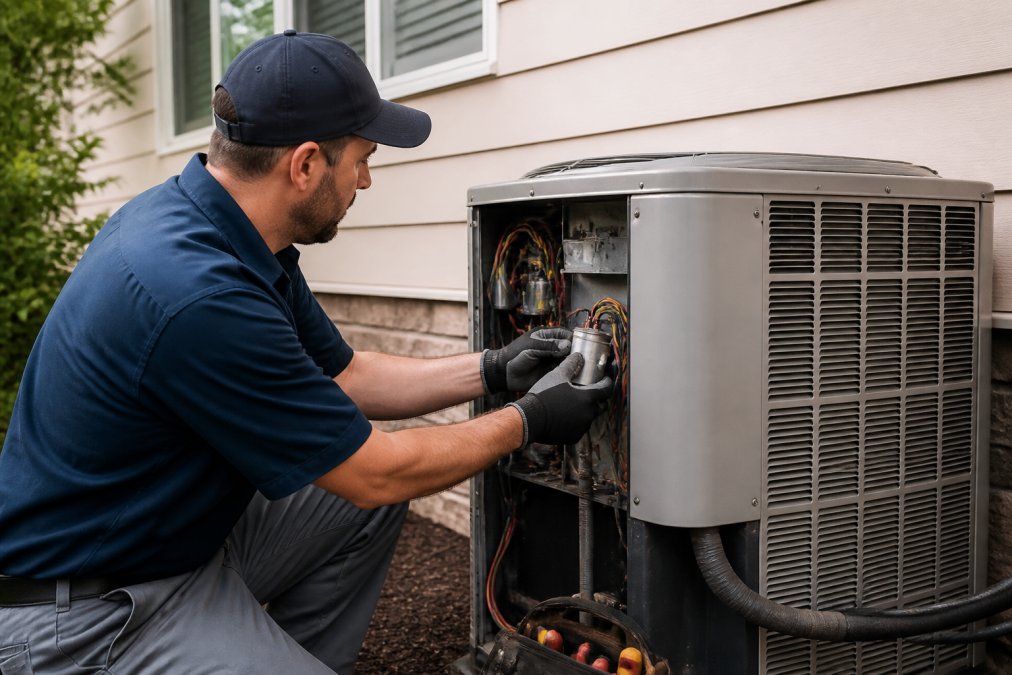
 comparison
Emergency vs Proactive Repair Costs: 2026 Homeowner Guide
Table of Contents
- Emergency vs Proactive Repair Costs: The Real Numbers
- Why Emergency Service Premiums Hit So Hard
- The Hidden Costs of Reactive Home Repairs
- Your Preventive Home Maintenance Checklist to Avoid Surprise Bills
- The True Cost of Deferred Home Maintenance
- Benefits of Home Maintenance Memberships for Busy Owners
- How to Calculate Your ROI on Planned Maintenance
- Conclusion: Making the Shift to Proactive Care
- Frequently Asked Questions
Last Updated: September 13, 2026
Emergency vs Proactive Repair Costs: The Real Numbers
Emergency vs proactive repair costs usually breaks one way: reactive repairs cost more, often by a wide margin. At Lone Eagle Home Services, we see this across Morris County every season. Here's where the money goes, and how to build a maintenance plan that pays for itself.
Why Emergency Service Premiums Hit So Hard
Emergency rates exist because you're buying availability, not just labor. When a pipe bursts at 11 p.m. or a water heater fails on a holiday weekend, you're paying for a technician to drop everything, drive out after hours, and source parts when suppliers are closed. That premium stacks on top of the repair itself.
A few structural reasons emergency calls cost more:
- After-hours labor multipliers. Most service companies charge a higher hourly rate outside standard business hours, and many add a flat trip charge on top.
- Limited vendor choice. When you need someone now, you take whoever answers. You lose the ability to compare quotes or wait for a better price.
- Rushed diagnostics. A technician under time pressure may replace a part rather than trace the root cause, which means the same failure can return.
- Secondary damage. A slow leak that becomes a burst pipe doesn't just cost a plumber's visit. It can mean drywall, flooring, and mold remediation.
The premium isn't the whole story. It's the multiplier effect that makes reactive repairs so expensive.
The Hidden Costs of Reactive Home Repairs
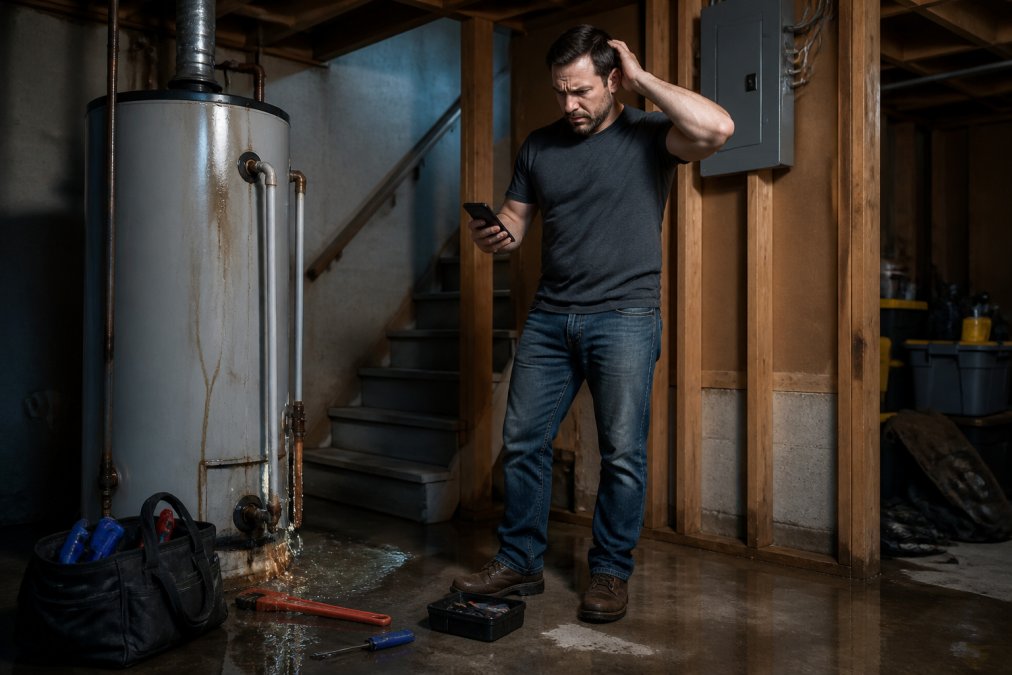
The invoice is only the visible cost. Reactive repairs carry a second layer of expenses that rarely show up on a single bill: time, stress, and the administrative burden of managing a crisis.
Operational Downtime and Lost Productivity
When a system fails, your home stops working. No heat means a hotel night or a space heater running overtime; a failed sump pump means a flooded basement and a day of cleanup. For homeowners who travel or work long hours, that's lost time plus the mental load of coordinating contractors on short notice.
The productivity loss is measurable even when it isn't billed. A single emergency typically consumes a full day: the call, the wait window, the diagnosis, the approval decision, the repair, and the follow-up. Two or three a year costs you a week of focus a scheduled tune-up would have caught.
The Administrative Burden Nobody Prices In
Emergency repairs come with a hidden clerical tax. You become the project manager for a problem you didn't plan for:
- Coordinating trades. A burst pipe can pull in a plumber, a restoration crew, a drywaller, and an insurance adjuster, each needing scheduling, access, and follow-up.
- Insurance paperwork. Filing a claim, documenting damage, and chasing reimbursement is hours of unpaid work.
- Decision fatigue. Every emergency forces fast choices under pressure, repair or replace, this vendor or that one, now or wait, with no time to research.
None of this appears on an invoice. All of it costs you.
The Psychological and Stress Cost
This is the cost competitors rarely address, and the one homeowners feel most. An emergency repair isn't just expensive; it's destabilizing, it arrives without warning and forces you to accept whatever price and timeline you're offered.
The stress compounds in predictable ways:
- Anticipatory anxiety. Once a system has failed once, you start waiting for the next failure. Every cold snap or heavy rain becomes a source of worry.
- Loss of control. You're reacting to a problem on someone else's schedule, not yours.
- Trust erosion. Rushed diagnostics and pressured decisions make it harder to know whether you got a fair price or the right fix.
A proactive plan doesn't just reduce bills. It removes the waiting-for-the-other-shoe-to-drop feeling that comes with aging systems, a real return, even though it never shows up in a spreadsheet.
Secondary Damage: The Multiplier
A slow leak that becomes a burst pipe can mean drywall, flooring, and mold remediation. A furnace that short-cycles can crack a heat exchanger, turning a repair into a safety issue and a full replacement (energy.gov). The longer a problem waits, the larger the final bill.
Your Preventive Home Maintenance Checklist to Avoid Surprise Bills
A preventive home maintenance checklist is a scheduled set of inspections and tune-ups that catch problems before they become failures. The goal isn't to fix everything at once; it's to keep major systems on a predictable rhythm.
Here's a practical seasonal checklist to work from:
- Fall: HVAC tune-up, gutter cleaning, roof and flashing inspection, weatherstripping check, water heater flush
- Winter: Pipe insulation check, furnace filter replacement, snow and ice dam watch, sump pump test
- Spring: AC tune-up, exterior caulking, deck and fence inspection, drainage and grading check
- Summer: Irrigation and hose bib check, attic ventilation inspection, exterior paint touch-ups, smoke and CO detector test
Most of these tasks take under an hour. Done consistently, they keep your systems inside their designed operating range, where they last longest and cost least.
The True Cost of Deferred Home Maintenance
Deferred maintenance, postponing repairs or upkeep, is the quiet driver behind most emergency spending. A task you skip this year doesn't disappear; it compounds. A $150 gutter cleaning pushed off can lead to fascia rot, soffit damage, and water intrusion into the walls (extension.psu.edu).
The pattern is predictable:
| What Gets Deferred | Short-Term Saving | Likely Long-Term Cost |
|---|---|---|
| Gutter cleaning | One afternoon | Fascia rot, water intrusion, foundation issues |
| HVAC tune-up | One service visit | Compressor or heat exchanger failure, full replacement |
| Caulking and sealing | A tube of sealant | Rot, pest entry, higher energy bills |
| Water heater flush | Under an hour | Sediment buildup, premature tank failure |
| Roof inspection | A quick look | Undetected leak, interior water damage |
Every row tells the same story: the deferred task is small, and the consequence is large.
Benefits of Home Maintenance Memberships for Busy Owners
Home maintenance memberships remove the scheduling problem that causes deferred maintenance in the first place. The core benefit isn't a discount; it's that the work actually gets done on time, by someone accountable.
For busy owners, the practical advantages stack up:
- One point of contact. Instead of juggling a plumber, an electrician, an HVAC tech, and a handyman, you have a single team coordinating all of it.
- Priority scheduling. Members get moved to the front of the queue, which matters most when something fails.
- Flat-rate pricing. You know what a job costs before it starts, which makes budgeting possible.
- Documented visits. Digital service reports after every visit give you a record of what was checked and what needs attention.
- Seasonal tune-ups built in. The maintenance calendar runs itself.
This is the model Lone Eagle Home Services operates on: a dedicated team handling seasonal tune-ups, on-demand repairs, and vendor coordination under flat-rate pricing. For homeowners who travel or work long hours, that makes proactive care realistic rather than aspirational.
How to Calculate Your ROI on Planned Maintenance
The formula is the easy part. What makes an ROI estimate survive a side-by-side comparison is the inputs you feed it, and those change by system. Here's a framework for each major system, plus the assumptions that make the numbers defensible.
The base formula:
ROI = (Avoided Emergency Costs + Extended Asset Life − Plan Cost) ÷ Plan Cost
Now let's make each variable concrete.
Step 1: Build a system-by-system cost baseline
List every major system and assign it three numbers: typical proactive annual cost, typical emergency replacement cost, and expected service life with and without maintenance. Use your own repair history or a local quote, never a guess.
| System | Proactive Annual Cost | Emergency Replacement Cost | Life Without Maintenance | Life With Maintenance |
|---|---|---|---|---|
| HVAC (furnace or AC) | Tune-up visit | Full system replacement | Shorter, failure-prone | Extended by several years |
| Water heater | Annual flush | Tank replacement + possible water damage | Sediment shortens tank life | Full rated lifespan |
| Roof | Inspection + minor sealing | Full or partial replacement + interior damage | Leaks go undetected | Leak caught early |
| Plumbing | Seasonal inspection | Burst-pipe repair + remediation | Slow leaks compound | Joints and shutoffs checked |
| Electrical | Panel and outlet inspection | Fault repair + possible fire damage | Overloaded circuits unnoticed | Hazards caught early |
| Sump pump | Annual test | Pump replacement + flooded basement | Fails during the storm | Fails on a test, not a flood |
Fill the dollar columns with your own local figures. The structure matters more than the exact numbers.
Step 2: Estimate failure probability honestly
The hardest input is the odds of failure. Two anchors:
- Age relative to expected service life. A system past 75% of its rated life is in the high-risk band (energy.gov). A system under 50% is low-risk. This is the single most useful rule of thumb.
- Service history. A system that has had two or more repairs in the past 24 months is trending toward replacement regardless of age.
You don't need actuarial precision, just a defensible range. "This water heater is 11 years old against a 10-to-12-year expected life, so I'll assume a meaningful chance of failure this year" beats "it might break."
Step 3: Quantify avoided emergency costs
Avoided emergency costs are not just the repair invoice. They include:
- The after-hours premium, the multiplier you pay for a night, weekend, or holiday call.
- Secondary damage, water, mold, drywall, flooring, or electrical damage that follows a failure.
- Emergency replacement vs. planned replacement, a system replaced under duress is often replaced at a higher cost and with less choice of equipment.
- Disruption costs, hotel nights, lost work time, and the administrative burden of coordinating emergency vendors.
A useful shortcut: for any system where a failure causes water or fire damage, assume the emergency cost is a multiple of the repair itself, not the repair alone.
Step 4: Add the extended-life value
When a system lasts several years longer because it was maintained, you defer a full replacement. Spread that deferred replacement across the extra years and you get an annualized benefit, often the largest line in the ROI calculation and the one most homeowners overlook.
Step 5: Compare against a fixed plan cost
The plan cost is known; the emergency cost is not. That asymmetry is the real argument. Compare a predictable annual figure against an unpredictable emergency figure and the proactive side usually wins on certainty alone, even before you count the avoided damage.
A worked example (structure, not a quote)
Suppose a homeowner pays a fixed annual plan fee covering tune-ups and priority scheduling. Over 12 months they avoid one after-hours HVAC call, one water-heater emergency, and one roof leak that would have gone undetected, plus the deferred replacement of one system extended by three years. Subtract the plan fee, divide by the plan fee, and you have the ROI. The precise percentage isn't the point, every avoided emergency is a cost that never appears on a bill, which is exactly why reactive spending feels cheaper than it is.
Conclusion: Making the Shift to Proactive Care
The shift from reactive to proactive care is a scheduling decision more than a spending one. Homeowners who avoid emergency bills aren't luckier; they've moved maintenance onto a calendar and handed the coordination to someone accountable.
That's what Lone Eagle Home Services is built to do. Membership includes proactive seasonal tune-ups, priority scheduling with member-exclusive labor rates, flat-rate pricing, and a single trusted team handling every repair and vendor relationship. Every visit ends with a digital service report, so you always know the state of your home.
See Plans and find out what proactive care looks like for your property.
Frequently Asked Questions
How much more expensive are emergency repairs compared to scheduled maintenance?
Emergency repairs often cost more than the same work scheduled in advance. The premium comes from after-hours rates, rushed shipping on parts, and the need to accept whatever contractor is available. A proactive repair costs what it costs. An emergency version of that same repair adds urgency markups, overtime labor, and often collateral damage from the delay.
What is the most cost-effective type of maintenance for a home?
Planned preventive maintenance is the most cost-effective approach for any home. It focuses on routine tasks like seasonal HVAC tune-ups, gutter clearing, and water leak checks that catch small issues before they become expensive failures. Pairing a preventive home maintenance checklist with a membership service keeps those tasks on schedule so you are not relying on memory or luck.
Is a home maintenance membership worth it for a newer house?
Yes, even newer homes benefit from proactive care. Builder-grade systems still wear out, and small issues like a slow drain or a failing seal can go unnoticed until they cause damage. A membership provides scheduled tune-ups and a single point of contact, which is especially useful if you travel or have a busy schedule. The cost of one avoided emergency often covers a full year of membership.
What happens if I skip seasonal maintenance for a year or two?
Skipping seasonal maintenance accelerates the cost of deferred home maintenance. Small problems compound: a clogged gutter leads to roof damage, a worn HVAC filter strains the compressor, and a tiny leak rots framing. By the time you notice, the repair bill can be several times what the original tune-up would have cost. Deferred maintenance also shortens the lifespan of major systems.
Emergency repairs will always cost more than planned ones; the only variable is how many you have to make. Lone Eagle Home Services gives Morris County homeowners a membership-based way to keep that number low, with seasonal tune-ups, flat-rate pricing, one trusted team, and documented service reports after every visit. Get started with Lone Eagle Home Services and replace surprise repair bills with a maintenance plan you can actually budget for.