 ultimate-guide
Cost of Annual Home Maintenance in NJ: 2026 Guide
Table of Contents
- The 1% Rule and Square Footage Budgeting for Annual Home Maintenance in NJ
- Major Systems Replacement Costs and Age-of-Home Tiered Budgeting
- How to Detect Hidden Water Leaks in Walls
- Home Maintenance Checklist for Homeowners: Seasonal and Annual Tasks
- Benefits of Professional Home Maintenance Memberships
- Local Contractor Cost Benchmarks and Emergency Repair Funds
- Frequently Asked Questions
Last Updated: September 18, 2026
The 1% Rule and Square Footage Budgeting for Annual Home Maintenance in NJ
The cost of annual home maintenance in NJ starts with a simple benchmark: set aside roughly 1% of your home's value each year for upkeep. A $700,000 Morris County colonial, then, implies about $7,000 annually, though age and climate push that number higher.
That figure is a floor, not a ceiling. The 1% rule assumes a home in reasonable condition with average systems nearing replacement. Once a roof, furnace, or water heater enters its final years, real spending climbs well past the benchmark. This guide breaks down what drives that number in northern New Jersey specifically, and how to budget for it without surprises.
Square footage offers a second lens. Larger homes carry more roof, more siding, more plumbing fixtures, and more HVAC capacity, so maintenance scales with size. A useful method: multiply heated square footage by a per-foot reserve that reflects your home's age and systems.
| Home Profile | Budgeting Method | What Drives the Number |
|---|---|---|
| Newer build, under 10 years | 1% of value | Warranty coverage, minor tune-ups |
| Mid-life, 10-25 years | 1-2% of value | Appliance lifespan, first roof wear |
| Older, 25+ years | 2%+ of value | Major systems, structural upkeep |
The U.S. Census Bureau's American Housing Survey tracks how age and condition shape homeowner spending nationally, a useful reality check against any single rule of thumb.
Major Systems Replacement Costs and Age-of-Home Tiered Budgeting
Tiered budgeting beats a flat percentage because it matches your reserve to what is actually about to fail. Group your home's systems by remaining life, then fund the nearest tier first.
- Tier 1 (0-3 years): water heater, HVAC filters, caulking, gutter seals
- Tier 2 (3-10 years): furnace, central air, appliances, deck staining
- Tier 3 (10+ years): roof replacement, siding, windows, sewer lines
Most homeowners overfund distant tiers and underfund the near ones. A common mistake is treating a fifteen-year-old water heater as a someday problem. It is a this-year problem.
Age-of-home tiering also explains why two identical houses on the same street can carry very different annual home maintenance budgets. One has replaced its major systems; the other is staring at all of them at once.
How to Detect Hidden Water Leaks in Walls
Hidden water leaks matter to a maintenance budget because they are one of the few problems that start cheap and end expensive. A slow supply-line drip behind a vanity might cost a few hundred dollars to fix if caught in a week. Left for a season, the same drip rots subfloor, feeds mold in the wall cavity, and turns into a remediation and rebuild project that can run into the thousands. That is the difference between a Tier 1 line item and a Tier 3 emergency.
How to detect hidden water leaks in walls: check your water meter with every fixture off, watch for discolored paint or bubbling, and press along baseboards for softness.
A few habits make detection reliable:
-
Read the meter before and after an eight-hour window with no water use
-
Photograph ceilings and cabinet interiors after heavy rain
-
Note any paint that blisters or peels without an obvious cause
-
Listen for running water when nothing is on
-
Freeze-thaw cycles. Supply lines in exterior walls, unheated crawlspaces, and garage ceilings are the first to split when temperatures swing below freezing overnight and back above it during the day. A pinhole that opens in January often does not show as a stain until the spring thaw.
-
High summer humidity. In a damp basement or a first-floor slab, condensation on cold-water pipes mimics a leak and can hide a real one. A musty smell in July is a signal, not a nuisance.
-
Older galvanized and polybutylene plumbing. Homes built before the mid-1980s are more likely to have supply lines that fail from the inside out, which means the leak starts long before the wall shows it.
Small leaks left alone rot framing and feed mold, which turns a plumbing fix into a remediation project. Seasonal inspection catches most of them before that point, and the cost of catching them early is a fraction of the cost of catching them late.
Home Maintenance Checklist for Homeowners: Seasonal and Annual Tasks
A home maintenance checklist for homeowners should split tasks by season, because northern New Jersey weather dictates what matters when. Spring and fall carry the heaviest load; summer and winter are lighter.
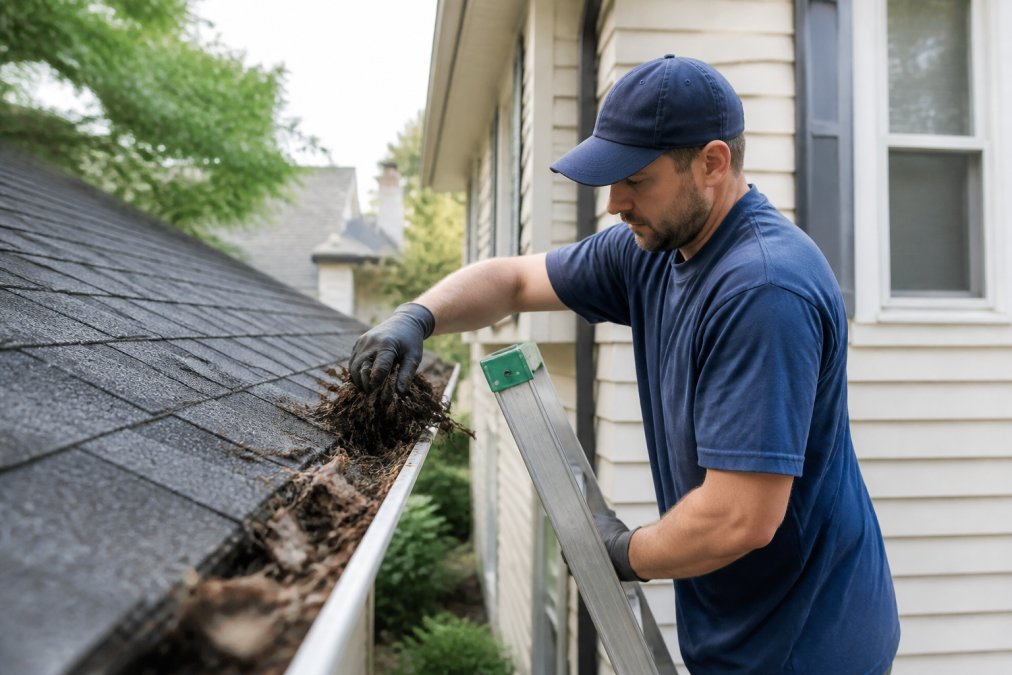
- Spring: clean gutters, inspect roof for winter damage, service the AC
- Summer: check deck and siding, test sump pump, seal exterior gaps
- Fall: clear gutters again, service the furnace, drain outdoor lines
- Winter: watch for ice dams, check for drafts, test smoke and CO detectors
Benefits of Professional Home Maintenance Memberships
Professional home maintenance memberships trade a predictable monthly fee for proactive care and a single point of contact. For busy Morris County homeowners, that trade usually pays for itself in avoided emergencies.
Local Contractor Cost Benchmarks and Emergency Repair Funds
Local contractor cost benchmarks vary by trade and season, so treat any single number as a starting point, not a quote. Labor rates in Morris County run higher than national averages, and emergency calls cost more than scheduled work. The practical move is to build an emergency repair fund alongside your maintenance reserve, then size it against what local trades actually charge.
| Trade | Typical Scheduled Visit | What Moves the Price |
|---|---|---|
| HVAC technician | Tune-up and filter service | System age, refrigerant type, number of zones |
| Plumber | Water heater flush or fixture repair | Access, shutoff condition, permit needs |
| Electrician | Outlet, GFCI, or panel inspection | Panel age, code upgrades, permit needs |
| Roofer | Inspection and minor flashing repair | Pitch, height, number of layers, chimney |
| Gutter and drainage | Clean-out and reseal | Linear feet, tree cover, downspout routing |
| Handyman or generalist | Multi-task punch list | Scope, materials, whether a permit is required |
Three pricing mechanics matter more than the headline rate:
- Emergency vs. scheduled. After-hours and weekend calls carry a premium over the same work booked in advance. A burst pipe at 2 a.m. is not priced like a Tuesday morning appointment.
- Seasonal demand. HVAC calls spike in the first heat wave and the first cold snap. Roof and gutter work compresses into the weeks after leaf drop. Booking in the shoulder season is usually cheaper and easier to schedule.
- Permits and code. Work that triggers a municipal inspection adds both the permit fee and the time to schedule it. Panel upgrades, water heater replacements, and roof tear-offs are the common triggers.
| Fund | Purpose | Target Size |
|---|---|---|
| Maintenance reserve | Routine and seasonal upkeep | 1-2% of home value |
| Emergency fund | Sudden system failure | One major system replacement, or three months of maintenance spending, whichever is higher |
Frequently Asked Questions
How much should I budget for yearly home maintenance?
A common guideline is the 1% rule: budget 1% of your home's purchase price annually for maintenance. For a $600,000 home, that's $6,000 per year. However, this varies with home age, size, and local climate. In areas with cold winters and hot summers, costs can run higher due to HVAC strain and freeze-thaw cycles. Creating a dedicated savings account for home maintenance helps you avoid dipping into emergency funds for routine upkeep.
What is the 1% rule for home maintenance?
The 1% rule suggests setting aside 1% of your home's value each year for maintenance and repairs. It's a starting point, not a hard rule. Homes older than 20 years often need 1.5% to 2%, while new homes may need less. High-cost regions may require more due to contractor labor rates. Use the rule to set a baseline, then adjust based on your home's specific systems and condition.
Does a home maintenance membership save money in the long run?
Memberships can reduce costs by preventing small issues from becoming major repairs. For example, regular HVAC tune-ups improve efficiency and extend equipment life, while early leak detection avoids structural damage. Many memberships offer priority scheduling and member-exclusive labor rates, which can lower emergency repair bills. The savings depend on how well you follow the maintenance schedule and your home's age and condition.
What specific home maintenance tasks are essential for New Jersey climates?
In New Jersey, prioritize gutter cleaning in fall to prevent ice dams, HVAC servicing before summer and winter, and roof inspections after storms. Freeze-thaw cycles can crack driveways and foundations, so seal cracks promptly. Humid summers make dehumidification important to prevent mold. Also, check for leaks after heavy rain and insulate pipes to avoid winter bursts. These tasks address the region's specific weather challenges.
Managing annual home maintenance in NJ is less about any single rule and more about matching your budget to your home's age, systems, and climate. Lone Eagle Home Services handles that coordination for Morris County homeowners through membership-based care, flat-rate pricing, proactive seasonal tune-ups, and digital service reports after every visit. See Plans and let one trusted team carry the maintenance schedule so small problems never become expensive ones.