 ultimate-guide
How to Keep Home in Shape: A Pro Maintenance Plan
Table of Contents
- Why Proactive Care Keeps Your Home in Shape
- Preventative Home Maintenance Benefits That Protect Your Investment
- Your Seasonal Home Maintenance Checklist for Every Season
- How to Detect Hidden Water Leaks in Walls Before They Spread
- Building a Year-Round Maintenance Schedule That Sticks
- Smart Home Automation and Eco-Friendly Upgrades for Modern Maintenance
- Budgeting for Home Repairs and Long-Term Capital Planning
- Conclusion: Take the First Step Toward a Well-Maintained Home
- Frequently Asked Questions
Last Updated: September 15, 2026
Why Proactive Care Keeps Your Home in Shape
Learning how to keep home in shape is less about weekend heroics and more about a repeatable system. At Lone Eagle Home Services, we know that approach always costs more.
Homes age the way cars do. Skip the oil change and the engine eventually tells you about it, loudly and expensively. A proactive maintenance plan is the oil change. It's a recurring set of inspections and tune-ups that catch small failures while they're still small.
The core argument here is simple: the plan matters more than the individual task. Anyone can clean a gutter. Fewer homeowners run a schedule that catches a failing water heater before it floods a basement.
Below, we'll walk through seasonal checklists, leak detection, smart-home upgrades, and how to budget for all of it without guesswork.
Preventative Home Maintenance Benefits That Protect Your Investment
Preventative home maintenance is the practice of inspecting and servicing home systems on a fixed schedule before problems surface. Its payoff is twofold: fewer emergency repairs and a stronger resale position.
A common mistake is treating maintenance as optional until something breaks. In practice, that inverts the cost curve. A slow drip under a sink is a cheap fix today and a flooring replacement later. The EPA's indoor air quality guidance makes the same point about ventilation: neglect compounds quietly.
The benefits stack up in three areas:
- Structural integrity: Small roof, siding, and foundation issues get caught before water intrusion spreads.
- Home value: A documented maintenance history reassures buyers and appraisers.
- Home health: Clean ventilation and moisture control reduce mold and air-quality problems.
Your Seasonal Home Maintenance Checklist for Every Season
A seasonal home maintenance checklist breaks the year into four focused rounds of work, so no system goes uninspected for twelve months. Here's how to structure it.
Spring
- Inspect the roof for winter damage and loose flashing
- Clean gutters and check drainage systems
- Test the HVAC system before cooling season
- Check exterior caulking and window seals
Summer
- Service the air conditioning unit and replace air filtration media
- Inspect the deck, driveway, and exterior paint
- Check for plumbing maintenance issues like slow drains
- Test smoke and carbon monoxide detectors
Fall
- Schedule furnace and boiler maintenance
- Clear gutters again after leaf drop
- Seal gaps and add insulation before cold weather
- Drain and winterize exterior faucets
Winter
- Watch for ice dams and roof leaks
- Keep exhaust hood and dryer vents clear
- Monitor indoor humidity with a furnace humidifier
- Check for frozen pipes during cold snaps
| Season | Priority System | Typical Tasks | Frequency |
|---|---|---|---|
| Spring | Roof and drainage | Gutter cleaning, roof inspection | Once |
| Summer | Cooling and exterior | AC service, deck check | Once |
| Fall | Heating and insulation | Furnace tune-up, sealing | Once |
| Winter | Plumbing and safety | Pipe checks, detector tests | Monthly |
How to Detect Hidden Water Leaks in Walls Before They Spread
The fastest way to detect a hidden water leak is to watch for the signals you can see and smell: discolored drywall, a musty odor, warped baseboards, or a water meter that keeps ticking when nothing is running.
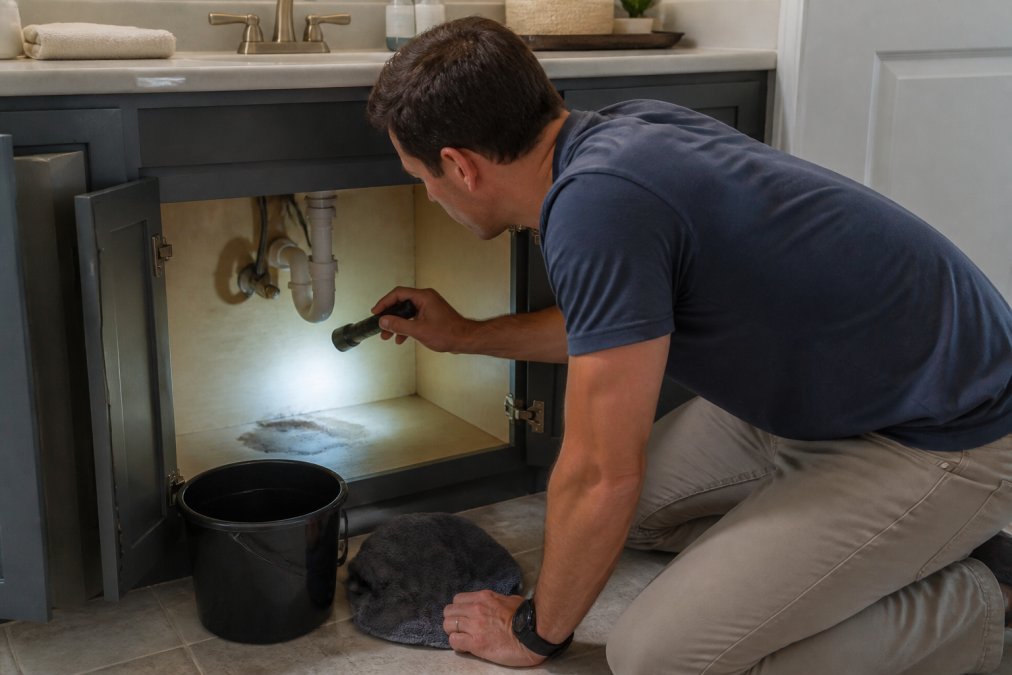
Start with the meter test. Shut off every fixture in the house, then check the water meter. If the dial still moves, water is escaping somewhere in the system.
Then work room by room:
- Look for paint that bubbles or peels for no obvious reason.
- Press a hand against walls near bathrooms and the kitchen for cool, damp patches.
- Check the ceiling below any second-floor bathroom for faint stains.
- Smell for mustiness in closets and cabinets.
- Inspect the water heater pan and supply lines for corrosion.
Left alone, a slow leak rots framing, feeds mold, and undermines structural integrity. The CDC's guidance on mold and moisture is blunt about the health consequences of unchecked damp.
Building a Year-Round Maintenance Schedule That Sticks
A maintenance schedule that sticks is one you can actually maintain, which means fewer tasks done on a predictable cadence rather than a long list you abandon by February. The trick is to anchor tasks to triggers, not willpower.
Tie each job to something you already notice. Change the HVAC filter when the utility bill arrives. Test detectors on the first of the month. Clean gutters after the last big leaf drop.
A workable structure looks like this:
- Monthly: filters, detector tests, visible leak checks
- Quarterly: HVAC inspection, exhaust hood cleaning, clutter reduction in storage areas
- Annually: professional home inspection, roof and gutter review, boiler maintenance
- Seasonally: the checklist above
What most guides miss is the documentation piece. Keep a simple log of what was done and when. It turns a vague sense of "I think I handled that" into a real maintenance history.
Smart Home Automation and Eco-Friendly Upgrades for Modern Maintenance
Smart home automation turns maintenance from a memory test into an alert system. The value isn't the gadget itself; it's the early warning. A leak sensor that pings your phone the moment moisture appears under a sink catches a problem while it's still a towel-and-wrench fix instead of a flooring replacement.
Here's how the main categories actually work, and what to weigh before buying.
Water leak detection. Battery-powered sensors sit under sinks, behind washing machines, and near the water heater. They detect moisture on their contacts and send a push notification. A step up is a whole-home shutoff valve that installs on the main supply line: when a paired sensor trips, the valve closes automatically. The trade-off is cost and installation, a shutoff valve typically requires a plumber and a power source near the main line, while standalone sensors are a screwdriver-and-battery job.
HVAC monitoring. A smart thermostat learns your schedule and adjusts runtime, which cuts energy use and reduces wear on the compressor. Some systems also track filter life and runtime hours, so you get a reminder before airflow drops. The catch: not every HVAC system is compatible, and older units with two-wire wiring may need a common wire run.
Moisture and humidity control. Smart hygrometers in basements and crawl spaces alert you when relative humidity climbs into the range where mold thrives, generally above 60 percent. Pair one with a smart dehumidifier and it runs only when needed, which saves energy over a unit that runs continuously.
Fire and CO safety. Connected smoke and carbon monoxide detectors announce which unit triggered, not just that one did, and they push alerts to your phone when you're away. Interconnected hardwired models are the most reliable; battery-only smart models are easier to retrofit but depend on you replacing batteries.
Eco-friendly maintenance overlaps heavily with this. Sealing air leaks, upgrading insulation, and maintaining ventilation reduce both energy use and wear on your home systems. The DOE's home energy efficiency resources outlines which upgrades tend to pay back fastest. On the cleaning side, switching to non-toxic agents, vinegar, baking soda, and plant-based surfactants, keeps indoor air cleaner and avoids the residue that harsh chemicals leave on surfaces you touch daily.
Where automation helps most:
- Water leak detection on supply lines and under sinks
- HVAC runtime monitoring and filter reminders
- Moisture control in basements and crawl spaces
- Fire safety alerts tied to your phone
Budgeting for Home Repairs and Long-Term Capital Planning
A repair budget works best when it's split into two buckets: routine upkeep and long-term capital planning. Routine upkeep covers filters, minor fixes, and seasonal service. CapEx planning covers the big-ticket replacements you know are coming. Most guides stop at the first bucket. The second is where the real money lives.
The mistake is lumping them together. When a furnace dies and you've only budgeted for filters, the emergency feels like bad luck. It wasn't. Furnaces have a service life, and a CapEx plan anticipates it.
How to size the reserve. A common rule of thumb is to set aside 1 to 2 percent of your home's value each year for maintenance and repairs, with a separate line for capital replacements.
Build the plan around a simple timeline:
Conclusion: Take the First Step Toward a Well-Maintained Home
Frequently Asked Questions
What is the most important home maintenance task?
No single task covers everything, but water management tops the list. Check for leaks, clear gutters, and maintain drainage to prevent costly water damage. Seasonal home maintenance checklists that include roof, plumbing, and HVAC inspections are the most effective way to keep your home in shape and avoid emergency repairs.
How often should you perform seasonal home maintenance?
Aim for a deep maintenance review each season. Spring and fall are critical for HVAC tune-ups, gutter cleaning, and weatherproofing. Summer and winter call for targeted checks like air conditioning performance and heating system efficiency. Spreading tasks across the year prevents burnout and keeps small issues from becoming expensive problems.
What are the signs that a house needs major maintenance?
Watch for persistent musty odors, unexplained spikes in utility bills, cracks in walls or foundations, sagging floors, and water stains on ceilings or walls. These often signal hidden moisture, structural issues, or failing systems. Addressing them early through routine inspection and preventative repairs can save thousands compared to reactive fixes.
Does regular home maintenance increase property value?
Consistent upkeep protects your home's value by preserving its condition and preventing deferred maintenance. A well-maintained home appraises higher and sells faster. Preventative home maintenance benefits also include better energy efficiency, improved indoor air quality, and fewer surprise repair bills, all of which appeal to buyers.