 how-to
How to Spot Foundation Cracks Early: A Homeowner's Guide
Table of Contents
- How to Spot Foundation Cracks Early: An Inspection Routine That Works
- Types of Foundation Cracks: What Direction and Pattern Tell You
- Foundation Crack Width: The Thresholds That Matter
- How to Monitor Foundation Cracks Over Time
- When to Worry About Foundation Cracks
- Seasonal and Environmental Influences on Foundation Movement
- Frequently Asked Questions
Last Updated: October 14, 2026
How to Spot Foundation Cracks Early: An Inspection Routine That Works
Foundation cracks are openings in a concrete or masonry foundation wall that can range from harmless surface lines to signs of active structural movement. Knowing how to spot foundation cracks early is the difference between a cheap fix and a five-figure repair. This guide from Lone Eagle Home Services walks you through a repeatable inspection routine you can run in about 30 minutes.
Here's the core idea most guides skip: a crack's direction, width, and rate of change matter far more than the crack itself. A hairline crack that never moves is usually cosmetic. A narrow crack that widens a little each season is a warning.
Below, we'll show you exactly how to inspect, measure, photograph, and track cracks, plus when to call a professional.
What You'll Need Before You Start
Gather these tools before you head to the basement:
- A bright flashlight or headlamp
- A small ruler or a crack-width gauge
- A camera or your phone
- Painter's tape and a marker
- A notebook or notes app
- A level (a 2-foot one works fine)
Set aside 30 minutes. Do the inspection in daylight if you can, and check both the interior and exterior of the foundation in the same session. Comparing the two is one of the most useful habits you can build.
Types of Foundation Cracks: What Direction and Pattern Tell You
Direction tells you where the force is coming from. Pattern tells you how the foundation is responding.
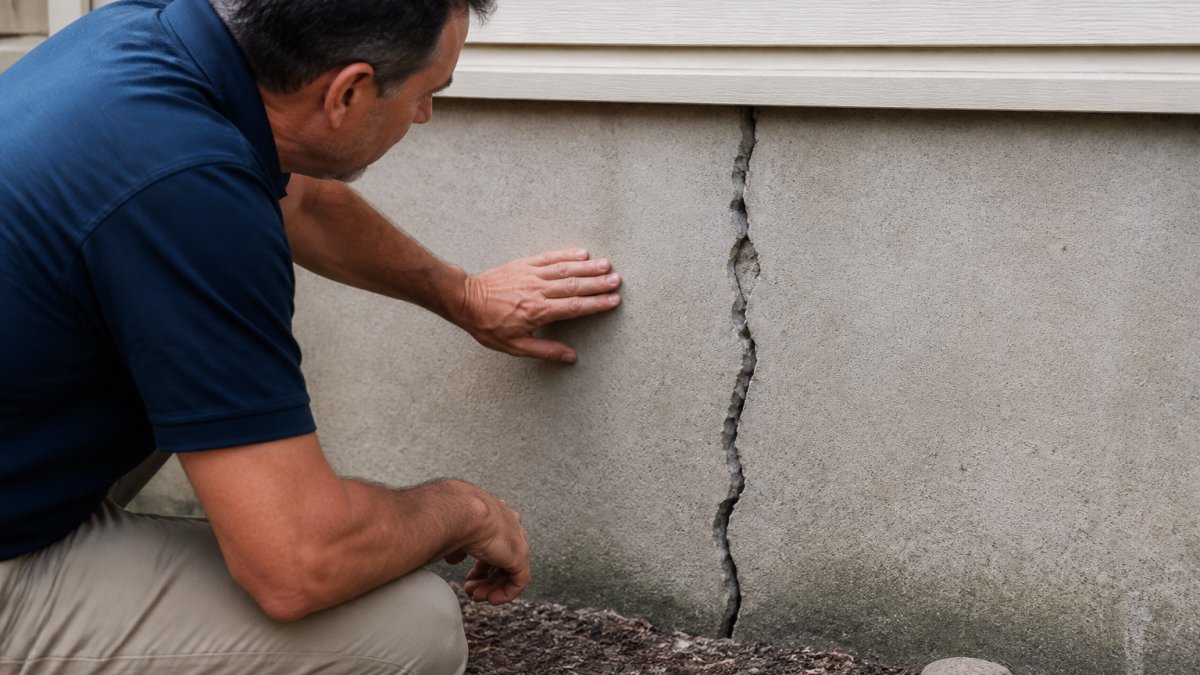
Vertical cracks run straight up and down a foundation wall. Most are shrinkage cracks that form as concrete cures and loses moisture, and many are non-structural.
Horizontal cracks run side to side. These deserve the most attention because they often mean hydrostatic pressure from wet soil is pushing inward against the wall.
Diagonal cracks move at an angle, often starting near a corner and running toward the middle of a wall.
Stair-step cracks follow the mortar joints in masonry or block walls, stepping up or down like a staircase.
Map cracking is a web of fine, interconnected cracks with no dominant direction, usually on a slab or a wall surface.
Hairline cracks are thinner than a credit card and often cosmetic. Cracks wider than 1/4 inch are likely structural.
Reading Displacement, Not Just Direction
A crack can be narrow and still be serious if the two sides have shifted out of plane. Run your hand across the crack. If one side sits proud of the other, that's displacement, and it points to movement rather than simple shrinkage. A level held against the wall can confirm bowing. Displacement plus a horizontal or stair-step pattern is the combination that most often pushes a crack from "monitor" to "evaluate."
What Pattern Alone Can't Tell You
Pattern is a strong clue, not a diagnosis. A vertical crack can still be active, and a diagonal crack can be old and stable. That's why the next two sections matter: width gives you a severity threshold, and tracking over time tells you whether the crack is still moving. Direction and pattern tell you what probably caused it. Measurement and monitoring tell you whether it's still happening.
Foundation Crack Width: The Thresholds That Matter
Crack width is the single easiest thing to measure, and it's one of the clearest severity signals. Use a ruler or crack-width gauge and record the number.
| Crack Width | Typical Reading | Action |
|---|---|---|
| Hairline (under 1/16 inch) | Often cosmetic or shrinkage | Monitor at each season change |
| 1/16 to 1/8 inch | Common, usually non-structural | Measure and track growth |
| 1/8 to 1/4 inch | Worth a professional look | Get an evaluation |
| Over 1/4 inch | Likely structural | Call a professional promptly |
A hairline crack is thinner than a credit card. A crack at or above one-eighth inch is wide enough to let water in, which raises the risk of water intrusion and moisture damage. Once a crack reaches one-quarter inch, treat it as a structural concern.
Measure at the widest point, and measure the same spot every time so your numbers are comparable.
How to Monitor Foundation Cracks Over Time
Monitoring is where most homeowners fall short. A single measurement is a snapshot; a series of measurements is a diagnosis. The goal is to answer one question: is this crack growing?
A Room-by-Room Inspection Routine
Run this in the same order every time so you don't skip anything. Set aside about 30 minutes.
Basement or crawl space
- Start at one corner and work clockwise around the perimeter.
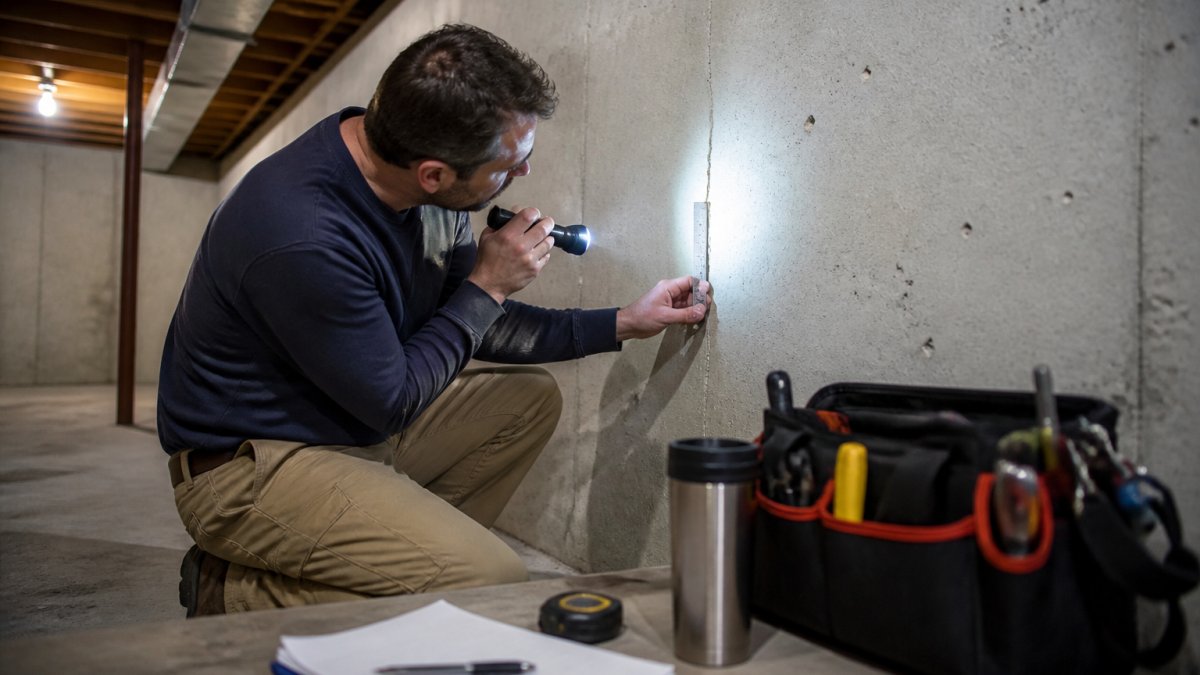
- Scan the top third, middle third, and bottom third of each wall with a flashlight held at a low angle, raking light makes hairline cracks visible.
- Check the floor slab for cracks, and note whether any slab crack lines up with a wall crack.
- Look at the base of each wall where it meets the floor, and at the top where it meets the sill plate.
- Check any interior piers, posts, or steel columns for cracks or movement at their base.
Main living level
- Open and close every exterior door and window. Note any that stick, drag, or no longer latch.
- Look at the corners of door and window frames for new gaps or cracks in the drywall.
- Walk the floors and note any slope, bounce, or squeak that's new.
- Check where interior walls meet the ceiling and floor for new separation.
Exterior
- Walk the perimeter and look at the foundation wall above grade.
- Check the joint where the foundation meets the siding or brick veneer.
- Look at the mortar joints in any brick or block, especially near corners.
- Check the grade, soil should slope away from the foundation, not toward it.
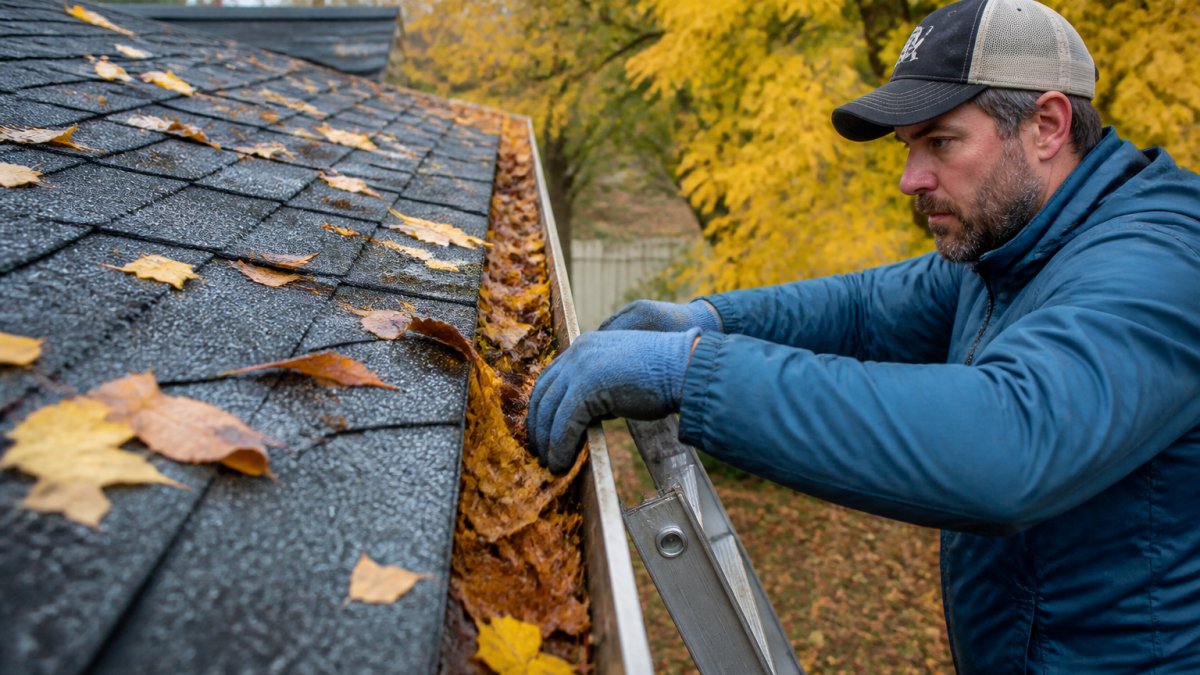
- Look at downspouts and gutters. Water discharged too close to the foundation is a common driver of movement.
How Often to Inspect
Check at the start of each season, four times a year. Add a check after any unusually heavy rain, a long dry stretch, or a hard freeze. Those are the events that move soil and open cracks. If you've already found a crack you're tracking, check it monthly until it's been stable for two full seasons.
Photo and Measurement Tracking
Follow this routine every time you check a specific crack:
- Place a ruler or tape measure next to the crack, in the same orientation every time.
- Photograph it straight-on with good light, filling the frame.
- Measure the width at the widest point.
- Note the date and the exact location.
- Compare against your last photo and number.
Tape a small piece of painter's tape beside the crack with the date written on it. This gives every photo a fixed reference point, so you can line up shots and spot crack growth or crack displacement over time.
Marking the Crack Itself
For a crack you're actively tracking, a crack monitor is the most reliable tool. These are small, inexpensive plastic gauges that bridge the crack and show movement on a graduated scale. You can also use a simple pencil line: draw a short line across the crack at a right angle, date it, and check whether the line breaks or shifts. A crack monitor or a dated pencil line removes the guesswork from "did it move?"
Keeping a Log
Keep a simple log with four columns: date, location, width, and notes. Add a photo reference number. If a crack widens between checks, that change matters more than the absolute width. A crack that goes from 1/16 inch to 1/8 inch over six months is more concerning than a stable 1/8-inch crack that hasn't moved in two years.
When to Worry About Foundation Cracks
Worry when a crack is wide, growing, or paired with other symptoms. Width alone isn't the whole story. Watch for these companion signs:
- Uneven floors or a floor that slopes
- Sticking doors or sticking windows
- Gaps around door and window frames
- Wall separation at corners or where the wall meets the ceiling
- A bowing wall
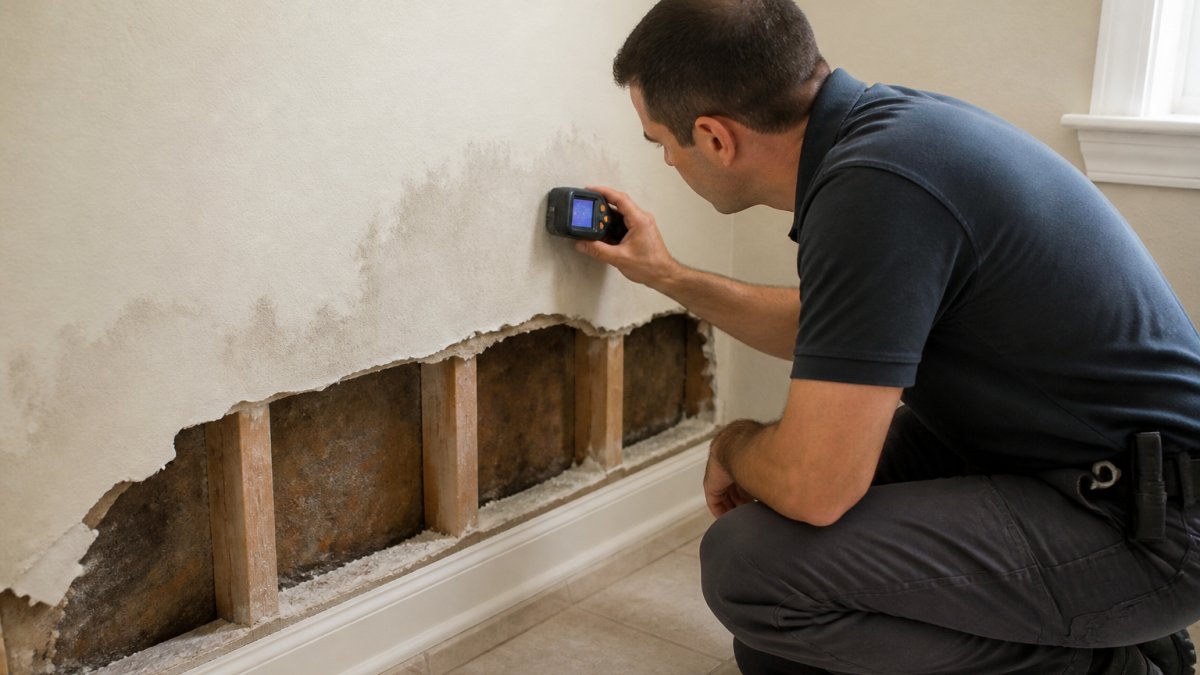
- Water intrusion, damp spots, or leakage in the basement
Any of these alongside a crack shifts the picture from "monitor" to "get a professional evaluation." A crack that's wider than one-quarter inch, actively widening, or horizontal should be assessed without delay.
At Lone Eagle Home Services, we treat these early signals as exactly what proactive maintenance is for: catching small problems before they become expensive ones. Our membership includes seasonal tune-ups and digital service reports after every visit, so changes get documented instead of forgotten.
Seasonal and Environmental Influences on Foundation Movement
Soil movement drives most foundation movement, and soil responds to the seasons. In wet periods, soil expands and pushes against the foundation.
That's why cracks often appear or widen after a wet spring or a dry summer. Freeze-and-thaw cycles add another push, as water in the soil expands when it freezes.
This is the practical takeaway: check your foundation at the start of each season, not once a year. The same crack can look stable in a mild month and active after a heavy rain.
If juggling these seasonal checks sounds like one more chore, that's the gap a maintenance membership is built to close.
Foundation cracks rarely announce themselves. They widen quietly, season after season, until a small line becomes a structural repair.
That's the work Lone Eagle Home Services was built to take off your plate.
Frequently Asked Questions
What size crack is acceptable in a foundation?
Hairline cracks under one-eighth inch wide are generally considered normal, especially in concrete that has cured and shrunk. Cracks between one-eighth and one-quarter inch deserve monitoring with photos and measurements every few weeks. Anything wider than one-quarter inch, or any crack that is actively widening, should be evaluated by a foundation professional. Width alone is not the only factor; direction, displacement, and whether the crack is growing matter just as much as the measurement itself.
How do I monitor a foundation crack to see if it is getting worse?
Clean the crack, then mark both ends with a pencil line and the date. Place a small ruler beside the widest point and photograph it with your phone, keeping the same angle and distance each time. Recheck every four to six weeks, or after heavy rain and freeze-thaw cycles. Compare photos side by side and note any widening, lengthening, or displacement. If the crack grows beyond one-quarter inch or the two sides shift out of alignment, call a professional for an evaluation.
Can foundation cracks cause water to enter a basement?
Yes. Any crack that penetrates the full thickness of a foundation wall creates a path for water, especially when soil around the home is saturated. Hydrostatic pressure from wet soil pushes water against the wall, and it finds the easiest route inside, which is often the crack itself. You may notice efflorescence (white mineral deposits), damp patches, or staining along the crack line before you see active leaking. Sealing a crack stops the symptom, but correcting the drainage that caused the pressure matters just as much.
When should I call a foundation professional about a crack?
Call a professional when a crack is wider than one-quarter inch, when it is horizontal or stair-step in a masonry wall, when you see displacement (one side of the crack is not flush with the other), or when the crack is growing between inspections. Other reasons to escalate: doors and windows that stick suddenly, uneven floors, or visible bowing in a basement wall. A professional evaluation typically includes a full interior and exterior inspection, moisture readings, and a written assessment with recommended next steps.