 how-to
How to Clean Gutters Safely in Autumn
Table of Contents
- Why Autumn Gutter Cleaning Matters
- When to Clean Gutters in Fall
- Best Tools for Cleaning Gutters Safely
- Gutter Cleaning Safety Tips Before You Start
- Step-by-Step Guide to Clean Gutters Safely
- How to Clean Gutters Without a Ladder
- Common Mistakes to Avoid When Cleaning Gutters
- When to Call a Professional for Gutter Cleaning
- Frequently Asked Questions
Last Updated: October 12, 2026
Why Autumn Gutter Cleaning Matters
Autumn is when gutters need the most attention.
Seasonal gutter neglect can create expensive problems every year: rotted fascia boards, damaged siding, basement flooding, and compromised structural integrity. All preventable with proper autumn maintenance.
Cleaning gutters in fall protects your home through winter. Snow and ice add weight to debris-filled gutters, increasing collapse risk, and regular maintenance extends your gutter system's lifespan by years.
When to Clean Gutters in Fall
Clean gutters at least twice during autumn: once in early fall, after most leaves drop but before heavy rain, and again in late fall, just before winter.
Timing depends on climate and tree coverage: many nearby trees means three cleanings (early, mid, and late fall); fewer trees means two usually suffice.
Watch for these signs that your gutters need immediate attention:
- Water overflowing from gutter edges during rain
- Visible debris piling up in gutters
- Sagging or pulling gutters
Don't wait for visible problems. A proactive schedule prevents damage and saves money on repairs.
Best Tools for Cleaning Gutters Safely
The right tools make gutter cleaning easier and safer. You don't need expensive equipment, but quality matters.
Essential tools for gutter cleaning:
- Sturdy ladder (6-foot to 20-foot, depending on roof height)
- Work gloves (leather or heavy-duty rubber)
- Safety glasses or protective eyewear
A gutter scoop is worth the investment: curved scoops fit into gutters and remove debris efficiently.
Consider a gutter guard system: it reduces debris accumulation and lowers cleaning frequency. Installation requires professional help, but the long-term time savings are significant.
Gutter Cleaning Safety Tips Before You Start
Safety is non-negotiable when working at heights. Falls from ladders send many people to emergency rooms each year in the U.S., and gutter work combines height, unstable footing, and a task that pulls your attention from balance. Most injuries happen because people skip basic precautions or rush.
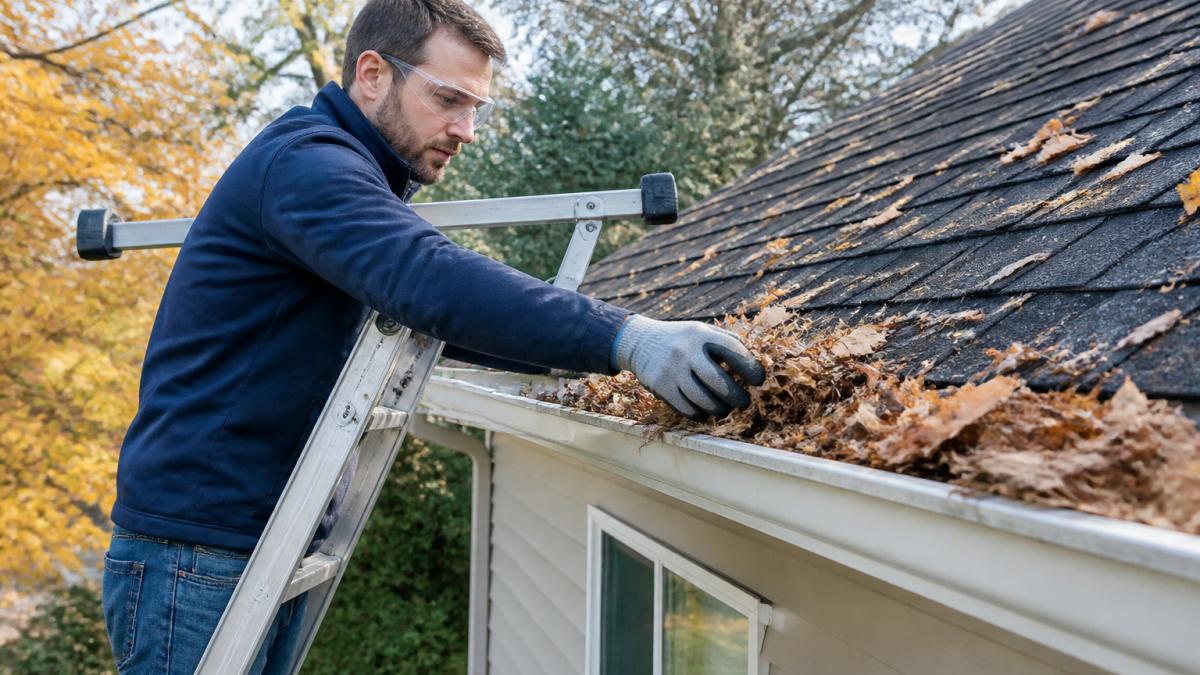
Proper Ladder Setup and Positioning
Use the 4-to-1 rule: for every 4 feet of working height, move the ladder base 1 foot from the wall.
Extend the ladder at least 3 feet above the gutter line for a handhold.
Match the ladder to the surface:
- Concrete or asphalt: Standard rubber feet work. Wipe them clean first.
- Grass or dirt: Use spike feet or a ladder leveler so the legs don't sink unevenly.
- Decking or composite: Use a standoff or stabilizer bar to spread the load and keep the ladder off the gutter edge.
- Sloped ground: Use a ladder leveler or build a firm, level base. Never shim a leg with a brick or block of wood.
Check the ladder's duty rating before you climb. Ratings cover total weight (user plus tools plus debris):
- Type III (light duty): 200 lbs
- Type II (medium duty): 225 lbs
- Type I (heavy duty): 250 lbs
- Type IA (extra heavy duty): 300 lbs
Look up before you set the ladder.
Inspect the ladder before every use:
- Look for cracks, bends, or splits in the rails
- Test all rungs to ensure they're secure
- Verify that hinges and locks work properly on extension and articulating ladders
- Check the feet for worn or missing pads
Never use a ladder during high winds or storms. If you notice the ladder moving or debris blowing sideways, get down.
Personal Protective Equipment
Wear proper protective equipment every time you clean gutters. A small cut from a rusty gutter edge is a tetanus risk if your vaccination isn't current (the CDC).
Required protective gear:
- Heavy-duty work gloves (leather or reinforced rubber with a grip coating)
- Safety glasses or a face shield
- Long sleeves and long pants
- Closed-toe shoes with slip-resistant soles
Wear gloves rated for outdoor work, thin gardening gloves won't protect against the rusty nails, broken glass, and sharp metal edges in gutters.
Safety glasses prevent debris from hitting your eyes, compressed leaves and dirt can fly up when you pull a clog free.
If you'll be on the roof at all, add a fall-protection harness and anchor point. If your roof pitch is steep or your gutters sit more than two stories up, stay off the roof and work from a ladder or hire a pro.
Step-by-Step Guide to Clean Gutters Safely
Follow this systematic approach to clean gutters safely and thoroughly.
Step 1: Clear Large Debris by Hand
Start by removing large debris with your hands or a small scoop. Wear work gloves and safety glasses, and scoop leaves, twigs, and packed dirt into your collection bucket.
Work from one end of the gutter toward the downspout to avoid pushing debris into the drain, and don't rush this step.
Remove all visible debris before moving to the next step. Partial cleaning leads to clogs later.
Step 2: Flush the Gutters with Water
After removing large debris, flush the gutters with a garden hose on medium pressure, high pressure can damage gutters or push debris deeper into the system.
Spray along the entire gutter length toward the downspout. If water backs up or flows slowly, debris is still blocking the system.
Pay special attention to gutter corners and seams. Debris accumulates in these areas and causes clogs.
Step 3: Check Downspouts and Drainage
Downspouts are where most clogs occur. After flushing the gutters, run water directly into downspout openings, it should flow immediately and completely through.
If water backs up or flows slowly, the downspout is clogged. Use a plumbing snake or pressure washer to clear it.
Check that water exits the downspout at least 4 feet from your foundation, draining away from your home.
How to Clean Gutters Without a Ladder
Not everyone is comfortable at heights. Several alternatives let you clean gutters safely without a ladder.
Gutter cleaning tools for ground level:
- Gutter vacuum systems (handheld or mounted on poles)
- Pressure washers with gutter cleaning attachments
- Extendable gutter cleaning wands (20-30 feet)
- Professional gutter cleaning services
Gutter vacuums work well for light debris, connecting to household vacuum systems to remove leaves from ground level.
Pressure washers with gutter attachments provide more power for stubborn debris and moss, but high pressure can damage gutters.
Extendable wands let you reach gutters from the ground, working best for single-story homes and light debris.
Professional gutter cleaning is the safest option.
Common Mistakes to Avoid When Cleaning Gutters
Learning what not to do saves time and prevents injury.
Mistakes that cause problems:
- Working alone without someone to spot you
- Cleaning gutters during rain or immediately after
- Using damaged or unstable ladders
- Skipping safety equipment
Working alone is dangerous, if you fall or get injured, no one can help. Always have someone present who can call for emergency help.
Don't clean gutters when they're wet: wet leaves are slippery and heavier, significantly increasing fall risk.
Rushing leads to mistakes and injuries. Set aside adequate time and work methodically.
When to Call a Professional for Gutter Cleaning
Most one-story homes with safe ladder access are a reasonable DIY job. Run through four questions, How high? How steep? How damaged? How able? If any answer pushes past the thresholds below, hire a pro.
The Four-Question Decision Framework
1. How high?
- Single story (gutters under 12 feet): DIY is reasonable with a proper ladder and a spotter.
- Two stories (12-20 feet): DIY is possible but the risk climbs sharply. Extension ladders at this height need firm footing, a spotter, and calm weather.
- Three stories or 20+ feet: Hire a professional. Falls from this height are frequently fatal, and most homeowners don't own the right equipment.
2. How steep?
If you must walk on the roof to reach any part of the gutter, check the pitch.
3. How damaged?
Call a pro if you see any of these:
- Gutters pulling away from the fascia or sagging between hangers
- Rust-through, holes, or separated seams
- Downspouts that stay clogged after you've snaked them
- Water staining on the fascia, soffit, or siding below the gutter line
These aren't cleaning problems, they're repair problems. A crew that also does repair can fix them in one visit; a cleaning-only service will just clear debris and leave the underlying issue.
4. How able?
Be honest about your physical condition and comfort with heights. Vertigo, balance issues, recent surgery, or a fear of heights all argue for hiring out.
What Professional Gutter Cleaning Typically Costs
Pricing varies by region, home height, and gutter length. Many companies offer a discounted seasonal package (spring and fall cleanings) versus booking separately. If you already pay for lawn care, pest control, or window cleaning, ask whether that company bundles gutter cleaning, it often does, and bundling lowers the per-visit price.
Compare that to a single water-damage repair: foundation repairs, fascia replacement, and interior water damage routinely run into the thousands, which is why gutter cleaning is cheap insurance rather than a discretionary expense.
What to Ask Before You Hire
- Are you insured? Ask for a certificate of insurance showing general liability and workers' compensation. If a technician falls on your property and the company isn't insured, the claim can come back to you.
- Do you clean downspouts, or just the gutters? A quote that covers gutters but not downspouts leaves the most common clog point untouched.
- Do you flush and verify flow? The best crews run water through the system and confirm it drains, rather than just scooping debris.
- Do you photograph before and after? Photo documentation protects both sides if a dispute arises.
A Middle Path: Hybrid DIY
You don't have to choose between full DIY and full service. A common approach: handle the easy, reachable runs yourself and hire a pro for the high, steep, or damaged sections.
Lone Eagle Home Services provides professional gutter cleaning as part of our seasonal maintenance programs. Our team handles safety, uses proper equipment, and delivers digital service reports after every visit, coordinating all your home maintenance needs so you don't manage multiple contractors.
Regular professional maintenance prevents expensive repairs. Our membership-based approach keeps your gutters consistently maintained year-round, not just when problems appear.
Frequently Asked Questions
How often should you clean gutters in autumn?
Most homeowners need to clean gutters at least twice during fall: once in mid-autumn when leaves begin falling heavily, and again in late autumn after most trees have shed. If you have many trees nearby, weekly checks may be necessary. The goal is to prevent water backup before winter arrives, which can cause ice dams and water damage to your home's structure.
What is the safest way to clean gutters from a ladder?
Position your ladder at a 75-degree angle, with the base 3 feet away from the wall for every 10 feet of height. Secure the ladder at the top, keep both hands free while working, and never lean more than 12 inches to either side. Wear slip-resistant shoes, use a tool belt for supplies, and have someone stabilize the ladder. Move the ladder frequently rather than overreaching, as overextension causes most gutter-cleaning accidents.
Can you clean gutters without using a ladder?
Yes. Ground-level alternatives include gutter cleaning tools with extension poles (reaching up to 30 feet), pressure washers with gutter-cleaning attachments, or leaf blowers. Some homeowners use robotic gutter cleaners or hire professionals with specialized equipment. These methods work best for single-story homes or when you want to avoid ladder work entirely, though they may not remove stubborn debris as effectively as hand cleaning.
What tools do you need to clean gutters safely?
Essential tools include a sturdy ladder, work gloves, safety glasses, a gutter scoop or small shovel, a bucket for debris, and a garden hose with spray nozzle. For added safety, use a ladder stabilizer, rope or tie-down straps, and slip-resistant shoes. Optional tools include a pressure washer, gutter brush, or extension pole. Having the right equipment prevents accidents and makes the job faster and more thorough.