 how-to
Is $300 a Month Enough for Home Maintenance?
Table of Contents
- The Short Answer: Is $300 Per Month Enough?
- How Much to Save for Home Maintenance: The Rules That Matter
- Home Maintenance Budget Examples: What $300 Actually Covers
- Monthly Home Maintenance Checklist: What Fits in Your Budget
- Home Maintenance Sinking Fund: Separating Routine Care From Emergency Repairs
- When $300 Falls Short: What to Do
- Frequently Asked Questions
Last Updated: October 12, 2026
The Short Answer: Is $300 Per Month Enough?
For most homeowners, $300 per month for home maintenance budget is a solid starting point. That breaks down to $3,600 annually. Whether it's actually enough depends on your home's age, size, and condition.
Here's the reality: $300 covers routine maintenance and smaller repairs for homes in good condition. For older homes or larger properties, you'll likely need more.
The goal isn't to guess, it's to plan.
How Much to Save for Home Maintenance: The Rules That Matter
Three main rules guide home maintenance budgeting. They give you a framework to figure out if $300 works for your specific situation.
The 1% Rule
The 1% rule is straightforward: save 1% of your home's purchase price annually for maintenance and repairs.
If you bought your home for $400,000, you'd set aside $4,000 per year. That's about $333 per month. If your home cost $300,000, the rule suggests $3,000 annually, or $250 per month.
This rule works well for average homes in decent condition. It assumes regular upkeep and a mix of routine repairs.
The $1 Per Square Foot Rule
Another common guideline is the $1 per square foot rule. Multiply your home's square footage by $1, then divide by 12 to get a monthly budget.
A 2,000-square-foot home would need roughly $2,000 annually for maintenance. That's about $167 per month. A 3,500-square-foot home would require approximately $3,500 yearly, or $292 per month.
This rule is helpful because it scales with your home's size.
Home Maintenance Budget Examples: What $300 Actually Covers
What does $300 monthly actually buy? The answer changes based on your home's age, size, and condition. Let's break it down by property type, and then show how to allocate the money so it doesn't disappear into a dozen small purchases.

New Home (Built After 2015)
New homes are forgiving. Builder warranties often cover major systems for the first several years, and the structure itself is still settling. Your $300 monthly budget handles routine care and small fixes.
In a new home, expect to spend money on:
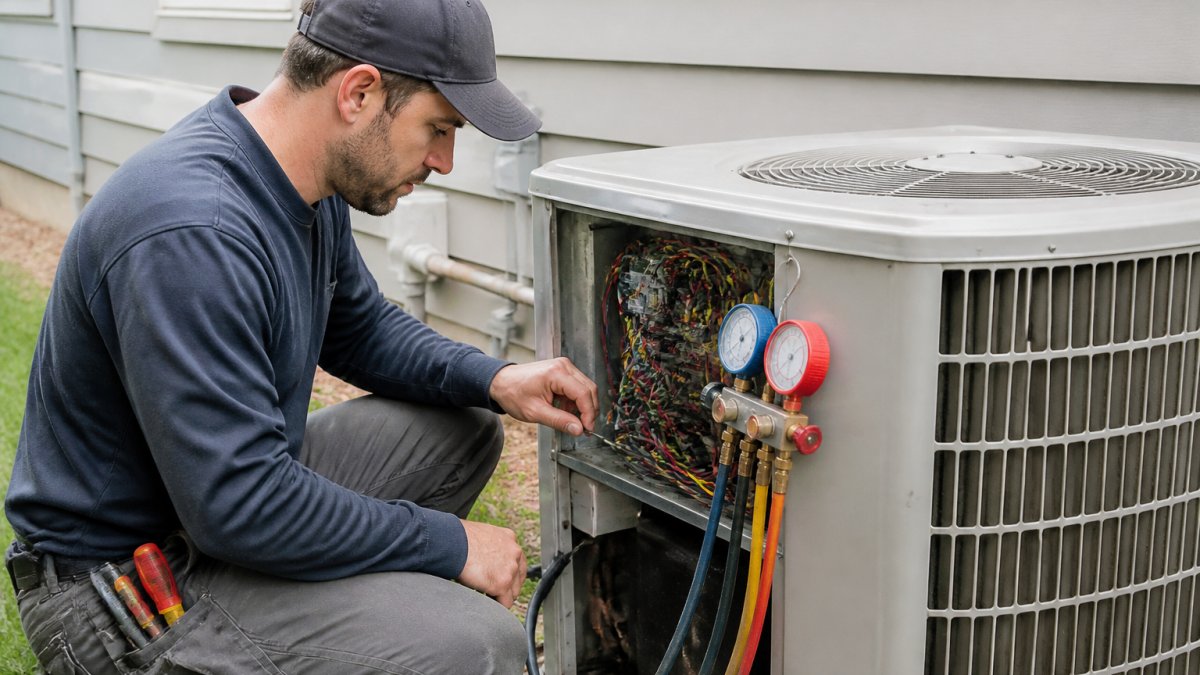
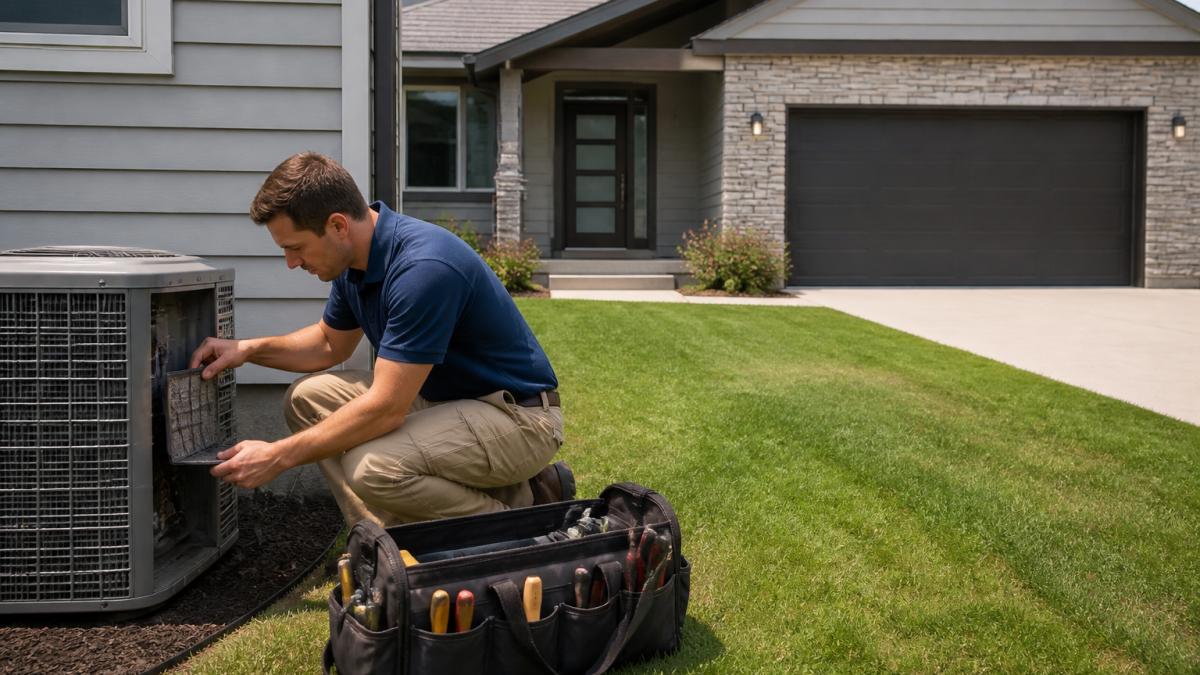
- Annual HVAC system maintenance and filter changes
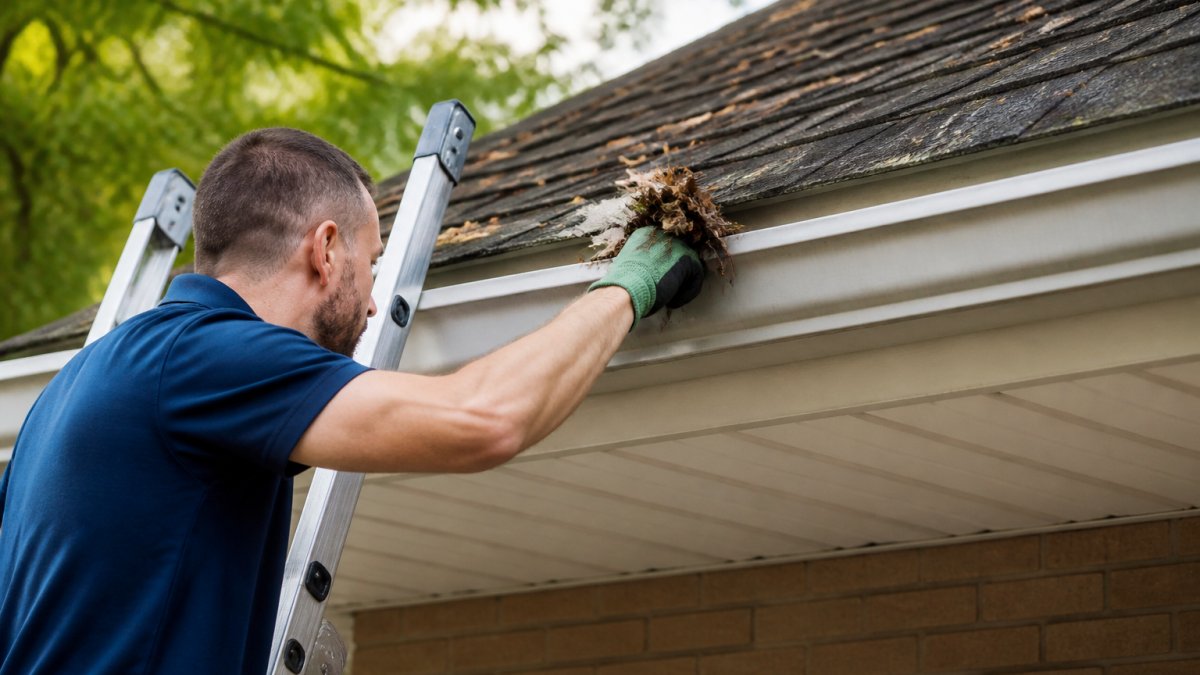
- Gutter cleaning twice yearly
- Seasonal inspections and minor repairs
A realistic $300 monthly allocation for a newer home might look like:
- $60-$80 for recurring services (HVAC filters, pest control, gutter cleaning)
- $40-$60 for seasonal DIY supplies (caulk, weatherstripping, filters, light bulbs)
- $100-$150 into a repair reserve for the first out-of-warranty failure
$300 per month works well for new homes. You're unlikely to face major system failures in the first decade, so most of the money can sit in reserve rather than get spent.
Mid-Age Home (Built 2000-2015)
Homes built in this era are entering their maintenance-intensive years. Systems are aging but not yet at replacement stage. $300 monthly becomes tighter but still workable.
Your budget now covers:
- HVAC maintenance and occasional repairs
- Plumbing fixes and water heater care
- Roof inspections and minor repairs
A mid-age home might need one or two bigger repairs per year, a water heater replacement, roof patching, or HVAC service. A common pattern is to shift the allocation:
- $80-$100 for recurring services and inspections
- $50-$70 for DIY and small repairs
- $80-$120 into a repair reserve
$300 monthly ($3,600 yearly) handles this if you're disciplined about preventive maintenance. The trap is spending the reserve on small upgrades instead of letting it grow.
Older Home (Built Before 2000)
Older homes demand more attention. Systems are nearing end-of-life. $300 monthly starts to feel tight unless your home is in exceptional condition.
Plan for:
- Frequent HVAC repairs and eventual replacement
- Plumbing issues and potential water heater replacement
- Roof repairs and possible replacement costs
Older homes often surprise you with hidden issues. A $300 budget covers routine care, but one major repair can consume several months of savings. Many older home owners find they need $400-$500 monthly to stay ahead.
A Personalized Framework: Adjust $300 to Your Home
Rather than accept or reject $300 outright, run your home through five variables. Each one pushes your number up or down.
- Home value. The 1% rule sets a baseline. A $250,000 home implies $2,500/year ($208/month); a $500,000 home implies $5,000/year ($417/month). If your home value is above roughly $360,000, $300 is below the 1% benchmark.
- Square footage. The $1 per square foot rule sets another baseline. A 1,500 sq ft home implies $125/month; a 3,000 sq ft home implies $250/month; a 4,000 sq ft home implies $333/month. Above roughly 3,600 sq ft, $300 is below the benchmark.
- Age and condition. Add 20-50% to either baseline for a home over 25 years old, or one with deferred maintenance. Subtract 20-30% for a home under 10 years old with active warranties.
- Included services. If you already pay a lawn service, pest control, or HVAC plan separately, those costs shouldn't come out of the $300, or the $300 needs to grow to cover them.
- Climate and systems. Roofs, HVAC, and plumbing take more abuse in regions with heavy snow, hail, high heat, or humidity. Homes with septic systems, wells, pools, or older electrical panels carry extra line items.
What $300 Does Not Cover
Be clear about the boundary. A $300 monthly maintenance budget is not designed to fund:
- A full roof replacement (commonly $8,000-$15,000+ depending on size and material)
- A full HVAC system replacement (commonly $5,000-$12,000+)
- A sewer line replacement or major foundation repair
Those belong in a separate capital-replacement fund or your emergency savings. Mixing them into the monthly maintenance number is the fastest way to feel like $300 is never enough.
Monthly Home Maintenance Checklist: What Fits in Your Budget
A solid home maintenance budget requires knowing what to prioritize. Not everything needs professional attention every month, but planning ahead keeps costs manageable.
Monthly tasks (mostly DIY or minimal cost):
- Check for water leaks under sinks and around toilets
- Test HVAC filters and replace if needed
- Look for pest droppings or entry points
Quarterly tasks (seasonal, some professional help):
- Clean gutters and downspouts
- Inspect roof for damage or debris
- Check weatherstripping on doors and windows
Annual tasks (typically professional):
- HVAC system maintenance and inspection
- Chimney cleaning and inspection
- Septic system inspection (if applicable)
Spreading these tasks across the year keeps your monthly budget balanced. A $300 monthly budget means roughly $900 per quarter for professional work, plus DIY maintenance. That's realistic for routine upkeep.
Home Maintenance Sinking Fund: Separating Routine Care From Emergency Repairs
Here's where many homeowners get confused: maintenance savings and emergency funds serve different purposes.
Maintenance budget covers planned, predictable costs. Gutter cleaning, HVAC service, seasonal inspections, filter replacements, these happen regularly.
Emergency fund covers unexpected failures. A pipe bursts. The furnace dies in January. The roof springs a leak.
A smart approach separates the two:
- Use your $300 monthly budget for routine maintenance
- Build a separate emergency fund equal to 1-2 months of total household expenses
- Once established, your emergency fund covers surprise repairs without derailing your budget
Many homeowners mix these categories and end up underfunded. You need both.
When $300 Falls Short: What to Do
$300 monthly isn't enough for every situation. If your home needs more, you have options, but the order you take them in matters. Here's a practical catch-up plan.
Step 1: Triage What Can Wait and What Can't
Not all maintenance is equal. Rank your to-do list by consequence of delay:
Fix now (safety, water, or structural risk):
- Active leaks, running toilets, dripping water heaters
- Roof leaks or missing shingles
- Gas smells, electrical burning odors, tripping breakers
Fix this season (prevents larger damage):
- Clogged gutters and poor drainage
- Failed caulk and weatherstripping
- HVAC filters and annual service
Defer if cash is tight (cosmetic or long-horizon):
- Interior paint touch-ups
- Landscaping upgrades
- Non-urgent appliance replacement
If your $300 is stretched, spend it top-down on this list. Deferring cosmetic work is fine. Deferring water intrusion is not.
Step 2: Close the Gap With Preventive Maintenance
When you can't raise the budget, lower the future bill. Preventive maintenance is the cheapest dollar you'll ever spend on your home.
- A $150-$250 annual HVAC tune-up commonly prevents $500-$1,500 compressor or blower failures.
- A $200-$400 roof inspection catches flashing and shingle issues before a $1,000+ interior water repair.
- A $50 water heater flush extends tank life by years compared with a $1,200-$2,000 replacement.
Step 3: Build a Catch-Up Plan
If your home needs $400-$500 monthly but you can only set aside $300, don't abandon the budget. Close the gap over time:
- Start at $300. Keep the habit going. Consistency beats a perfect number you never hit.
- Add windfalls. Tax refunds, bonuses, and side income go straight into the repair reserve until it reaches one major-repair threshold (commonly $2,000-$5,000).
- Raise by $25-$50 per quarter. A $50 increase every three months gets you from $300 to $500 within a year without a painful jump.
- Redirect completed payments. When a car loan or subscription ends, route that amount into the maintenance fund.
- Reassess annually. After each year, compare what you actually spent against what you saved. Adjust the number, not the habit.
Step 4: Separate Maintenance From Emergency Savings
A common mistake is treating the $300 as both the maintenance budget and the emergency fund. They are different jobs.
- Maintenance budget ($300/month): predictable upkeep, small repairs, seasonal services.
- Emergency fund: 3-6 months of household expenses in an accessible account, used for job loss, medical events, or a major home failure that exceeds the maintenance reserve.
- Capital replacement fund: a separate, slower-growing bucket for known future replacements (roof, HVAC, water heater).
If you only have $300 total to allocate, split it. Putting all $300 into maintenance and nothing into emergency savings leaves you exposed the first time a system fails.
Step 5: Decide Whether to DIY, Bundle, or Outsource
The labor decision changes your effective budget more than the savings rate does.
- DIY-friendly: filter changes, caulking, gutter clearing, minor paint, weatherstripping, basic pest prevention.
- Bundle-worthy: HVAC service, pest control, lawn care, and gutter cleaning are commonly offered as annual plans that cost less than booking each visit separately.
- Always outsource: gas, major electrical, roofing, foundation, and sewer work. The liability and safety risk isn't worth the savings.
A membership-based service like Lone Eagle Home Services handles seasonal tune-ups, vendor coordination, and proactive repairs. You get one trusted team, flat-rate pricing, and priority scheduling. That structure often costs less than juggling independent contractors.
Step 6: Get a Professional Assessment
If you're guessing whether $300 is enough, stop guessing. A home inspector or experienced contractor can walk the property and produce a prioritized list: what's urgent, what's coming in the next 1-3 years, and what can wait. That list converts a vague monthly number into a real plan, and tells you whether your target is $300, $450, or $600.
Frequently Asked Questions
Is $300 a month enough for home repairs and maintenance?
$300 per month ($3,600 annually) can cover routine maintenance and minor repairs for newer homes under 2,000 square feet, but falls short for older properties or larger homes. The 1% rule suggests budgeting 1% of your home's purchase price annually, a $400,000 home needs $4,000 per year. $300 monthly works best when paired with a separate emergency fund for unexpected major repairs like roof or HVAC replacement.
How much should you save for home maintenance monthly?
Most homeowners should save between $200-$400 monthly, depending on home age and size. Apply the 1% rule: divide your home's value by 12 to find your monthly target. For a $500,000 home, that's roughly $417 monthly. Homes built before 2000 typically need 20-30% more than newer homes. Your actual amount depends on property type, local climate, and maintenance history.
What's the difference between a home maintenance budget and an emergency repair fund?
A maintenance budget covers routine upkeep: HVAC inspections, gutter cleaning, lawn care, and seasonal tune-ups. An emergency fund covers unexpected major repairs: roof leaks, water damage, or failed systems. Keep these separate. Use your $300 monthly for predictable maintenance, and maintain a separate emergency reserve (typically 3-6 months of expenses) for urgent repairs that exceed your routine budget.
What are typical annual home maintenance costs?
Average homeowners spend $1,200-$3,600 annually on maintenance and minor repairs. The exact amount depends on home age, size, and condition. New homes average $1,200-$1,800; mid-age homes (15-25 years old) average $2,400-$3,000; older homes often exceed $3,600. Larger properties and homes in harsh climates cost more. Budget for roof, HVAC, plumbing, landscaping, and seasonal inspections as your primary expenses.