 blog
5 Signs of Electrical Wiring Failure Every Homeowner Should Know
Table of Contents
- Why Electrical Wiring Failure Deserves Your Attention
- Sign #1: Flickering, Dimming, or Buzzing Lights
- Sign #2: A Burning Smell From an Electrical Outlet or Odd Odors
- Sign #3: Warm Outlets, Hot Switch Plates, or Sparks
- Sign #4: When Your Circuit Breaker Keeps Tripping
- Sign #5: Damaged Wiring and Deteriorating Insulation
- How to Check for Bad Wiring in a House Without Taking Risks
- What an Electrical Wiring Inspection Covers and When to Schedule One
- Frequently Asked Questions
Last Updated: October 18, 2026
Why Electrical Wiring Failure Deserves Your Attention
Most electrical wiring failure starts small: a flicker, a faint buzz, a breaker that trips once a month. Those clues are easy to explain away, right up until they aren't.
Electrical wiring failure is the breakdown of the wires, connections, or protective components that carry power safely through your home. It can mean a loose connection, cracked insulation, an overloaded circuit, or a component that has simply worn out.
Here's the part most guides get wrong. These five signs are not a checklist to "keep an eye on." They are a countdown. The longer you wait, the higher the fire and shock risk climbs. Below, we break down each sign, what it means, and exactly what to do next.
Sign #1: Flickering, Dimming, or Buzzing Lights
Flickering, dimming, or buzzing lights usually point to a loose connection or a failing circuit, not a bad bulb. If it happens in one fixture, start with the bulb. If it happens across a whole room or floor, treat it as an electrical wiring problem.
What to check first:
- Swap the bulb. If the flicker stops, you're done.
- Note whether the flicker happens when a large appliance kicks on.
- Listen for a buzz at the switch or fixture, not just the bulb.
A buzzing sound at the switch plate is the one to take seriously. It often means arcing inside the box, and arcing produces heat. Heat near wood framing is how electrical fires start.
Sign #2: A Burning Smell From an Electrical Outlet or Odd Odors
A burning smell from an electrical outlet is an emergency. Turn off the power at the breaker, then call a licensed electrician. Do not plug anything back in to "test" it.
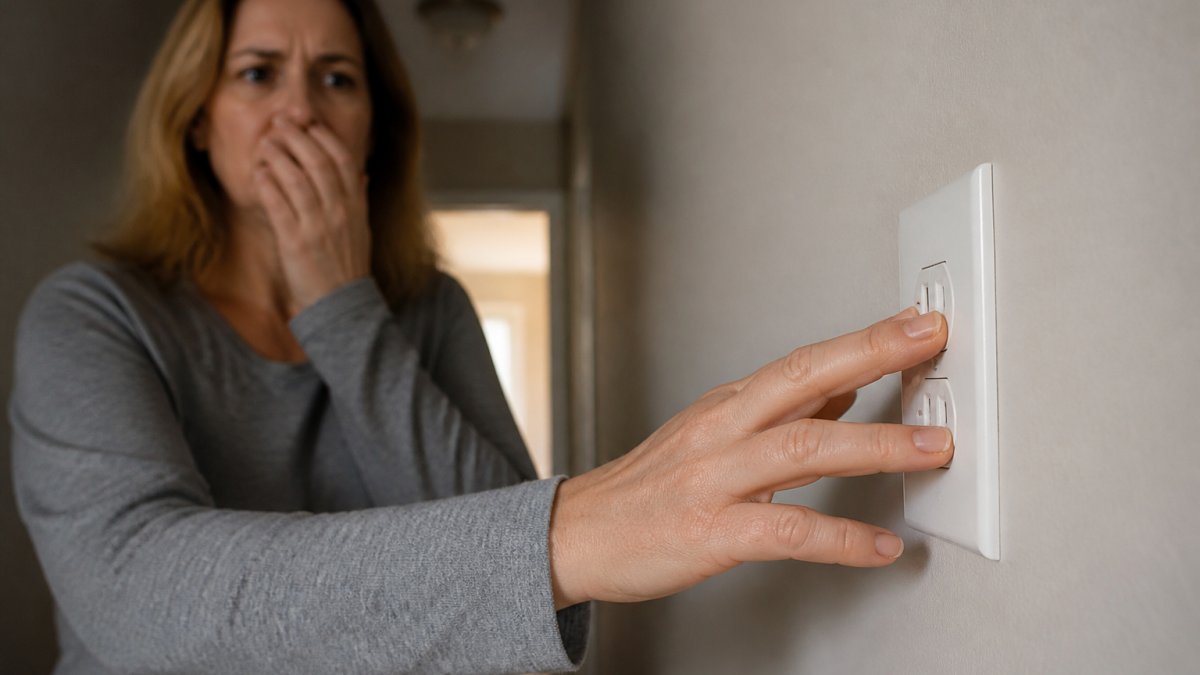
That hot, fishy, or plastic odor is overheated insulation. It can come from a loose connection, an overloaded circuit, or a failing outlet. Odd odors near a panel or switch are never normal. They are one of the clearest signs of electrical wiring failure you can catch early.
What to do right now:
- Cut power to that circuit at the breaker.
- Leave the outlet alone. No cords, no chargers.
- Call an electrician the same day.
Sign #3: Warm Outlets, Hot Switch Plates, or Sparks
Warm outlets and hot switch plates mean current is turning into heat somewhere it shouldn't. A little warmth on a dimmer switch is normal. A warm faceplate on a standard outlet is not.
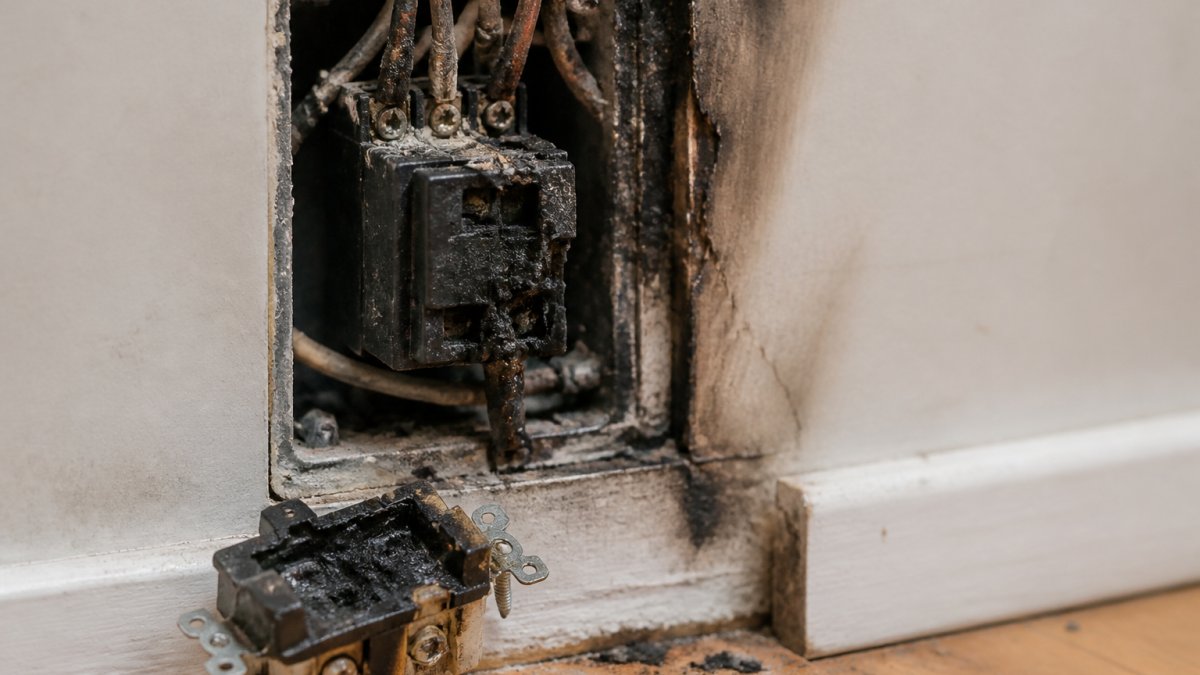
Sparks when you plug something in are equally telling. A tiny blue snap at the moment of contact can happen. A yellow or orange spark, a sustained crackle, or scorch marks around the slots are signs of a serious fault.
Quick triage:
- Warm outlet: stop using it and get it inspected.
- Hot switch plate: turn the circuit off.
- Sparks with scorch marks: call an electrician now.
This is also where homeowners mix up causes. A warm outlet can come from a bad outlet, a loose connection, or too many cords on one circuit. Only an inspection tells you which.
Sign #4: When Your Circuit Breaker Keeps Tripping
A circuit breaker keeps tripping because something on that circuit is drawing too much current, shorting out, or the breaker itself is failing. One trip is normal. The same breaker tripping again and again is a message.
Most guides stop at that sentence. The useful question is narrower: is this an overload, a bad appliance, or a wiring fault? You can usually narrow it down without opening anything.
Symptom-to-possible-cause guide:
| What you notice | Most likely cause | What it means |
|---|---|---|
| Trips only when a space heater, microwave, or vacuum runs | Overloaded circuit | Too much load for one circuit; spread devices across circuits |
| Trips with one specific appliance, holds with others | Faulty appliance or its cord | Stop using that appliance; have it repaired or replaced |
| Trips with nothing plugged in | Wiring fault or failing breaker | Stop resetting it; this points inside the wiring or panel |
| Trips immediately after reset, every time | Short circuit | Do not reset again; call an electrician |
| Breaker feels warm or smells like burning | Overheating breaker or connection | Treat as urgent; cut power at the main if safe to do so |
Safe homeowner steps, in order:
- Unplug everything on that circuit, then reset the breaker once.
- If it holds, add devices back one at a time and note which one trips it.
- If it trips with nothing plugged in, stop resetting it. Repeated resets into a fault can damage the breaker and raise fire risk.
- Never swap in a bigger breaker to "fix" a tripping problem. The breaker is sized to protect the wire; a larger one removes that protection.
When it is urgent: A breaker that will not reset, a burning smell at the panel, visible scorch marks, or a breaker that is hot to the touch are not wait-and-see problems.
A common pattern in older homes is a circuit that was fine for years until a renovation added outlets or a larger appliance. The breaker did not fail; the load outgrew the circuit. That is a wiring and capacity question, not a breaker question, and it needs an inspection rather than a replacement part.
Sign #5: Damaged Wiring and Deteriorating Insulation
Damaged wiring and deteriorating insulation are the failures you can see, and the ones you can't. Cracked, brittle, or chewed insulation lets current escape where it shouldn't. Rodents, heat, age, and poor workmanship all speed this up.
What most guides skip is why the risk varies so much from home to home. Three factors do most of the work: age, materials, and installation quality.
Age. Insulation does not last forever. Heat cycling, vibration, and moisture make it brittle over decades.
Materials. Some legacy wiring materials break down faster than others, and some lack the grounding and protection modern circuits rely on.
Installation quality and renovations. Poor workmanship is a quiet risk. Backstabbed outlets, undersized wire on a larger breaker, splices outside a box, and do-it-yourself additions all create points where connections loosen or heat builds.
Visible red flags:
- Cracked or crumbling wire coating
- Scorch marks at outlets or in the panel
- Wires that feel brittle or look chewed
- Outlets that are loose in the wall or warm to the touch
- A panel with mismatched breakers, double-tapped terminals, or unlabeled circuits
If you spot any of these, do not touch them. Get a professional assessment. Visual checks are safe; probing, pulling, or repairing is not.
This is also where an inspection earns its keep. An electrician can identify wiring type, check connections at terminals, verify grounding and protection, and tell you whether a circuit is safe to keep using or should be retired. That is information you cannot get from the outside of a wall.
How to Check for Bad Wiring in a House Without Taking Risks
Learning how to check for bad wiring in a house safely means knowing where your role ends. You can look, listen, and smell. You should not open panels, pull outlets, or probe wires.
Safe homeowner checks:
- Note which breakers trip and how often
- Watch for flickering across rooms, not just one bulb
- Smell for burning or fishy odors near outlets and the panel
- Feel switch plates for unusual warmth
- Look for scorch marks, cracks, or chewed wires
- Log when each issue started
Leave to a licensed electrician:
- Opening the breaker panel
- Removing outlets or switches
- Testing circuits with a meter
- Any work inside walls
The U.S. Fire Administration's electrical fire safety guidance makes the point plainly: faulty wiring and related electrical issues are a leading cause of home fires. Looking is fine. Digging in is not.
What an Electrical Wiring Inspection Covers and When to Schedule One
An electrical wiring inspection is a top-to-bottom safety review of your home's electrical system. It covers the panel, outlets, switches, wiring, grounding, and ground fault protection.
What an inspection typically includes:
- Breaker panel and service entrance review
- Outlet and switch testing for heat, damage, and grounding
- Checks for loose connections and damaged insulation
- Ground fault protection testing in wet areas
- A written summary of findings and priorities
When to schedule one:
- You notice any of the five signs above
- Your home is older and has never been inspected
- You're buying or renovating
- You rent or live in a multi-unit building
Renters and multi-unit owners should flag issues to the landlord in writing and keep a copy. Electrical hazards in shared walls are the building owner's responsibility to fix, not yours.
The National Fire Protection Association's electrical safety resources and the U.S. Consumer Product Safety Commission both stress early detection over reactive repair. That matches what we see in the field.
This is where a proactive maintenance plan earns its keep. Lone Eagle Home Services coordinates seasonal tune-ups and on-demand repairs through one trusted team, with flat-rate pricing and a digital service report after every visit. Instead of chasing an electrician after a breaker trips, members get priority scheduling and a single point of contact. You can see plans to find the fit for your home.
Frequently Asked Questions
What are the warning signs of faulty electrical wiring?
The most common signs of electrical wiring failure include flickering, dimming, or buzzing lights; a burning smell from an outlet or switch; warm outlets and hot switch plates; sparks when you plug something in; a circuit breaker that keeps tripping; and visible damage to wire insulation. Any one of these points to a problem inside the electrical system that will not fix itself. Treat two or more together as urgent and have a licensed electrician inspect the wiring before using those circuits again.
How can you check for bad wiring in a house?
Safe homeowner checks are limited to what you can see and smell: look for discolored or scorched outlet covers, cracked or brittle cords, and outlets that feel warm; note any burning odor or buzzing sound; and watch whether breakers trip repeatedly. Do not remove outlet covers, open the panel, or probe wires yourself. Anything beyond a visual check belongs to a licensed electrician, who can test for loose connections, ground faults, and deteriorating insulation with proper equipment.
Can faulty wiring cause a house fire?
Yes. Electrical faults are a leading cause of residential fires, and the risk climbs when warning signs are ignored. Overloaded circuits, loose connections, and deteriorating insulation generate heat inside walls where no one sees it until smoke appears. A burning smell from an electrical outlet or a breaker that keeps tripping is the system telling you heat is building somewhere. Shut off power to the affected circuit and call an electrician rather than waiting to see if it happens again.
Should you turn off the power if you suspect bad wiring?
If you see sparks, smell burning, or find a hot outlet or switch plate, shut off the breaker for that circuit at the panel, provided you can reach it safely. If the panel itself is warm, buzzing, or smoking, leave it alone and call an electrician or emergency services. For lesser signs like flickering lights, avoid heavy use on that circuit until it is inspected. Never open a panel or outlet to investigate on your own, since the shock and fire risk is real.
Electrical problems rarely announce themselves twice. A flicker today is a warning; the same flicker next month is a pattern. If any of these five signs showed up in your home, don't wait for a sixth. Lone Eagle Home Services gives you one trusted team for inspections, repairs, and vendor coordination, backed by flat-rate pricing and confirmed appointments. Get started with Lone Eagle Home Services and turn a warning sign into a fixed problem before it becomes an emergency.