 blog
blog
7 Ways to Simplify Property Upkeep in 2026
Table of Contents
- 1. Build a Home Maintenance Schedule That Runs on Autopilot
- 2. Use a Home Maintenance Checklist So Nothing Slips
- 3. Plan Seasonal Home Maintenance Before Each Transition
- 4. Start Home Repair Tracking to Stop Repeat Problems
- 5. Separate Urgent Repairs From Routine Upkeep
- 6. Budget for Property Upkeep by Lifecycle, Not by Surprise
- 7. Hand Off the Work to One Accountable Team
- Conclusion
- Frequently Asked Questions
Last Updated: October 17, 2026
1. Build a Home Maintenance Schedule That Runs on Autopilot
The most effective way to simplify property upkeep is to stop relying on memory and put recurring tasks on a fixed schedule. A written home maintenance schedule turns a pile of vague worries into a short list of dated jobs. You check the list. You do the work. You move on.
Most homeowners run their homes reactively. Something breaks, they panic, they call whoever answers. That pattern costs more money and more stress than a planned approach.
The fix is simple. Map every major system in your home to a frequency:
- Monthly: HVAC filter swap, smoke and carbon monoxide detector test, sink and drain check
- Quarterly: gutter clearing, water heater flush check, exterior walk-around
- Twice a year: roof inspection, window and door seals, weatherstripping
- Annually: heating and cooling system tune-up, chimney sweep, full property inspection

Put the schedule somewhere you'll see it. A shared digital calendar works better than paper for most households because it sends reminders. Set each task to repeat, and you've built a system that runs without you thinking about it.
2. Use a Home Maintenance Checklist So Nothing Slips
A home maintenance checklist is a written list of tasks grouped by system and season, used to confirm each job gets done. It removes guesswork and catches the small items that quietly turn into big repair costs. But most checklists fail for one reason: they treat every task as equally important. A usable checklist ranks tasks by risk and frequency so you know what to do first when time is short.
Build your checklist around the systems that fail most often, and give each task a priority tier:
- Tier 1, Safety and water intrusion (do first, every time): smoke and carbon monoxide detector tests, under-sink leak checks, toilet supply line inspection, dryer vent lint removal, roof flashing and shingle check after storms
- Tier 2, Habitability and efficiency (schedule within the month): HVAC filter swap, thermostat battery replacement, condensate line flush, water heater temperature and pressure relief valve test, weatherstripping and door seal check
- Tier 3, Cosmetic and long-cycle (batch quarterly): caulk refresh, exterior wash, deck board inspection, gutter clearing, paint touch-ups
A practical pattern is to keep one master checklist and one seasonal copy. The master list holds every task with its tier and frequency. The seasonal copy pulls forward only the tasks due in the next 90 days, so the list stays short enough to finish. Tick items off as you go, and note the date completed, that date becomes your repair history and your proof of upkeep.
For rental properties, the same checklist doubles as documentation. Keep dated entries for each task and each tenant-reported repair, and coordinate access windows in writing. A checklist you actually use beats a perfect one you ignore, and a dated one protects you when a dispute arises.
3. Plan Seasonal Home Maintenance Before Each Transition
Seasonal home maintenance works best when it starts before the weather turns, not after. The week before the first freeze is too late to find a cracked hose bib. The first hot spell is too late to discover a failing capacitor.
Think in four transitions:
- Winter to spring: roof and gutter inspection, drainage check, exterior wash
- Spring to summer: cooling system tune-up, window screens, deck sealing
- Summer to fall: heating tune-up, chimney check, weatherstripping
- Fall to winter: pipe insulation, outdoor faucet shutoff, snow equipment prep
The U.S. Department of Energy's home energy guidance notes that regular heating and cooling maintenance helps systems run closer to their rated efficiency. That's the practical case for seasonal care: a well-maintained system uses less energy and lasts longer.
4. Start Home Repair Tracking to Stop Repeat Problems
Home repair tracking means logging every repair, its date, the cost, and who did the work. It sounds tedious. It pays off the first time a problem comes back.
Here's what most guides miss. A repair that fails twice usually wasn't a repair at all. It was a patch. Without a log, you can't tell the difference.
Track these fields for every job:
- Date and what failed
- Who did the work and what they charged
- Parts or materials used
- Whether the fix held
A simple spreadsheet works. So does a shared note on your phone. The format matters less than the habit.
Tracking also protects you. If a contractor's work fails inside a reasonable window, your log gives you the dates and details to make your case. When Lone Eagle Home Services handles repairs, members get a digital service report after every visit, so the record builds itself.
5. Separate Urgent Repairs From Routine Upkeep
Not every problem deserves the same response. Sorting issues into urgent and routine is the difference between a calm household and a chaotic one.
Urgent means stop and fix now:
- Active water leaks or water damage
- No heat in freezing weather
- No cooling in extreme heat, especially with young children or older adults
- Electrical burning smells or sparking
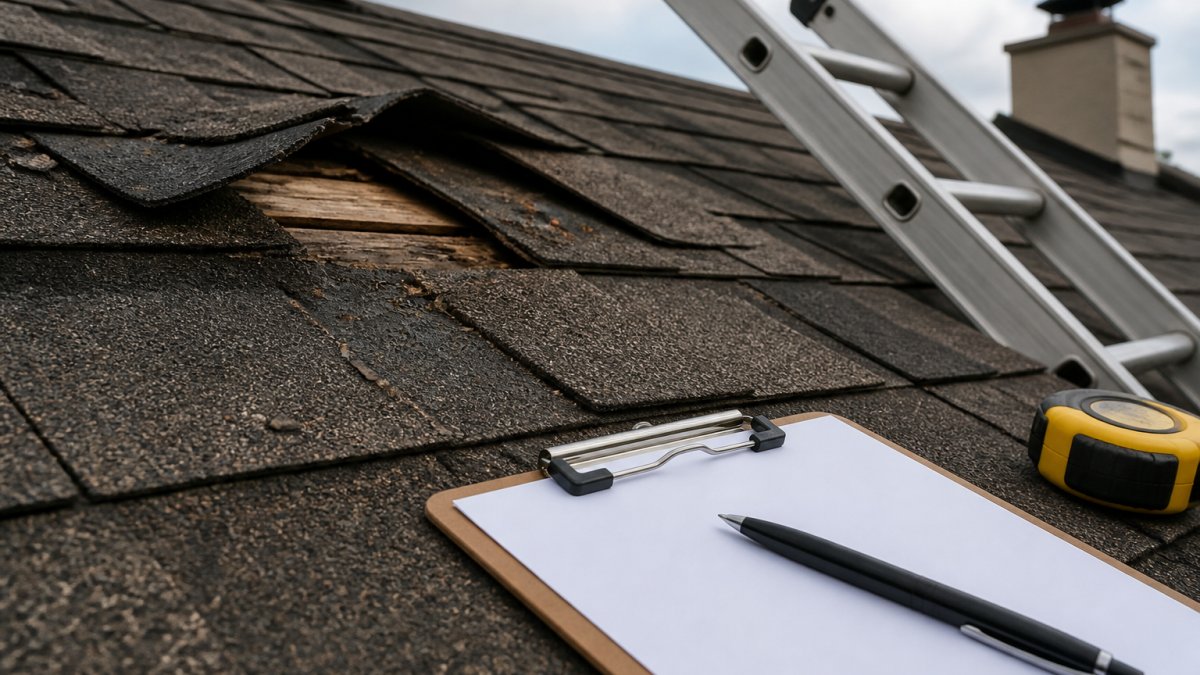
- Roof damage letting water in
Routine means schedule it and move on:
- A dripping faucet
- A sticking door
- Caulk that needs refreshing
- A scuffed exterior
The EPA's indoor air quality resources point out that moisture problems left unaddressed can lead to mold growth, which is why water issues belong in the urgent column. A slow drip behind a cabinet is not cosmetic. It's a countdown.
6. Budget for Property Upkeep by Lifecycle, Not by Surprise
Property upkeep costs less when you plan for it by lifecycle instead of reacting to failures. Every system in your home has a service life. Budget for replacement before it ends, and the emergency call becomes a scheduled line item.
A lifecycle approach means thinking in years, not weeks:
- Short cycle (5-10 years): water heater, dishwasher, garage door opener, sump pump
- Medium cycle (10-20 years): furnace, air conditioner, roof, deck
- Long cycle (20+ years): windows, siding, structural elements
The practical move is a monthly reserve. A common rule of thumb among property managers is to set aside 1% of the home's value per year for upkeep, with a higher rate, often 1.5% to 2%, for older homes or homes with many original systems. On a $400,000 home, 1% is $4,000 a year, or about $333 a month. That figure is a starting point, not a guarantee; adjust it upward as systems age.
Then compare repair versus replace before you spend. A repair that costs more than half the price of a replacement, on a system already past 75% of its expected life, usually favors replacement. A repair on a young system usually favors repair. Write the comparison down, the act of pricing both options prevents the default 'just patch it' decision that leads to repeat failures.
The CFPB's homeowner resources recommend building a dedicated savings buffer for home expenses rather than folding them into general spending. A separate account makes the reserve real, and a separate account also makes the monthly transfer automatic.
Finally, prioritize spending by risk. Safety items and water-intrusion prevention come before cosmetic upgrades, because a failed supply line or a roof leak causes damage far beyond the cost of the fix. A lifecycle budget with a risk-ordered priority list turns upkeep from a series of surprises into a predictable plan.
7. Hand Off the Work to One Accountable Team
The final simplification is the biggest one: stop managing contractors yourself. Coordinating five different trades for five different problems is a job. Treat it like one, or hand it off.
Lone Eagle Home Services provides one trusted team for seasonal tune-ups, on-demand repairs, and vendor coordination. No juggling. No chasing callbacks. Confirmed appointments and uniformed technicians backed by real systems.
Membership-based home care with flat-rate pricing means you know the cost before the work starts. Priority scheduling and member-exclusive labor rates are provided. Digital service reports after every visit keep your repair history current without extra effort.
For busy homeowners, the value isn't just convenience. It's accountability. When one team owns the outcome, problems get solved instead of passed around.
Conclusion
Property upkeep gets overwhelming when you're the only one holding the thread. A schedule, a checklist, and a single accountable team change that.
Lone Eagle Home Services handles the proactive seasonal tune-ups, the on-demand repairs, and the vendor coordination, all under flat-rate pricing with confirmed appointments and digital service reports. See Plans to find the membership that fits your home.
Frequently Asked Questions
What is the easiest way to keep up with property upkeep?
The easiest approach is to stop relying on memory. Put every recurring task on a home maintenance schedule with fixed months, then keep a running home maintenance checklist you can check off. Group tasks by season so you handle them in batches instead of one at a time. Pair that with home repair tracking so you know what was fixed, when, and by whom. When the system lives in one place, upkeep stops feeling like a series of emergencies.
How often should you perform routine home maintenance?
Most homes need attention on three rhythms: monthly, quarterly, and annually. Monthly tasks include checking filters, testing smoke and carbon monoxide detectors, and scanning for leaks under sinks. Quarterly work covers gutters, exterior walkarounds, and HVAC filter changes. Annual items include roof inspections, water heater flushes, and caulking windows and doors. Seasonal home maintenance adds two larger passes, one before winter and one before summer, to catch what the monthly checks miss.
Which home maintenance tasks should be done seasonally?
Spring and fall carry the heaviest load. In spring, clear gutters, inspect the roof for winter damage, service the cooling system, and check exterior paint and caulk. In fall, reverse that: drain outdoor lines, tune the heating system, seal gaps around windows and doors, and confirm the roof and flashing are ready for snow. Summer and winter are lighter, focused on filters, detectors, and watching for water intrusion. A written home maintenance schedule keeps these from stacking up.
Is it better to handle property upkeep yourself or hire a professional?
Handle small, low-risk tasks yourself: filter changes, detector tests, clutter removal, and visual checks. Bring in a professional for anything involving the roof, electrical, plumbing, HVAC refrigerant, or gas. Those jobs carry real liability and expensive failure modes. Many homeowners land on a hybrid: they do the quick checks and hand the rest to one accountable team, which removes the juggling of multiple contractors and keeps home repair tracking in a single record.