 ultimate-guide
Are Proactive Home Maintenance Benefits Worth It?
Last Updated: November 4, 2026
Quick Summary
Proactive home maintenance means inspecting, servicing and adjusting your home's systems before small problems become emergencies. According to the U.S. Department of Energy, it can reduce repair costs by up to 40% compared with waiting for things to break.
- Proactive home maintenance can reduce repair costs by up to 40% compared with reactive fix-it-when-it-breaks approaches.
- U.S. homeowners spend about $21,400 per year on hidden maintenance costs, according to Pearl SCORE.
- About 32% of homeowners are delaying repairs because of rising costs, per ConsumerAffairs' survey of 1,000 homeowners.
- Proactive maintenance supports insurability, since timely checks stop minor issues from escalating into structural failures.
- Keep a simple maintenance log with dates and invoices to show buyers, appraisers or insurance adjusters.
Table of Contents
- Why Waiting for Things to Break Costs More Than You Think
- Preventive Maintenance vs. Reactive Repairs: What the Numbers Show
- Average Annual Home Maintenance Costs and Where Your Money Goes
- Protecting Property Value, Home Safety, and Insurability
- Seasonal Maintenance Calendar and Home Maintenance Checklist for Homeowners
- DIY vs. Professional Thresholds and the Value of Professional Home Maintenance Memberships
- Booking Your First Seasonal Tune-Up With Lone Eagle Home Services
- Frequently Asked Questions
Why Waiting for Things to Break Costs More Than You Think
Waiting for a system to fail is one of the most expensive habits a homeowner can have. Proactive home maintenance means inspecting, servicing and adjusting your home's systems before small problems turn into emergencies. According to the U.S. Department of Energy's home energy resources, proactive maintenance can reduce repair costs by up to 40% compared with reactive, fix-it-when-it-breaks approaches. At Lone Eagle Home Services, we see this pattern across Morris County homes every season: a worn part caught early is a quick fix, while the same part left alone can damage the systems around it.
The financial stakes are larger than most owners expect. Pearl SCORE's annual home maintenance cost report estimates that U.S. homeowners spend about $21,400 per year on hidden maintenance costs. Those costs are easier to plan for than to absorb in a single emergency invoice.
Preventive Maintenance vs. Reactive Repairs: What the Numbers Show
Preventive maintenance is scheduled care that keeps equipment working as designed. Reactive repair is the work you pay for after something has already failed. The gap between the two shows up in the bills. The research points to up to 40% in savings for proactive programs, and it also shows that a meaningful share of owners are already delaying work: ConsumerAffairs' survey of 1,000 homeowners found that about 32% are holding off on repairs because of rising costs.
Deferring a repair does not remove its cost. It usually raises it, because a small leak becomes rot, and a tired heat exchanger becomes a no-heat call on the coldest night of the year.
Average Annual Home Maintenance Costs and Where Your Money Goes
Annual maintenance spending is not one bill. It is spread across HVAC service, plumbing checks, exterior care, roofing and gutters, and the small jobs that pile up over a year. Most owners underestimate the total because the costs arrive in pieces. Pearl SCORE's home maintenance cost benchmarks put the national average near $21,400 per year, which is a useful baseline for building a budget.
The more useful number is not the total, it is the ratio between what scheduled care costs and what the same system costs when it fails. Pricing for specific services depends on home size, system age, fuel type and local labor rates, so treat any figures as planning context rather than quotes.
| System | Typical annual preventive cost | Typical emergency replacement or major repair | What drives the gap |
|---|---|---|---|
| HVAC | Seasonal tune-up, filter changes, minor parts | Compressor or full system replacement | A failed compressor often takes the air handler and refrigerant lines with it; emergency summer or winter calls carry premium labor rates |
| Roof | Annual inspection, flashing and sealant touch-ups, gutter clearing | Decking repair plus full or partial tear-off | Small leaks rot decking and insulation before they show as a stain; emergency tarping and water mitigation add line items |
| Water heater | Annual flush, anode rod check, pressure relief test | Tank replacement plus water damage remediation | Sediment shortens tank life; a failed tank can release dozens of gallons into finished space |
| Plumbing | Seasonal shutoff-valve exercise, supply-line inspection, drain clearing | Burst-supply repair, drywall and flooring replacement | A slow supply-line leak behind a wall is invisible until the drywall fails |
| Electrical | Panel inspection, GFCI testing, tightening connections | Panel replacement or arc-fault damage repair | Loose connections generate heat; failures often involve fire or shock risk, not just cost |
| Gutters and drainage | Twice-yearly clearing, downspout check, grading inspection | Fascia and soffit repair, foundation crack repair, basement waterproofing | Clogged gutters push water into fascia and against the foundation |
Unplanned repairs often cost far more than scheduled care once water damage, drywall and emergency labor are included, and they also cost time, displacement and insurance deductibles.
Watch out: a low annual maintenance quote that covers only a visual walk-through is not the same as a tune-up. Ask what is actually tested, cleaned and adjusted before you compare prices.
Pricing for specific services depends on the size of the home, the system involved and the scope of the work, so treat any single figure as a starting point. See real rates for handymen, HVAC and memberships to plan your budget. For current rates on the services we offer, see the Lone Eagle Home Services pricing page.
Protecting Property Value, Home Safety, and Insurability
Routine upkeep protects more than comfort. Documented maintenance supports property value, reduces safety hazards such as faulty wiring, gas-appliance problems and water damage, and keeps your home in the condition insurers expect. Find out whether homeowners insurance covers preventative maintenance and how neglect affects claims. Industry analysis from Arthur J. Gallagher & Co. links proactive maintenance to stronger insurability, since small, timely checks prevent minor issues from escalating into structural or system failures. Keep a simple maintenance log with dates and invoices. It gives you a record to show a buyer, an appraiser or an insurance adjuster.
Seasonal Maintenance Calendar and Home Maintenance Checklist for Homeowners
The most reliable approach is to split the work across the year. Spring and fall are the two windows that matter most, because they are when heating and cooling systems need inspection before the next season's load. A practical calendar looks like this:

| Season | Focus | What to check |
|---|---|---|
| Spring | Cooling and exterior | AC service, gutters, exterior caulking, irrigation |
| Summer | Water and safety | Water heater, smoke and CO detectors, dryer vent |
| Fall | Heating and roof | Furnace service, chimney, roof and attic ventilation |
| Winter | Protection | Pipe insulation, drain clearing, ice-dam prevention |
Use this as a homeowner checklist. Mark each task when it is done and note anything that needs a professional. Homeowners who follow a written schedule tend to catch problems while they are still inexpensive.
DIY vs. Professional Thresholds and the Value of Professional Home Maintenance Memberships
Most maintenance advice stops at 'hire a pro for the dangerous stuff.' That is not a threshold, it is a slogan. A useful threshold tells you which specific tasks are safe to do yourself, which require a licensed trade, and which require a permit before anyone touches them. The three categories below are the ones most homeowners actually face.
Safe to DIY. These tasks are low-risk, reversible and do not touch gas, high-voltage electrical or the structure of the house:
- Replacing HVAC filters on the schedule the manufacturer specifies
- Testing smoke and carbon monoxide detectors and replacing batteries
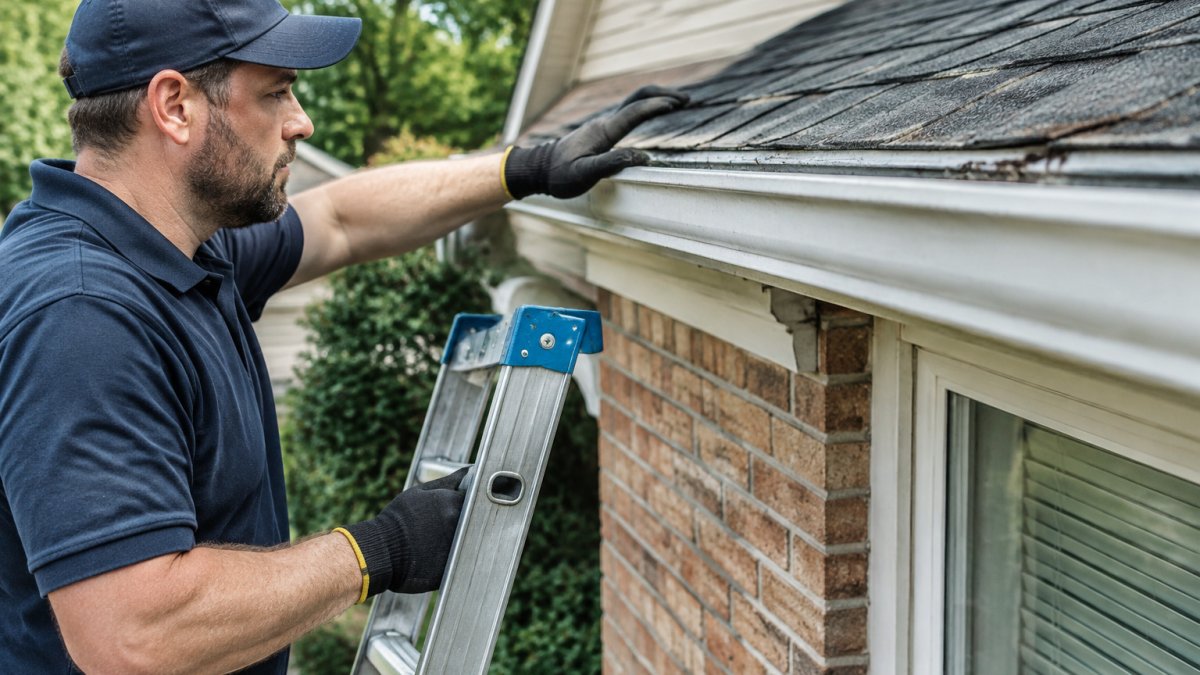
- Clearing gutters from a stable ladder at a safe height, or from the ground with an extension tool
- Vacuuming dryer vents and lint traps
- Flushing the water heater per the manufacturer's instructions, if the drain valve is accessible and in good condition
- Sealing small exterior cracks with caulk
- Cleaning refrigerator coils and checking supply hoses for bulging or cracking
Requires a licensed professional. These tasks involve gas, high-voltage electrical, height, refrigerant handling or the structural envelope. Doing them yourself can void warranties, void insurance coverage for related damage, and in some cases violate local code:
- Any gas line work, gas appliance connection or combustion testing
- Electrical panel work, new circuits, or anything beyond replacing a fixture or a switch
- Refrigerant handling and HVAC compressor or coil work
- Roof work above a safe height, and any roof repair that involves flashing or decking
- Structural repairs, foundation work and load-bearing changes
- Sewer line work and main water line repairs
Requires a permit before work begins. Most jurisdictions require permits for panel upgrades, water heater replacement, structural changes, and additions or major remodels. A contractor who offers to skip the permit is transferring the risk to you, unpermitted work can complicate a sale, an appraisal and an insurance claim.
Watch out: 'I watched a video' is not the same as 'I know the code.' If a task touches gas, the panel, the roof or the structure, the cost of a licensed professional is almost always less than the cost of correcting unpermitted or improper work later.
Professional maintenance memberships make the second and third categories easier to manage. A membership gives you scheduled seasonal visits, a single point of contact and priority scheduling, so the work happens before it becomes urgent. Lone Eagle Home Services offers membership plans with member-level service benefits. You can review plan options on our site and decide which level fits your home.
Booking Your First Seasonal Tune-Up With Lone Eagle Home Services
If you are weighing these benefits for your own home, the simplest next step is a seasonal tune-up. Lone Eagle Home Services handles inspections, scheduled service and vendor coordination for Morris County homeowners, so you deal with one team instead of several contractors. book your first seasonal tune-up and get a clear look at what your home needs before the next season arrives.
Frequently Asked Questions
How much can proactive home maintenance save me each year?
Proactive maintenance is generally understood to reduce overall repair costs compared with reactive, fix-it-when-it-breaks approaches. Savings depend on the age of your home, the systems it has, and how consistently you schedule inspections. Planned care gives you more control over when and how maintenance money is spent. Start by listing your major systems, such as HVAC, roof, plumbing, and exterior drainage, and schedule an inspection for each at least once a year.
Does proactive maintenance increase home resale value?
Well-documented maintenance history supports property value because buyers and inspectors look for systems that have been cared for rather than patched. A maintenance log showing regular service on your HVAC, water heater, and roof gives buyers confidence in the home's condition. Deferred maintenance, by contrast, often becomes a negotiating point during a sale. Keep receipts and service reports in one place, since a clear record can strengthen your position when you list the property.
Will proactive maintenance help with my home insurance?
Insurers consider the condition of a home's major systems when assessing risk, and documented upkeep can support your insurability. Small, timely checks catch issues such as worn seals, loose connections, or early roof damage before they lead to water intrusion or fire risk. Confirm the specifics with your insurance agent, since policy terms vary by carrier and state. Keeping dated service records makes those conversations simpler and gives you evidence of responsible ownership.
Is a home maintenance membership worth the cost compared with calling a handyman when something breaks?
A membership makes sense when you want scheduled seasonal tune-ups, one accountable point of contact, and priority scheduling rather than juggling several contractors. Lone Eagle Home Services offers flat-rate membership pricing and member-exclusive labor rates, with digital service reports after every visit. Pricing depends on the plan and the property, so review current options on the Lone Eagle Home Services website or request a quote before deciding. If you only need a single one-time repair, a traditional handyman may be the better fit.