 listicle
Concierge Home Repair Service Benefits in 2026
Table of Contents
- The Real Cost of Managing Home Repairs Yourself
- What a Concierge Home Repair Service Actually Does
- The Core Benefits: Time, Accountability, and Peace of Mind
- Proactive vs Reactive Home Repair: Why Prevention Wins
- Home Concierge vs Home Warranty: Which Model Fits?
- Understanding Home Maintenance Membership Cost
- Is a Concierge Service Worth It for Your Home?
- Conclusion: Make Home Care Effortless
- Frequently Asked Questions
Last Updated: September 7, 2026
The Real Cost of Managing Home Repairs Yourself
The average homeowner juggles a rotating cast of plumbers, electricians, HVAC techs, and handymen, each with their own phone number, schedule, and pricing quirks. That coordination work is unpaid labor, and it adds up in ways most people never calculate. Between the back-and-forth scheduling, the time off work for appointment windows, and the stress of wondering whether the work was done right, DIY contractor management quietly consumes hours every month.
A concierge home repair service consolidates that entire workflow into a single point of contact. Instead of calling three different vendors to diagnose one issue, you make one call and a trusted team handles the rest. Homeowners in Morris County can reclaim significant time each month simply by removing the administrative burden of home upkeep. The real cost of managing repairs yourself isn't the invoice, it's the hours and mental energy you never get back.
The Financial Case: A 5-Year ROI Breakdown
Most articles stop at saying preventive maintenance "saves money." Here is a concrete, conservative model based on typical U.S. homeowner spending patterns. This is not a guarantee; it is a framework for evaluating your own situation.
Scenario: A 2,500-square-foot single-family home, 15 years old, in a suburban market.
| Cost Category | Reactive Approach (Years 1-5) | Concierge Membership (Years 1-5) |
|---|---|---|
| Emergency Calls (e.g., after-hours HVAC, plumbing) | 3 calls/year x $450 average = $6,750 | 0 emergency calls (prevented) = $0 |
| Routine Repairs (e.g., faucet washers, door adjustments) | 4 calls/year x $250 average = $5,000 | Included in membership (labor) + parts at cost = $1,200 |
| Major System Failures (e.g., water heater, AC compressor) | 1 failure/year x $1,800 average = $9,000 | 0.5 failures/year x $1,800 = $4,500 (reduced frequency) |
| Vendor Coordination Time (scheduling, vetting, oversight) | 10 hours/year x $50/hour = $2,500 | 0 hours (handled by concierge) = $0 |
| Total 5-Year Cost | $23,250 | $5,700 + membership fees |
Membership Fee Calculation: The gap widens further when you factor in the extended lifespan of major systems, a well-maintained HVAC system can last 18-20 years versus 12-15 years for a neglected one, deferring a significant replacement cost.
This framework explains why the real cost of DIY management is rarely the invoice, it is the compounding risk of deferred maintenance and the hidden hourly cost of your own oversight.
What a Concierge Home Repair Service Actually Does
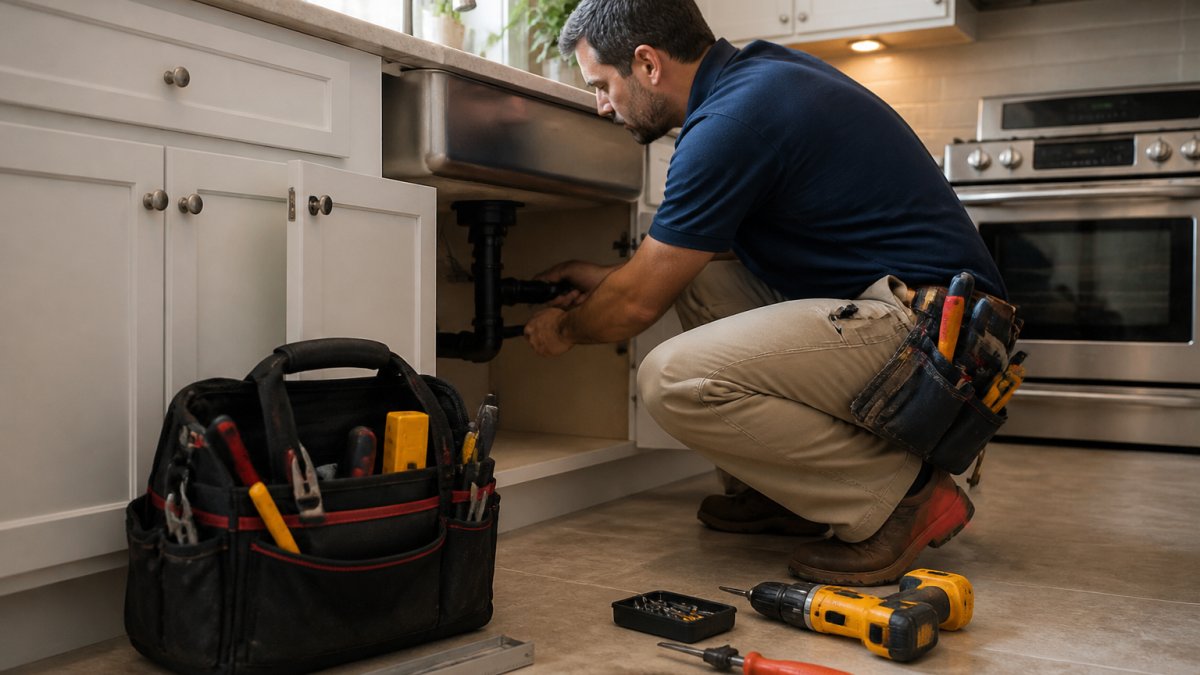
A concierge home repair service is a membership-based model where a dedicated team handles your property's maintenance, repairs, and vendor coordination under one roof. Unlike a traditional handyman you call when something breaks, this model assigns you a consistent team that learns your home's systems, history, and quirks over time.
The scope typically includes seasonal tune-ups, on-demand repairs, and project management. When a repair exceeds the team's in-house expertise, they coordinate and supervise vetted subcontractors rather than handing you a phone number. You receive confirmed appointments, clear communication, and a digital service report after every visit documenting what was done.
This contrasts sharply with the transactional nature of app-based services. Platforms like Thumbtack's service model connect you with individual pros for one-off jobs, but they leave you as the project manager. A concierge model assigns accountability to one provider who owns the outcome.
The Core Benefits: Time, Accountability, and Peace of Mind
Three outcomes drive most homeowners to switch from reactive hiring to a concierge relationship. Time savings top the list, since you stop vetting contractors and coordinating schedules. Accountability follows closely, because a membership provider has ongoing incentive to do quality work, unlike a one-off contractor who may never see you again. Peace of mind comes from knowing your home has a dedicated team monitoring its condition.

What most guides miss is that consistency drives the value. A rotating cast of strangers treats each visit as a discrete transaction. A dedicated team notices that your HVAC filter was dirty last visit, that the gutters need clearing before the next storm, and that a small crack in the driveway sealant is spreading. That institutional knowledge prevents problems rather than merely reacting to them.
Proactive vs Reactive Home Repair: Why Prevention Wins
Reactive repair is the most expensive way to maintain a home. Small issues ignored during routine maintenance often cascade into major failures requiring emergency repairs. A proactive vs reactive home repair approach shifts the focus to scheduled inspections and seasonal tune-ups that catch problems while they're cheap to fix.
Consider the difference in practice. A proactive seasonal check of your HVAC system might catch a failing capacitor costing a modest repair. Ignoring it means the system dies in July, requiring an emergency call, expedited parts, and potentially a full replacement. The [U.S. Department of Energy guidance on home maintenance(/how-to-book-professional-home-maintenance) | energy.gov] emphasizes that regular system upkeep extends equipment lifespan and maintains efficiency.
Preventive maintenance also protects your warranty coverage. Many home system warranties require documented annual service to remain valid. Skipping that schedule can void coverage precisely when you need it most, turning a covered repair into a full out-of-pocket expense.
Home Concierge vs Home Warranty: Which Model Fits?
A home warranty is an insurance product that covers specific system failures, while a home concierge provides active management and repair services. The home concierge vs home warranty distinction comes down to who initiates action. A warranty sits passive until you file a claim for a breakdown. A concierge service actively monitors, maintains, and schedules work to prevent breakdowns in the first place.
| Factor | Home Concierge | Home Warranty |
|---|---|---|
| Primary Focus | Preventive maintenance and repair | Breakdown coverage |
| Service Trigger | Scheduled tune-ups and monitoring | You file a claim after failure |
| Contractor Choice | Dedicated, vetted team | Assigned from their network |
| Coverage Model | Membership with flat-rate labor | Service fees per claim |
| Best For | Homeowners who want proactive care | Budget-conscious reactive coverage |
Warranties also carry coverage limits, exclusions, and per-claim fees that can surprise homeowners. A concierge model with flat-rate pricing offers more predictable costs for ongoing care. Many homeowners find that pairing both makes sense, using a warranty for catastrophic coverage while relying on a concierge for the maintenance that prevents most claims.
Understanding Home Maintenance Membership Cost
Home maintenance membership cost varies widely based on scope, property size, and service frequency. Some providers charge a monthly subscription covering routine tune-ups and discounted labor, while others offer annual packages with tiered service levels. The home maintenance membership cost typically reflects how many visits are included and whether vendor coordination is bundled.
When evaluating membership cost, compare it against what you currently spend on ad-hoc repairs plus the value of your time. Track your last twelve months of contractor invoices, then add an hourly rate for the scheduling and oversight you performed. Most homeowners find the comparison closer than they expect, especially when factoring in priority scheduling that prevents emergency markup.
Lone Eagle Home Services structures its membership with flat-rate pricing and member-exclusive labor rates, meaning you know the cost before work begins. That transparency eliminates the common fear of hourly billing surprises. Current membership pricing is available on the Lone Eagle Home Services pricing page, where you can also explore a trial to test the model.
Is a Concierge Service Worth It for Your Home?
A concierge service earns its keep when your time carries real value, your home has systems requiring regular attention, or you've been burned by unreliable contractors. Homeowners who travel frequently, manage rental properties, or simply dislike vendor coordination find the model most compelling. The benefits of concierge home repair become obvious when you calculate the hourly cost of your own oversight work.
But the decision to hand over your keys, literally, deserves deeper scrutiny than most guides provide. Two factors separate a professional operation from a glorified handyman referral service: security vetting and contract flexibility.
Security and Vetting Protocols: What to Demand
High-net-worth individuals and frequent travelers have a legitimate concern: who is entering my home when I am not there? A reputable concierge provider should be able to document, not just assert, its screening process. Ask for specifics on these four layers:
- Technician-Level Background Checks: Not just a county criminal search, but a national multi-state check, a sex offender registry search, and a Social Security number trace. Ask if the check is run annually or only at hiring.
- Employment Verification and Trade Licensing: Confirm that each technician has verifiable employment history and holds the appropriate state or local trade license for the work they perform. Ask to see a copy of the license and check its status with your state's licensing board.
- Insurance and Bonding: The provider should carry general liability insurance (typically $1 million or more per occurrence) and workers' compensation (iii.org). Ask for a certificate of insurance naming you as an additional insured for the duration of any major project.
- Access Control and Monitoring: Does the provider use GPS-enabled vehicle tracking? Do technicians wear uniformed, photo-identification badges? Does the provider log entry and exit times? For homes with smart locks, does the provider use temporary, single-use digital codes that expire after the visit?
Exit Strategy and Contract Flexibility
A common fear is being locked into a long-term contract with a provider that underperforms. The best providers mitigate this risk with transparent, flexible terms. Before signing, clarify the following:
- Trial Period: Does the provider offer a trial period? This allows you to verify response times, work quality, and communication without a long-term commitment.
- Seasonal vs. Year-Round: If you only need help during a specific season (e.g., winterizing a vacation home), does the provider offer seasonal contracts rather than forcing a 12-month commitment?
- Cancellation Notice: What is the required notice period for cancellation?
- Prorated Fees: If you cancel mid-cycle, are unused membership fees prorated and refunded, or are they forfeited?
- Service Transfer: If you sell your home, can the membership be transferred to the new owner or to a different property you own? This is a valuable feature that adds to the service's overall value proposition.
A provider that is confident in its service will not resist reasonable contract flexibility. If a provider demands a lengthy contract without a trial period or refuses to document its security protocols, that is a signal to keep looking.
Conclusion: Make Home Care Effortless
Managing a home shouldn't feel like a second job, yet that's exactly what happens when you coordinate multiple contractors, chase appointments, and hope the work holds up. The shift from reactive hiring to proactive membership care eliminates that stress while protecting your property value through consistent maintenance.
Lone Eagle Home Services brings this model to Morris County homeowners with a dedicated team, flat-rate pricing, and digital service reports after every visit. Our seasonal tune-ups and vendor coordination keep your home in condition year-round without the hassle of managing it yourself. Get started with Lone Eagle Home Services and let a trusted team handle the upkeep while you enjoy your home.
Frequently Asked Questions
What are the primary benefits of using a concierge home repair service?
The main benefits are time savings, accountability, and proactive care. Instead of vetting contractors for each job, you get a single trusted team that handles everything. This model prevents small issues from becoming expensive repairs through scheduled maintenance. You also get clear communication, confirmed appointments, and digital service reports after each visit, which provides peace of mind that the work is done right and your property value is protected.
How does a concierge home service differ from a standard handyman?
A standard handyman is typically hired for a single, specific task. A concierge home service operates on a membership model focused on long-term home upkeep. It provides a dedicated team for seasonal tune-ups, on-demand repairs, and vendor coordination. This approach includes accountability through systems and digital reports, rather than a single person's availability. It focuses on preventive maintenance to avoid future problems, not just fixing what is broken today.
Are concierge home repair services cost-effective for the average homeowner?
Cost-effectiveness depends on how you value your time and the condition of your home. The home maintenance membership cost is a predictable flat rate that covers planned visits and member-exclusive labor rates. This model is often more cost-effective than paying for emergency repairs after a small issue goes unnoticed. For homeowners who are busy or lack the skills to manage upkeep, the cost is offset by preventing major, expensive failures.
What types of maintenance are typically included in a concierge home plan?
Plans usually include seasonal tune-ups for major home systems like HVAC and plumbing, plus routine checks that catch wear and tear early. The focus is on preventive maintenance, such as inspecting for leaks, testing sump pumps, and checking gutters. It also covers on-demand repairs for issues that arise between visits. The goal is to manage the full scope of home upkeep through a single service provider, ensuring nothing is missed.