 how-to
How to Know When to Call a Professional for Home Repairs
Last Updated: October 26, 2026
Quick Summary
Call a pro when to call a professional for home repairs involves water you cannot shut off, electricity you cannot isolate, gas, fire risk, or anything structural. Handle it yourself only when the job is cosmetic, low-risk, and within your actual skill level. One "yes" on the three-question test means stop and call a specialist.
- Run every repair through three questions: can it hurt someone, can it get worse fast, and does the law require a licensed pro.
- DIY is fine for painting, caulking, patching drywall, swapping a faucet washer, and tightening cabinet hinges.
- A breaker that trips repeatedly is a warning, not a nuisance, so stop resetting it and get it looked at.
- A handyman cannot legally perform electrical, plumbing, or gas work in most jurisdictions.
- Get at least three written bids on the same scope before signing anything.
Table of Contents
- When to Call a Professional for Home Repairs: A Hazard and Urgency Triage
- DIY vs. Professional Home Repairs: Where the Line Actually Sits
- Home Repairs That Require a Professional: Electrical, Plumbing, Roofing, and Gas
- Handyman vs. Contractor: Matching the Trade to the Scope of Work
- Permits, Licensing, Insurance, and Code Compliance
- Questions to Ask Before Hiring a Contractor
- Repair Cost Comparisons and the Total Cost of DIY
- See Plans and Put Your Home on a Proactive Maintenance Schedule
- Frequently Asked Questions
When to Call a Professional for Home Repairs: A Hazard and Urgency Triage
Half of all homeowners took on maintenance work in 2026, and 34% tackled repairs, according to Home Improvement Research Institute project activity trends. Yet cost pressure keeps pushing people to delay: 59% say they put off necessary repairs because of the expense, per American Home Shield's maintenance statistics.
Here is the short answer. Call a pro when the work involves water you cannot shut off, electricity you cannot isolate, gas, fire risk, or anything structural. Handle it yourself only when the job is cosmetic, low-risk, and within your actual skill level.
Below is a breakdown of where that line sits, trade by trade.
The Three-Question Test Before You Touch Anything
Run every repair through three questions before you pick up a tool.
- Can this hurt someone? Gas, live electrical, or a roof edge above a drop all say yes.
- Can this get worse fast? Active leaks, sewage backup, and sparking outlets spread damage by the hour.
- Does the law require a licensed pro? Many electrical, plumbing, and gas jobs do.
One "yes" means stop and call a specialist. Three "no" answers mean DIY is on the table.
DIY vs. Professional Home Repairs: Where the Line Actually Sits
The line sits at risk, not difficulty. A hard tile job is still DIY-friendly. An easy outlet swap can kill you.
A common mistake is judging a repair by how long it takes. Time is the wrong measure. Ask what happens if it fails.
- DIY is fine for: painting, caulking, patching drywall, swapping a faucet washer, tightening cabinet hinges.
- Professional help is the safer call for: anything behind a wall, anything tied to power or water supply, and anything above head height on a roof.
What DIY Saves and What It Costs
DIY saves labor, but the savings shrink fast when a job goes wrong. ConsumerAffairs found that about 1 in 4 homes need serious repairs, and 45% of homes are less safe because repairs were neglected (ConsumerAffairs home repair survey).
That is the hidden cost. A botched DIY fix often costs more to undo than the pro would have charged to do it right.
Home Repairs That Require a Professional: Electrical, Plumbing, Roofing, and Gas
Some repairs should never be a learning project. Electrical, plumbing, roofing, and gas work all carry real safety and legal stakes.
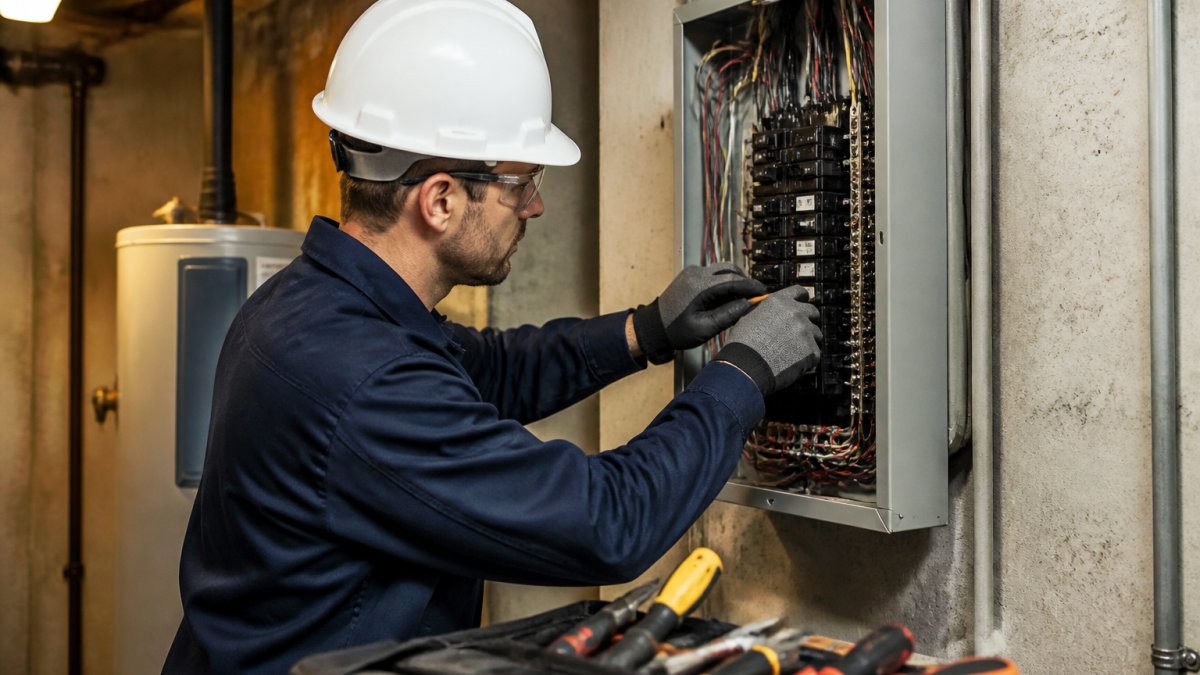
We tell homeowners to treat these four trades as off-limits for DIY unless they are trained and licensed.
Electrical Work and Panel Risks
Electrical work is the highest-risk category in the house. A wrong connection can cause a shock or start a fire inside a wall.
Watch out: a breaker that trips repeatedly is not a nuisance. It is a warning. Stop resetting it and get it looked at. Our guide to the 5 signs of electrical wiring failure covers the warning signs that mean call an electrician now.
Plumbing, Sewer Lines, and Water Shutoff
Plumbing problems split into two groups. A dripping faucet is a small fix. A pipe break or sewer line backup is an emergency repair.
Know where your water shutoff is before you need it. If you cannot stop the water, call a plumber immediately.
Roof Damage, Hail Damage, and Gas Lines
Roof damage and hail damage get worse with every storm. A small leak can rot decking and soak insulation within weeks. Waiting rarely saves money, and the costly outcomes of ignoring roof leaks tend to compound fast.
Gas lines are simple: if you smell gas, leave the house and call your utility and a licensed pro. Do not test it yourself.
Handyman vs. Contractor: Matching the Trade to the Scope of Work
The choice comes down to scope of work and licensing. A handyman handles small fixes. A contractor runs large-scale projects and pulls permits. A licensed trade specialist handles work the other two are not legally allowed to touch.
| Repair type | Best fit | Typical examples |
|---|---|---|
| Small fix | Handyman | Caulking, drywall patch, door adjustment, furniture assembly |
| Trade-specific | Licensed trade pro | Electrical, plumbing, gas, roofing, HVAC |
| Large-scale project | General contractor | Kitchen remodel, bathroom remodel, additions, structural changes |
A handyman is not licensed for work that requires a permit, and in most jurisdictions a handyman cannot legally perform electrical, plumbing, or gas work at all.
How to Evaluate Estimates and Avoid Unreliable Contractors
The estimate is where most bad projects begin.
1. Get at least three written bids on the same scope. Give every bidder the same written description of the work so the numbers are comparable.
**2.
**3.
4. Check references and recent local work. Ask for two or three references from the past year and actually call them.
5. Confirm the warranty on labor in writing. Manufacturer warranties cover materials; the contractor's warranty covers installation. Get the labor warranty term in the contract.
**6.
For a deeper vetting checklist, see our guide to finding reliable home repair professionals.
Permits, Licensing, Insurance, and Code Compliance
Permits and licensing exist to protect you, not just the pro. Unpermitted work can fail an inspection, void a manufacturer's warranty, and complicate a future sale when a buyer's inspector flags work with no record on file.
Here is a workflow for verifying both before any pro starts.
How to Verify a License and Insurance
- Ask for the license number, not just a business card. A legitimate trade pro can give you a state or local license number in writing.
- Look it up yourself. Most states maintain a free online license lookup through the state licensing board or contractor registration office. Search the number and confirm the name, trade, status, and expiration date match the person in front of you.
- Confirm the trade matches the job. A general contractor's license does not authorize electrical, plumbing, or gas work in most jurisdictions. Those require a separate trade license.
- Request a certificate of insurance directly from the insurer. Ask for both general liability and workers' compensation. A certificate emailed from the insurer, not a photocopy from the contractor, is harder to fake.
- Call the insurer to confirm the policy is active. Certificates can be outdated. A two-minute call closes that gap.
When a Permit Is Usually Required
Permit rules vary by jurisdiction, but a common pattern across most U.S. building departments is that permits are required for work that changes the structure, the electrical system, the plumbing system, or the mechanical system. Typical examples:
- Adding, moving, or removing walls, or altering load-bearing structure
- New electrical circuits, panel upgrades, or service changes
- New or relocated plumbing lines, water heaters, and gas piping
Cosmetic work, paint, caulk, a faucet washer, a drywall patch, generally does not require a permit. When in doubt, call your local building department and ask. The call is free; the correction is not.
Who Pulls the Permit
In most jurisdictions the licensed contractor pulls the permit, and the permit must be posted and inspected at defined stages. Be wary of any pro who suggests pulling the permit as the homeowner to "save time", that can shift liability and inspection responsibility onto you. Ask directly: "Will you pull the permit, and will the inspection be scheduled under your license?"
Code Compliance and Resale
Code compliance matters for safety first and resale second. When you sell, a buyer's inspector will look for unpermitted work, and a lender may require it to be corrected or retroactively permitted before closing. Retrofitting a permit after the fact is possible in many jurisdictions but usually costs more than pulling it up front and can require opening walls for inspection.
Questions to Ask Before Hiring a Contractor
The right questions separate a reliable pro from a risky one. Ask them before you sign anything.
- Can you show your license and insurance certificate?
- What is the full scope of work in writing?
- Is your quote flat-rate or hourly?
- Who handles permits and inspections?
- What is your warranty on labor?
- Can you provide recent local references?
For a deeper vetting checklist, see our guide to finding reliable home repair professionals.
Repair Cost Comparisons and the Total Cost of DIY
The cheapest quote is not always the lowest total cost. DIY looks free until you add tools, materials, and the cost of fixing a mistake.
Professional help costs more up front but usually comes with quality workmanship and a warranty. Understanding flat-rate pricing and how to spot fair quotes helps you compare estimates on equal footing.
A simple way to decide: add your time, tool purchases, and the risk of a redo. If that total nears a pro quote, hire the pro.
See Plans and Put Your Home on a Proactive Maintenance Schedule
The best repair is the one you never need. Proactive seasonal tune-ups catch small problems before they become expensive issues.
That is what our membership is built for. Lone Eagle Home Services provides one trusted team for maintenance and vendor coordination, with flat-rate pricing.
We are licensed and insured, with 5.0 Google Reviews. When you are ready to stop reacting and start preventing, see the plans and membership options for your home.
Frequently Asked Questions
How do I know when a home repair is beyond my DIY skills?
Run three checks. First, does the work involve the electrical panel, gas line, sewer line, or roof at height? Those are home repairs that require a professional because a mistake creates fire, gas, or structural risk. Second, does it need a permit? Permit requirements vary by jurisdiction. Third, can you finish it this weekend without specialized tools? If any answer is yes, stop and call a licensed professional.
When should I call a handyman instead of a contractor?
The handyman vs. contractor decision comes down to scope and licensing. A handyman suits small fixes: patching drywall, replacing a faucet, caulking, or hanging doors. A contractor is the right call for renovation, kitchen or bathroom remodel work, structural changes, or anything requiring a permit. If the job crosses into electrical, plumbing, or gas systems, you need a licensed trade specialist, not a generalist. Ask upfront which licenses the person holds and whether the work will be permitted.
What should I ask before hiring someone to repair my home?
Ask for the license number and verify it with your state or local licensing board. Request a certificate of insurance showing general liability and workers' compensation, and confirm the policy is current. Get a written scope of work with a fixed price or clear rate structure, a start date, and a completion date. Ask who pulls the permit, what the warranty covers, and who is liable if something goes wrong. Also ask for two recent references for similar work and confirm the crew is uniformed.
What is the total cost of DIY versus hiring a professional for home repairs?
DIY looks cheaper until you count the full picture: materials, tool purchases, your time, and the cost of fixing a failed attempt. A botched plumbing repair can lead to a pipe break and water damage that far exceeds the original job. Compare the quoted price against your hourly value and the downside risk, not just the parts cost.
The real challenge is not one repair. It is managing a dozen contractors, chasing callbacks, and hoping nothing slips. Lone Eagle Home Services removes that burden with membership-based home care, background-checked technicians, and clear flat-rate pricing. Get started with Lone Eagle Home Services and put your home on a schedule that prevents costly surprises.