 how-to
What Happens If You Ignore Roof Leaks: 7 Costly Outcomes
Table of Contents
- Why a Small Leak Never Stays Small
- 1. Water Damage From Roof Leak Spreads Through Your Home
- 2. Structural Damage: Rot in Roof Decking, Rafters, and Framing
- 3. Mold Growth, Mildew, and Health Risks Indoors
- 4. Insulation Damage and Higher Energy Bills
- 5. Electrical Hazards, Fire Risk, and Reduced Roof Lifespan
- How to Find a Roof Leak and Spot the Signs of a Roof Leak Early
- Roof Leak Emergency Steps: What to Do in the First Hour
- Frequently Asked Questions
Last Updated: October 15, 2026
Why a Small Leak Never Stays Small
A roof leak is water intrusion through a gap, crack, or worn spot in your roof system that lets moisture into your home. What happens if you ignore roof leaks?
Water follows gravity and finds every path downward. Within 48 hours, mold can start growing in damp materials, according to the EPA guide to mold cleanup.
Most homeowners spot the problem only when a ceiling stain appears. By then, water has been moving through the roof system for weeks.
The longer you wait, the more the damage spreads:
- Soft, rotted wood framing
- Stained or sagging drywall
- Wet insulation that stops working
- Mold that hurts indoor air quality
Below, we cover the seven costly outcomes of ignoring a roof leak, plus what to do in the first hour after you find one.
1. Water Damage From Roof Leak Spreads Through Your Home
Water damage from a roof leak rarely stays in one spot. It wicks through materials and spreads along the path of least resistance, often far from where the leak started.
How Water Travels Along Decking and Framing
Water enters at a broken shingle or flashing gap and soaks into the roof decking. From there, it runs along rafters and wood framing, dripping into attic insulation and down into wall cavities. You might see a stain in one room while the actual leak sits ten feet away.
Ceiling Stains, Drywall Damage, and Sagging Surfaces
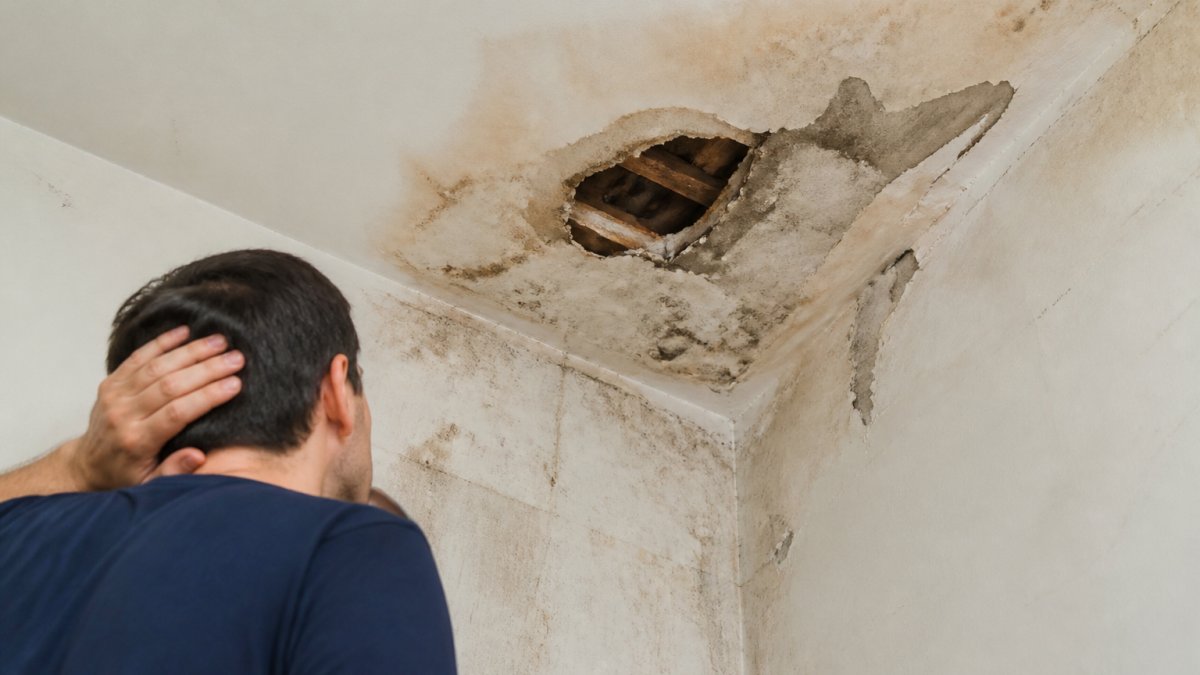
Ceiling stains are the most visible sign. Brown rings, bubbling paint, and soft spots all point to moisture buildup above the drywall. Left alone, drywall damage worsens until the surface sags and risks collapse. A common mistake is painting over a stain without fixing the source. The leak returns, and the damage keeps growing.
2. Structural Damage: Rot in Roof Decking, Rafters, and Framing
Rot is the quiet killer of a roof system, and it follows a predictable sequence. Once roof decking stays wet, wood-destroying fungi colonize the fibers. The wood doesn't just get soft, it loses cross-sectional strength, which is what carries the weight of shingles, snow, and anyone who walks the roof for service. A rafter that has lost a third of its effective section can still look fine from the attic until it deflects under load.
How the Damage Progresses
- Decking saturation. Water enters at a failed flashing detail, a lifted shingle, or a worn pipe boot and soaks the sheathing. Plywood and OSB delaminate as the glue lines break down.
- Framing wicking. Moisture travels along rafters and top plates into wall cavities. This is why a stain can appear ten feet from the actual entry point.
- Fastener and connection decay. Nail and screw shanks corrode, and the wood around them softens. Connections that once transferred load start to slip.
- Deflection and sag. Once enough section is lost, rafters bow, the roofline dips, and the deck can no longer support snow load or foot traffic.
What Changes the Timeline
Not every leak moves at the same speed. A slow drip that only wets the deck during heavy rain may take months to cause visible rot. A leak that keeps sheathing continuously damp, common around chimneys, valleys, and skylights, can support fungal growth in a matter of weeks in warm, humid conditions. Cold weather slows fungal activity but doesn't stop freeze-thaw cycling, which opens gaps and drives water deeper into joints.
Triage: What Needs Attention Now vs. Soon
- Emergency (same day): Active water entering living space, a sagging or bulging ceiling, or a roofline that has visibly dropped. These point to possible structural compromise and should be evaluated before anyone walks the roof.
- Prompt (within days): Damp decking or framing found during an attic inspection, soft spots, or a leak that reappears with every rain. Schedule a repair before the next significant storm.
- Scheduled (within weeks): A confirmed but slow leak in a vent boot or flashing with no interior water yet. Still worth fixing quickly, but it doesn't require emergency response.
Signs to Watch For
- Spongy or soft spots in the attic decking
- Sagging rooflines or a dip visible from the street
- Cracked, bowed, or split rafters
- Crumbling wood and rusted fasteners around the leak
What most guides miss is that the fix changes category once rot sets in. A shingle and flashing repair is a maintenance job. Replacing decking, sistering rafters, or rebuilding a section of framing is a structural project with permits, inspections, and a much larger scope. Catching the leak while it's still a maintenance job is the entire point.
3. Mold Growth, Mildew, and Health Risks Indoors
Mold growth starts fast in damp, dark spaces like attics and wall cavities. Mildew and mold release spores that hurt indoor air quality and can trigger allergies and breathing problems.
The CDC information on mold and health notes that mold exposure can cause coughing, wheezing, and eye irritation. For anyone with asthma or allergies, the health risks are worse. Mold also spreads.
4. Insulation Damage and Higher Energy Bills
Wet insulation stops doing its job. Once fiberglass or cellulose insulation gets soaked, it loses the ability to trap heat. That means energy loss, higher energy bills, and a home that never feels comfortable.
You may notice rooms that stay cold in winter or hot in summer. Your HVAC system runs longer to keep up, which drives up utility costs month after month.
5. Electrical Hazards, Fire Risk, and Reduced Roof Lifespan
Water and electricity don't mix. When moisture reaches wiring, outlets, or light fixtures in a ceiling, it creates electrical hazards and a real fire risk. Frayed wiring near a leak can spark.
A leaking roof also shortens your roof lifespan. Shingles lift, underlayment breaks down, and the whole roof system ages faster. A roof that should last decades may need early replacement.
How to Find a Roof Leak and Spot the Signs of a Roof Leak Early
Finding the leak early saves money. The trick is knowing the signs of a roof leak before water shows up on your ceiling.
Start with a roof inspection from inside your attic on a rainy day. Look for:
- Water stains or dark streaks on rafters
- Damp or discolored roof decking
- Dripping water or moisture buildup
- Musty smells near insulation
On the roof itself, check for missing shingles, cracked flashing, and worn seals around vents and chimneys. A quick check after big storms catches small leaks before they spread.
How to Tell a Roof Leak From Condensation or Plumbing
Not every ceiling stain comes from a roof leak. Condensation and plumbing leaks look similar but need different fixes.
- Roof leak: stains grow after rain, often near the roof edge or under a chimney.
- Condensation: appears in cold weather, tied to poor attic ventilation.
- Plumbing leak: shows up steadily, rain or shine, often near bathrooms or kitchens.
If you're unsure, a professional roof inspection settles it fast.
Roof Leak Emergency Steps: What to Do in the First Hour
Act fast when you find a leak, but act safely. The first hour is about containing water, protecting people and belongings, and creating a record, not about climbing onto a wet roof. Here's a practical sequence that most consequence-focused articles skip.
Safety First
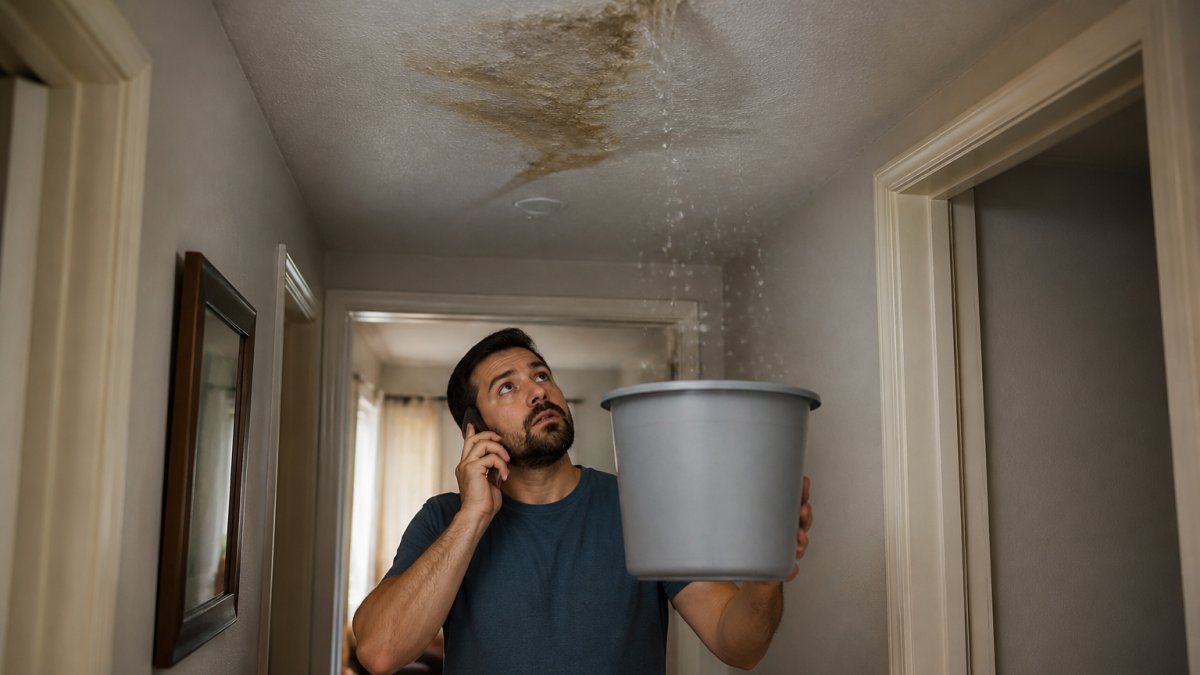
- Treat any ceiling with a bulge as a hazard. A bulging ceiling is holding trapped water and can release suddenly. Keep people and pets out from under it.
- Cut power to affected circuits. If water is near ceiling lights, outlets, or fixtures, turn off the breaker for that area before you touch anything wet. If you can't identify the right breaker, stay clear and call an electrician.
- Don't climb onto a wet roof. Wet shingles, ladders on soft ground, and live wiring near a leak make roof access the most dangerous part of the job. Leave the roof to a professional.
- Ventilate if you smell musty or burning odors. A burning smell near a wet fixture can indicate an electrical problem, leave the area and call for help.
Contain the Water
- Move valuables and furniture out from under the leak. Prioritize electronics, documents, and anything that stains.
- Place a bucket or bin under the drip. Add a towel or plastic sheet underneath to catch splash.
- If the ceiling bulges, place a bucket below, then poke a small hole at the low point of the bulge with a screwdriver to release water in a controlled way. Stand aside, the release can be sudden.
- Lay plastic or a tarp over belongings you can't move, especially under a drip that's spreading.
- Soak up standing water on floors and wipe down surfaces to limit warping and mold.
Document Everything for Insurance
This is the step most homeowners skip and later regret.
- Photograph the leak, the stain, the bulge, and any damaged items before you clean up. Take wide shots for context and close-ups for detail.
- Record video of active dripping if it's safe to do so.
- Keep receipts for anything you buy to contain the damage, tarps, buckets, fans, dehumidifiers, hotel stays if the home becomes unsafe.
- Log the date and time you discovered the leak and each action you took. Mitigation records support the claim.
Temporary Mitigation Until Help Arrives
- Use fans and a dehumidifier to dry the area and slow mold growth.
- A tarp over the roof can limit further intrusion, but only if it can be placed safely from the ground or by a professional. Don't improvise roof access.
- Don't seal interior surfaces with paint or caulk. Trapped moisture feeds mold and hides the evidence your insurer needs.
When to Call a Professional
Call a roofer for any leak that reaches the interior, any leak near wiring, and any leak you can't trace. Call an electrician if water is near fixtures or you smell burning.
For most homeowners, the safest move is a temporary patch and a call to a trusted team. Lone Eagle Home Services offers members priority scheduling and a single point of contact for every repair.
Frequently Asked Questions
What damage can a roof leak cause if left untreated?
Untreated leaks cause water damage that spreads through decking, rafters, and wood framing, leading to rot and structural damage. Insulation soaks through and loses effectiveness, ceiling and drywall develop stains and sag, and mold growth can begin within 48 hours. Electrical hazards and fire risk rise when water reaches wiring. Repair costs climb the longer you wait, and some insurance claims get denied for neglect.
How quickly can a roof leak cause serious damage?
Mold growth can start within 48 hours of water intrusion, especially in warm, humid conditions. Ceiling stains and drywall damage often appear within days. Rot in roof decking and rafters develops over weeks to months of repeated wetting and drying. A small leak that seems harmless in week one can mean structural repairs by month three, which is why prompt repair matters more than the leak's current size.
What should you do first when you find a roof leak?
Move furniture and electronics away from the drip, place a bucket underneath, and photograph the damage for your insurance claim. If water is near outlets or light fixtures, cut power to that area at the breaker. Do not climb onto a wet roof. Call a roofing professional the same day. These roof leak emergency steps limit water damage from roof leaks while you wait for help.
Can a small roof leak cause mold?
Yes. Even a slow drip creates the moisture buildup mold needs, and growth can begin within 48 hours in attic spaces and wall cavities. Mold and mildew damage insulation, wood framing, and indoor air quality, and can trigger health risks for sensitive people. Because mold often hides behind drywall and above ceilings, homeowners frequently discover it only after a roof inspection or when a musty smell appears.