 how-to
7 Signs It's Time to Outsource Residential Repairs
Last Updated: October 30, 2026
Quick Summary
Outsource residential repairs when the job involves gas, high-voltage electrical, or structural work, when a problem keeps coming back, or when a permit is required. It also makes sense when you lack the right tools, the time, or the warranty coverage to finish the work properly.
- Hire a licensed pro for gas, high-voltage electrical, or structural repairs.
- A repair that keeps recurring signals a root cause that needs professional diagnosis.
- Confirm a contractor's license through the state's official lookup before work begins.
- Compare cost per work order for three months before deciding in-house or outsourced.
- Request a certificate of insurance directly from the insurer, not from the contractor.
Table of Contents
- Why the Decision to Outsource Repairs Matters
- DIY vs. Hiring a Contractor for Home Repairs: A Decision Framework
- 7 Signs Your Repair Should Go to a Professional
- The Real Cost of Outsourcing Home Maintenance
- Home Repair Contractor Checklist: What to Verify Before You Hire
- Hybrid Models: Single-Provider Maintenance Versus Ad Hoc Hiring
- Booking Your Next Repair Through Lone Eagle Home Services
- Frequently Asked Questions
Why the Decision to Outsource Repairs Matters
Knowing when to outsource residential property repairs can save you time, money, and a lot of stress, and the right call often comes down to recognizing when it's smarter to outsource residential repairs rather than tackle them alone.
Lone Eagle Home Services works with Morris County homeowners who face this exact problem every season. This guide gives you a clear way to decide when to call a pro and when to handle the job yourself.
Maintenance costs add up over time, so treat cost as a planning factor when deciding how to handle each repair.
- Time: Repairs eat weekends and evenings.
- Money: Small fixes that go unaddressed often turn into bigger bills.
- Safety: Some jobs carry real risk.
DIY vs. Hiring a Contractor for Home Repairs: A Decision Framework
Doing it yourself is not always the wrong call. A simple decision framework makes the choice clearer. Ask four questions before you pick up a tool.
- Is it safety-critical? Gas, electrical panels, and structural work belong to licensed pros.
- Do you have the right tools and skills? A repair you can't finish is worse than no repair.
- How urgent is it? Active leaks and no-heat situations need fast action.
- Will it recur? A band-aid fix on a recurring problem usually costs more over time.
Pros of DIY:
- Lower upfront cost on simple jobs
- Flexible timing
- Good for learning basic home systems
Cons of DIY:
- Mistakes can cause water, fire, or electrical damage
- Time spent can be significant
- Warranties can be voided by unpermitted work
Pros of hiring a contractor:
- Licensed, insured work
- Faster completion
- Fewer callbacks when the job is done right
Cons of hiring a contractor:
- Higher upfront cost
- Vetting takes effort
- Scheduling can lag without a single point of contact
7 Signs Your Repair Should Go to a Professional
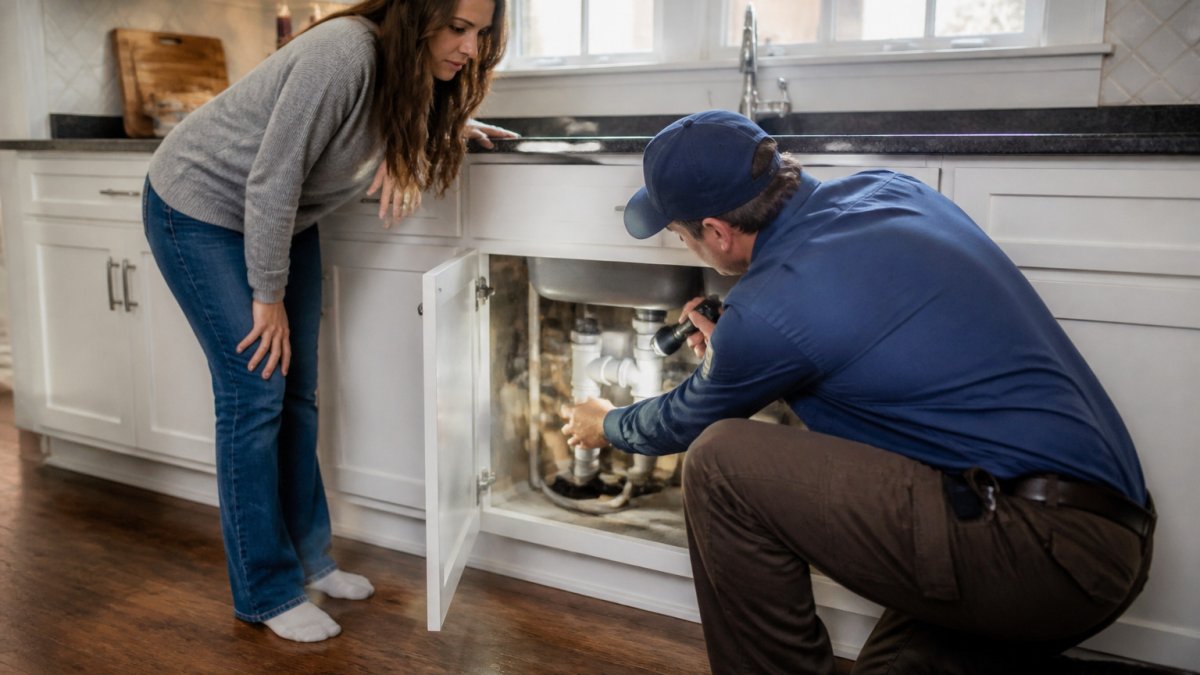
If one of these signs shows up, stop and call a professional. Each one points to a job where outsourcing makes sense.
- The repair involves gas, high-voltage electrical, or structural work.
- The problem keeps coming back after a fix.
- You need a permit to complete the work.
- The job requires specialized equipment you don't own.
- Water damage has spread beyond one visible spot.
- You don't have the time or energy to finish the job well.
- The repair affects a system covered by a warranty.
Watch out: A failed DIY repair often costs more than a professional job would have from the start. Stop before the damage spreads.
Safety-Critical and Licensed Trade Work
Some repairs are not a good place to experiment. Electrical panels, gas lines, and roof structures call for licensed trade work. A licensed electrician or plumber carries the training and insurance that protect your home and your family.
Check the license before you hire anyone. Licensing rules are set at the state level, so confirm the contractor's registration with the state before work begins.
Repairs That Keep Recurring
A repair that returns every few months points to a root cause you haven't found. Patching it again just delays the bill. A professional can diagnose the underlying problem, such as a drainage issue behind a wall or a worn part in a system.
Think of the recurring pattern as a signal. Once the same problem returns twice, the cost of finding the real cause usually pays off.
The Real Cost of Outsourcing Home Maintenance
Most homeowners compare a contractor's invoice to the price of a part and stop there. That comparison is incomplete. The honest way to decide whether to outsource a repair is to compare the fully loaded cost of doing it in-house against the fully loaded cost of hiring it out, not the sticker price of one job against the sticker price of another.
What in-house capacity actually costs
When you keep repair work in-house, the visible cost is materials and your own weekend hours. The hidden costs are larger:
- Labor and payroll taxes. If you pay anyone, a handyman, a family member on payroll, a part-time maintenance worker, you owe employer-side Social Security and Medicare taxes, federal and state unemployment insurance, and workers' compensation premiums. Those add a meaningful percentage on top of the wage itself.
- Tools and equipment. A pressure washer, a drain snake, a multimeter, a ladder rated for roof access, and a wet/dry vac add up quickly, and each one needs storage, maintenance, and eventual replacement.
- Insurance and liability. General liability coverage for repair work is separate from a standard homeowners policy, and an uninsured helper injured on your property can create a claim your policy may not cover.
What outsourcing actually costs
A contractor's invoice bundles labor, tools, insurance, licensing, and warranty into one number. The line items to scrutinize are:
- Trip and diagnostic fees. Many trades charge a service call fee that is separate from the repair itself.
- After-hours and emergency surcharges. Weekend, holiday, and overnight calls commonly carry a premium.
- Material markups. Contractors typically mark up parts; ask whether the quote reflects that.
The comparison that actually matters
Build a simple cost-per-work-order figure for each option. For in-house work, add materials, any wages and payroll taxes, a prorated share of tool and insurance costs, and an honest estimate of your own time.
Simple, repeatable tasks often stay cheaper in-house, while work requiring a license, a permit, specialized tools, or a warranty is often cheaper outsourced once callbacks and liability are counted.
When you request quotes, ask each contractor to break out labor, materials, permits, and disposal separately. A quote you can compare line by line is worth more than a single lump sum, even if the lump sum looks lower.
The article compares the hidden costs of keeping repairs in-house with the line items to check on a contractor's invoice.
| Cost category | Typical item | Why it matters |
|---|---|---|
| In-house labor | Payroll taxes and workers' comp | Adds a percentage on top of wages |
| In-house tools | Pressure washer, drain snake, ladder | Needs storage, upkeep, replacement |
| In-house liability | General liability coverage | Separate from homeowners policy |
| Outsourced fees | Trip and diagnostic fees | Often billed apart from the repair |
| Outsourced surcharges | After-hours and emergency premiums | Weekend, holiday, overnight calls |
| Outsourced extras | Permit fees and disposal | May be passed through separately |
| Decision method | Cost per work order | Compare both options over three months |
Home Repair Contractor Checklist: What to Verify Before You Hire
A checklist is only useful if you know how to verify each item and what goes wrong when you skip it. The list below pairs each check with the mechanism for confirming it and the residential risk it controls.
Licensing and registration
- Confirm the license or registration for the specific trade. Licensing is set at the state level, and many states require home improvement contractors to register separately from trade licensing. Verify through the state's official lookup rather than accepting a number on a business card. Use the NJ registration lookup to confirm status and insurance. Learn what to check and which questions to ask before hiring.
- Match the license to the work. An electrical license does not cover plumbing, and a general contractor's registration does not substitute for a licensed trade on gas, electrical, or structural work.
- Check for complaints and disciplinary actions. Most state licensing boards publish enforcement records. A clean license with a pattern of complaints is a different risk than a clean record.
Insurance and liability
- Request a certificate of insurance directly from the insurer, not from the contractor. Confirm general liability limits and that workers' compensation coverage is active.
- Confirm the policy names the correct entity. A certificate for a different company name than the one on your contract may not cover the crew on your property.
- Ask whether subcontractors carry their own coverage. If the contractor uses subs, their insurance status matters as much as the contractor's.
Permits and code compliance
- Ask who pulls the permit. On permitted work, the permit should be pulled by the licensed contractor, and the final inspection should be scheduled before final payment.
- Confirm the scope matches the permit. A permit for a water heater replacement does not cover relocating a gas line.
- Keep the inspection record. It is your evidence that the work met code if you sell or refinance.
Contract and payment terms
- Get a written scope that lists materials, labor, timeline, and what is excluded.
- Tie payments to milestones, not to a large upfront deposit. A common structure is a modest deposit, progress payments at defined milestones, and a final payment after inspection and walkthrough.
- Put the warranty in writing, including what it covers, how long it lasts, and who honors it if the contractor is unavailable.
Residential-specific triage before you call anyone
Not every repair needs the same vendor, and some need a licensed professional immediately. Sort the job before you start vetting:
- Urgent habitability and safety issues, no heat, no hot water, active water intrusion, gas odor, exposed wiring, sewage backup, or a roof leak over living space. These need a licensed trade and a fast response; do not wait for a general handyman.
- Routine repairs, a dripping faucet, a sticking door, a worn outlet cover, a running toilet. These can go to a general maintenance provider or a capable in-house hand.
- Deferred and cosmetic work, painting, caulking, landscaping, and minor cosmetic fixes. These are the safest to batch and schedule.
Service-level standards to write into the agreement
Vendor selection does not end at the signature. Ask each contractor to commit to measurable standards in writing:
- Response time for urgent versus routine requests, stated in hours.
- Completion time targets by job type.
- Repeat-repair policy, how many return visits are covered before the job is treated as unresolved.
A contractor who will not put response and completion targets in writing is telling you something useful. The vendors who will are the ones worth keeping on a short list.
Hybrid Models: Single-Provider Maintenance Versus Ad Hoc Hiring
Many homeowners end up with a mix of approaches. One option is calling a different contractor every time something breaks. Another is working with one provider who handles routine care and urgent repairs.
Ad hoc hiring:
- You choose the best fit for each job
- You repeat the vetting process every time
- Coordination falls on you
Single-provider maintenance:
- One point of contact for all repairs
- Proactive tune-ups catch small issues early
- Consistent accountability
Many busy homeowners find the single-provider route simpler. For a closer look at how a preventative schedule fits a busy calendar, see our guide on preventative home maintenance for busy professionals.
Booking Your Next Repair Through Lone Eagle Home Services
Lone Eagle Home Services provides membership-based home maintenance for Morris County homeowners, including seasonal tune-ups, on-demand repairs, and vendor coordination.
Our team is licensed and insured, and we provide uniformed technicians and digital service reports after every visit. You can see the membership options on the Lone Eagle Home Services website.
Ready to stop juggling contractors? Explore our membership plans to see how a single maintenance team can handle your repairs. If you're not sure how to get started, learn how to book professional home maintenance step by step.
Frequently Asked Questions
Does outsourcing home repairs make things cheaper?
Not always on a single job. A licensed contractor brings the right tools, insurance and warranty on the work, while a DIY attempt can turn a small fix into a larger one if the diagnosis is wrong. Outsourcing tends to cost less over time when it prevents recurring failures and repeat visits. Get at least two written estimates that list labor, materials, permit fees and warranty terms so you compare the same scope of work, and ask what happens if the repair does not hold.
When should a homeowner hire a professional instead of doing a repair themselves?
Hire a professional whenever the work involves gas, live electrical circuits, structural changes, roofing at height, or any task that requires a permit. Also outsource repairs where you cannot identify the root cause, where the problem has returned after a previous fix, or where the job would take you several weekends. Safety and code compliance are the strongest reasons to hand work to a licensed trade, and they matter more than the price of the repair itself.
Is it better to hire individual contractors or use a home maintenance service?
Individual contractors work well for a single, well-defined project such as a roof replacement. A maintenance service fits homeowners who face many small, recurring tasks and want one point of contact for scheduling, vendor coordination and records. Compare the two by counting how many separate trades you would need per year, how much time you spend chasing appointments, and whether you want written service reports after each visit.
Quick note on where to start: If a repair falls under one of the seven signs above, call a professional before the problem grows.