 how-to
How to Winterize a Vacation Home Before You Leave
Last Updated: October 30, 2026
Quick Summary
To winterize a vacation home, shut off the main water supply, open every faucet, and drain the lines, fixtures, and water heater so no water is left to freeze. If the home is monitored and heat is reliable, you can instead keep the thermostat at 55°F or higher.
- Set the thermostat no lower than 55°F if you choose to leave the heat on.
- Draining is the safer choice for homes with well systems, exterior pipe runs, or unheated crawl spaces.
- Shut off both washing machine supply valves, drain the hoses into a bucket, and leave the drum door open.
- Disconnect every hose and drain outdoor faucets, since a frost-free sillcock with a hose attached can crack.
- Remote temperature sensors that text you when the house drops below a set point give you time to act.
Table of Contents
- Why Winterizing a Vacation Home Matters More Than You Think
- Decide First: Leave the Heat On or Drain the Plumbing?
- How to Winterize Plumbing in a Vacant House
- How to Shut Off Water in a Vacant House in Winter
- How to Winterize a Dishwasher and Other Water-Using Appliances
- Protect Outdoor Faucets, Hoses, and Exposed Pipes
- Power Outages, Remote Monitoring, and Septic System Care
- Your Vacation Home Winterization Checklist
- Frequently Asked Questions
Why Winterizing a Vacation Home Matters More Than You Think
When you winterize a vacation home, remember it sits empty for months while temperatures drop. That gap between visits is when freeze damage happens.
The good news is that learning how to winterize a vacation home is mostly a matter of sequence. Do the steps in the right order, and you remove the water before it can freeze.
Below, we walk through the full shutdown, from the heat decision to the departure-day checklist. We also cover the parts most guides skip: power outages, septic systems, and what to do when you're hundreds of miles away.
Decide First: Leave the Heat On or Drain the Plumbing?
This is the decision that shapes everything else. Keep the heat running and you maintain a warm envelope around the pipes.
Use the framework below instead of guessing. Answer four questions about the property, then follow the recommendation.
**1.
**2.
3. How is the plumbing laid out? Pipes in exterior walls, unheated crawl spaces, garages, or long runs to a detached well house freeze first.
4. How often will someone be at the property? A home checked weekly can run on heat with a monitor and a neighbor.
Here is how those answers translate into a recommendation:
| Situation | Recommended approach | Why |
|---|---|---|
| Short absences (under 2 weeks), monitored home, reliable heat | Keep heat on at 55°F | Low exposure window; heat maintains the envelope |
| Long absences (4+ weeks), unmonitored, any climate with hard freezes | Fully drain | Removes the water; survives outages |
| Long absences but home is checked weekly and heat is new | Heat on with remote temperature alerts | Monitoring catches failure before pipes freeze |
| Well system, exterior pipe runs, or unheated crawl space | Fully drain | Exposed runs freeze regardless of thermostat setting |
| Mild climate, rare freezes, home visited monthly | Heat on at 55°F with a leak sensor | Risk is low; monitoring covers the gap |
Option A: Keep the Heat On at a Safe Temperature
Set the thermostat no lower than 55°F. That is warm enough to keep interior walls and pipe runs above freezing on a bitter night.
A common mistake is trusting a heat source nobody is watching. If the furnace quits during a cold snap, the house cools fast and pipes burst. Pair this option with a remote thermostat that sends temperature alerts, a leak sensor near the water heater and washing machine, and a neighbor or service that can check in.
Option B: Fully Drain and Shut Down the Plumbing
Draining removes the water, so there is nothing left to freeze. This is the safer choice for a cabin or cottage that sits empty through the winter, and it is the only approach that survives a multi-day power outage without drama.
The trade-off is spring restart work: you will need to refill, purge air from the lines, and check every fixture before the home is usable again. Build that into your reopening plan rather than discovering it on arrival.
How to Winterize Plumbing in a Vacant House
Winterizing plumbing in a vacant house means shutting off the water supply, opening every faucet, and draining the lines, fixtures, and water heater. The goal is an empty plumbing system with no trapped water anywhere.
Work through it in this order:
- Shut off the main water supply at the main shut-off valve.
- Open every faucet, hot and cold, to let air in and water out.
- Flush every toilet to empty the tanks and bowls.
- Drain the water heater by connecting a hose to the drain valve.
- Blow out the lines with compressed air if your system allows it.
- Pour non-toxic, plumbing-safe antifreeze into traps and toilet bowls.
For a deeper walkthrough of the pipe side, see our guide on preventing frozen pipes in winter.
How to Shut Off Water in a Vacant House in Winter
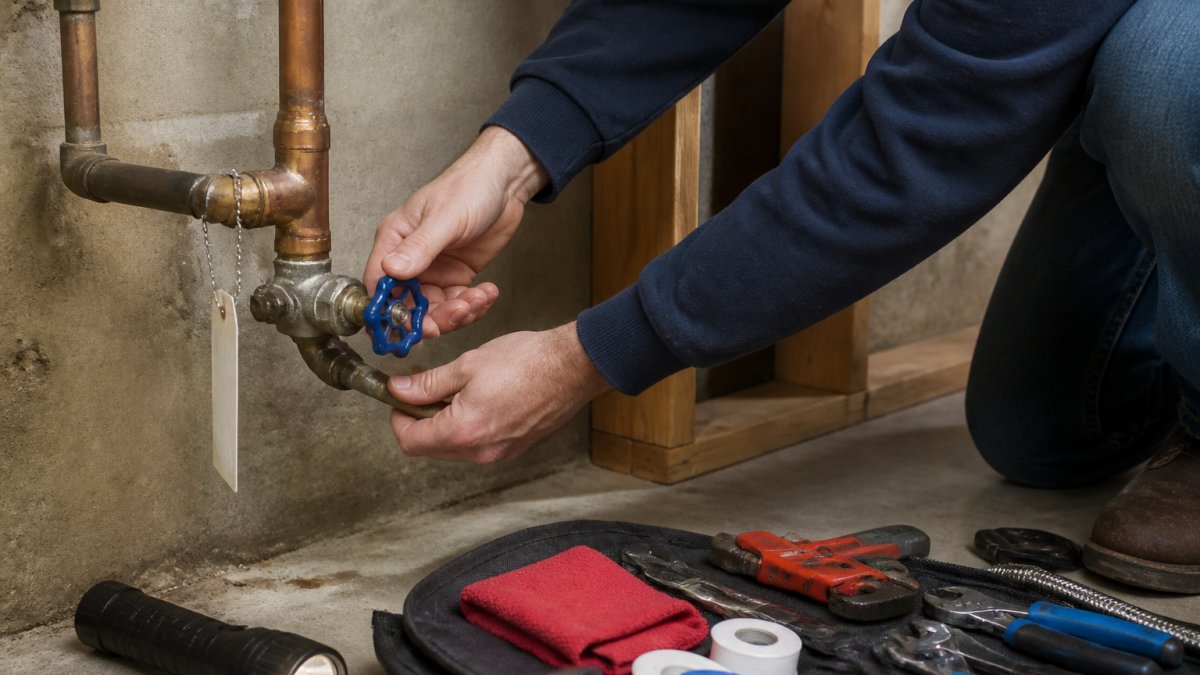
Shutting off water in a vacant house in winter starts at the main shut-off valve. Turn it clockwise until it stops, then open a low-level faucet to confirm the supply is truly off.
Find the valve before you need it. It's often near the water meter, in a basement, or in a utility closet. Label it so the next person can find it fast.
Watch out: a gate valve that hasn't moved in years can snap or seize. If the work is beyond DIY, you can book the home maintenance team Morris County homes deserve.
How to Winterize a Dishwasher and Other Water-Using Appliances
To winterize a dishwasher, turn off its water supply, run a short cycle to clear the line, then drain the remaining water from the filter and sump. Never leave water sitting in the appliance over a freeze. The same principle, shut the supply, purge the line, empty the reservoir, applies to every water-using device in the home, and each one has a specific failure point.
Work through them one at a time:
- Dishwasher: shut off the supply valve under the sink, run a drain cycle, then remove and empty the filter. If the unit has a visible sump, sponge out any standing water. Leave the door cracked so the interior dries.
- Washing machine: shut off both hot and cold supply valves, then run a spin cycle to push water out of the hoses and pump. Disconnect the hoses and drain them into a bucket, the hoses themselves hold water and split when it freezes. Leave the drum door open to prevent mildew.
- Refrigerator ice maker: turn off the supply line at the saddle valve, then let the tray and line empty. This is the appliance most owners forget. The ice maker line is a thin tube behind the fridge, often plastic, and it splits easily when it freezes. If the refrigerator stays on, disconnect the supply line and cap it.
- Water heater: drain it fully and leave the drain valve open. See the plumbing section for the full sequence.
- Water filtration system: shut off the supply, remove and drain the filter housings, and discard the cartridges. A whole-house filter left full of water cracks its housing.
- Humidifiers and coffee makers: empty, dry, and store them. Do not leave water in a reservoir over the winter.
- Outdoor irrigation and hose bibs: covered in the outdoor section, but confirm the supply is off and the lines are blown out before you lock up.
If the home will be drained rather than heated, open every appliance supply valve after shutting off the main so the lines can drain with the rest of the system. If the home will be heated, leave the appliance valves closed and rely on the thermostat, but check the ice maker line and washing machine hoses first, since they are the weakest points in a heated-house strategy.
Protect Outdoor Faucets, Hoses, and Exposed Pipes
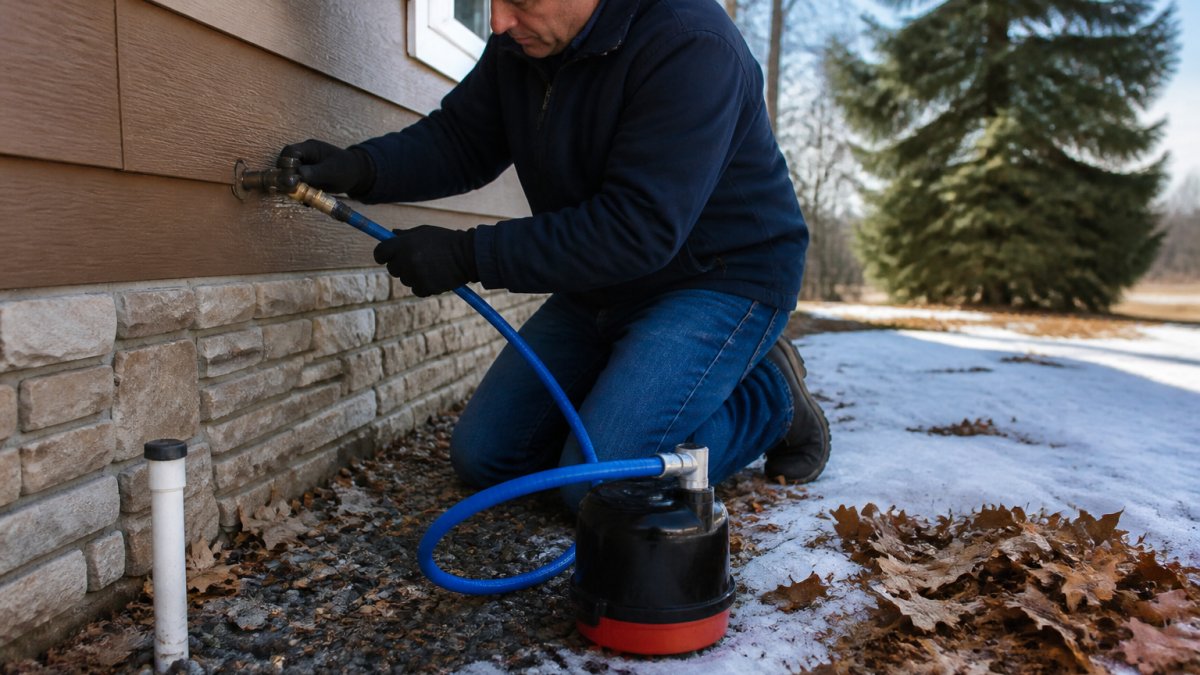
Outdoor water supply lines freeze first because they sit closest to the cold. Disconnect every hose, shut off the outdoor faucet from inside, and drain the line. A frost-free sillcock left with a hose attached traps water and cracks.
For exposed pipes, wrap them with pipe insulation or heat tape. Pay attention to runs in garages, crawl spaces, and along exterior walls. These spots get cold fast and are easy to overlook.
Our broader winter home maintenance tips for NJ homeowners cover related exterior prep.
Power Outages, Remote Monitoring, and Septic System Care
A power outage is the quiet killer of a heated-house strategy. When the furnace loses power, the house cools, and pipes freeze within hours in a hard cold snap.
Septic systems and sump pumps need attention too. A sump pump that loses power during a thaw can flood a basement. A septic system left with a full tank is a spring problem waiting to happen.
If you manage the property from a distance, see our guide on handling home repairs from long distance.
Your Vacation Home Winterization Checklist
Use this departure-day checklist so nothing gets missed. Print it, tape it inside a closet, and check each line before you lock the door.
- Set the thermostat to 55°F or fully shut down the heat
- Close the main shut-off valve and confirm the water is off
- Open all faucets and drain the water lines
- Flush and drain every toilet; add antifreeze to bowls
- Drain the water heater and leave the valve open
- Winterize the dishwasher, washing machine, and ice maker
- Disconnect hoses and drain outdoor faucets
- Insulate exposed pipes in the garage and crawl space
- Check the sump pump and septic system
- Set up remote temperature monitoring
- Ask a neighbor or service to check the property
For a matching walkthrough of the season-end shutdown, see our vacation home closing steps.
Winterizing a vacation home rewards preparation over reaction. Owners who avoid freeze damage typically shut the water down completely and have someone watching the property. That's where Lone Eagle Home Services fits. Our membership covers seasonal tune-ups, one trusted team for repairs, and digital service reports after each visit.
Frequently Asked Questions
Should you shut off the water in a vacant house in the winter?
Yes, in most cases. Shutting off the main valve and draining the lines removes the water that freezes and bursts pipes during extended cold snaps. The exception is a home kept above freezing with reliable heat and monitoring, where the system stays pressurized. If you shut off water in a vacant house in winter, also drain the water heater and open the faucets so trapped water has somewhere to go. Never leave a vacant property pressurized with the heat off.
How do you winterize a dishwasher before closing up for the season?
First shut off the water supply to the appliance, then run the drain cycle to empty the pump. Disconnect the supply line and drain any remaining water into a bucket. Pour about a cup of non-toxic plumbing-safe antifreeze into the drain trap, and leave the door slightly open to prevent mold. If you are unsure how to winterize a dishwasher in your specific model, check the manual or have a technician handle it during a seasonal tune-up.
Do you need to winterize a house if you leave the heat on?
You still need to prepare, but you can skip the full drain. Set the thermostat to at least 55°F, which keeps interior walls and plumbing above freezing in most cold weather. Then shut off the outdoor water supply, disconnect hoses, and insulate exposed pipes in unheated spaces like crawl spaces and garages. The risk with this approach is a heating system failure or power outage while you are away, so pair it with a remote temperature monitor or a scheduled check-in.
How often should someone check on a vacant vacation home in winter?
Plan a visit or professional inspection every one to two weeks during freezing temperatures. A weekly walk-through catches a failed furnace, a leak, or a burst pipe before damage spreads. If you cannot visit that often, use a monitored thermostat that alerts you when indoor temperatures drop, and ask a maintenance service to perform scheduled checks. Document each visit with photos so you have a record for insurance if something goes wrong.