 how-to
Hiring a Professional for NJ Deck Repairs: 2026 Guide
Last Updated: October 24, 2026
Quick Summary
Hiring a professional for nj deck repairs starts with verifying the contractor's state registration through the Division of Consumer Affairs, confirming active liability and workers' compensation insurance, and requesting a written, itemized estimate. Ask for three recent deck repair references and get the scope, payment schedule, and workmanship warranty in writing before signing.
- Photograph problem areas before calling so contractors can quote faster and more precisely.
- Ask for the insurance carrier's name and policy number, then call the carrier to confirm coverage.
- Structural repairs, new footings, and railing replacements typically require a permit from your local construction office.
- If more than a third of the deck's structure needs work, price a replacement alongside the repair.
- Compare quotes line by line, matching scope, material spec, labor basis, permit responsibility, and warranty term.
Table of Contents
- Step 1: Assess Whether Your Deck Is Safe to Use
- Step 2: Know the Scope of NJ Deck Repairs Before You Call
- Step 3: How to Choose a Deck Contractor
- Step 4: Deck Contractor Questions to Ask Before You Sign
- Step 5: Reading a Deck Repair Estimate Line by Line
- Step 6: Deck Repair vs. Replacement: Which Makes Sense
- Step 7: Permits, Codes, and Workmanship Protections
- Conclusion
- Frequently Asked Questions
Step 1: Assess Whether Your Deck Is Safe to Use
Before you call anyone for nj deck repairs, walk the deck and look for the failures that signal real danger. A deck that bounces underfoot, has loose railings, or shows rot at the posts is not a cosmetic problem. It is a structural one.
Start with the ledger board where the deck attaches to the house. Look for gaps, rusted bolts, or water staining. Then check the railings: grab and shake each one. A railing that moves more than a fraction of an inch needs attention before anyone leans on it.
Step 2: Know the Scope of NJ Deck Repairs Before You Call
NJ deck repairs fall into three buckets, and knowing which one you need keeps contractors from overselling. Most jobs are board-level fixes. Fewer involve structure. A small number are full replacements in disguise.
The best way to get an accurate estimate is to photograph the problem areas before you call. Contractors quote faster and more precisely when they see the damage up front.
Board Replacement, Structural Supports, and Railings
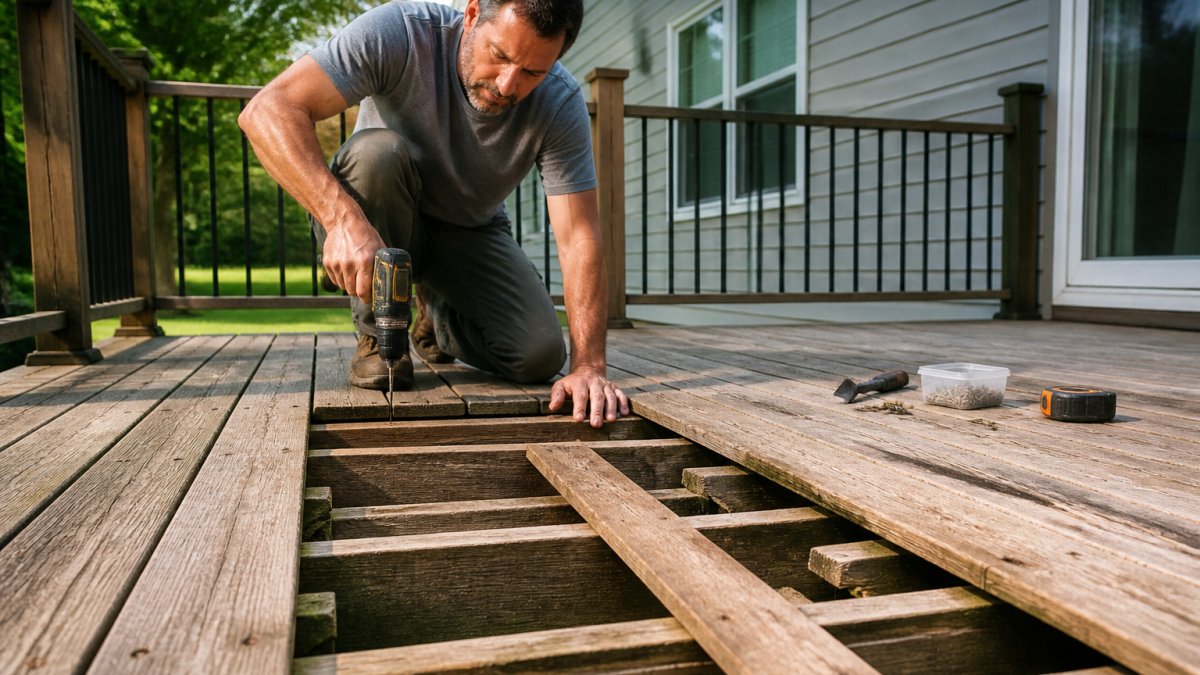
Board replacement is the most common repair. Warped, cracked, or rotting deck boards get pulled and swapped, usually in a day or two depending on square footage.
Structural supports are a different job. Support posts, deck framing, and the ledger connection carry the deck's weight. Any rot or movement here means the deck needs shoring or partial rebuild, not a surface fix.
Railings sit between the two. Loose posts often mean the framing beneath them has softened. A qualified contractor will check the framing before quoting a railing repair.
Step 3: How to Choose a Deck Contractor
Choosing a deck contractor comes down to three checks: registration, insurance, and proof of past work. Most directory pages stop at "call a pro." The practical version is a document list you can verify in about twenty minutes before you sign anything.
In New Jersey, home improvement contractors must be registered with the state Division of Consumer Affairs. Ask for the registration number and verify it through the state lookup before signing. Registration is not the same as a specialty license, so confirm the contractor's actual deck experience separately.
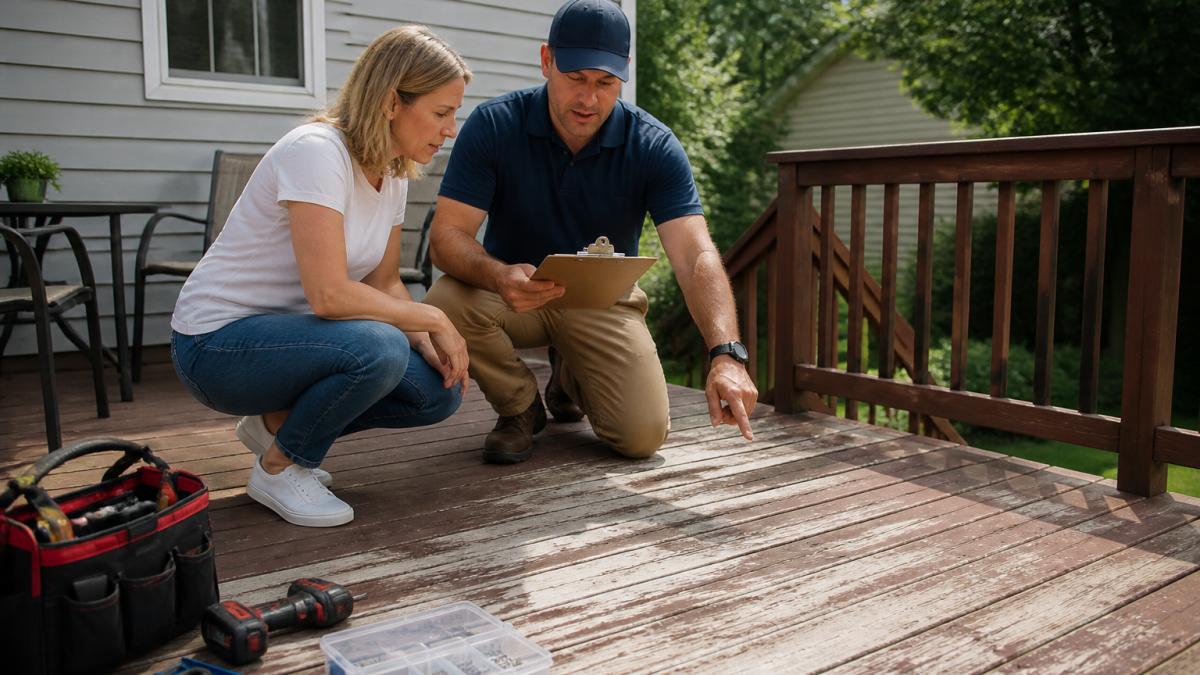
The document checklist
Request these items in writing, not verbally:
- State registration number, verify it yourself through the Division of Consumer Affairs lookup.
- Certificate of general liability insurance, ask for the carrier name and policy number, then call the carrier to confirm the policy is active and covers deck work.
- Workers' compensation coverage, if the crew is not covered, an injury on your property can become your problem.
- Three recent references, ask for deck repair jobs, not new builds, and call at least two.
- A written, itemized estimate, scope, materials, labor, permits, and cleanup as separate lines.
- A sample contract, check the payment schedule, warranty term, and change-order process before work starts.
Red flags that should end the conversation
A contractor who hesitates on the registration number, cannot name an insurance carrier, asks for a large cash deposit up front, or refuses to put the scope in writing is telling you something. Reliable professionals put their terms in writing and expect you to check them.
If you want a step-by-step method for confirming credentials, our guide on how to verify NJ home improvement licenses walks through the state lookup. For the broader search process, see how to find licensed home contractors in NJ.
Step 4: Deck Contractor Questions to Ask Before You Sign
The questions you ask before signing separate a qualified contractor from a handyman with a truck. Ask them in the same order every time so you can compare answers side by side.
- What is your New Jersey contractor registration number?
- Will you pull the permit, or am I responsible for it?
- What is the exact work scope, including materials and labor?
- How long will the job take, and what is the scheduling window?
- What does your workmanship warranty cover, and for how long?
- Who is my point of contact if something goes wrong?
A contractor who hesitates on the registration number or the warranty is telling you something. Our contractor vetting checklist covers the full list of documents to request.
Step 5: Reading a Deck Repair Estimate Line by Line
A deck repair estimate should break out materials, labor, permits, and cleanup as separate lines. Anything bundled into one lump sum is hard to compare and easy to inflate.
Watch for these red flags:
| Estimate Line | What to Check | Why It Matters |
|---|---|---|
| Materials | Board type, fasteners, and quantity listed | Vague materials hide substitutions |
| Labor | Hours or square footage basis stated | Flat labor with no basis invites padding |
| Permits | Named as included or excluded | Unpermitted work can void coverage |
| Cleanup | Debris removal stated | Hauling fees appear later if omitted |
| Warranty | Workmanship term in writing | Verbal promises are unenforceable |
What drives deck repair cost
The main cost drivers for deck repair projects are:
- Square footage and board count, more boards means more material and more labor hours.
- Material choice, pressure-treated lumber, composite, and hardwood carry different material costs and different fastener requirements.
- Access, a deck with limited backyard access or a second-story elevation takes longer to work on.
- Hidden framing damage, rot at joists, posts, or the ledger board turns a board swap into a structural repair.
- Railing scope, replacing posts and rail sections costs more than tightening hardware.
- Permits and inspections, structural work may add a permit fee and an inspection visit.
How to compare itemized quotes
Do not compare bottom-line totals. Compare line by line:
- Match the scope. Confirm each quote covers the same boards, the same railing work, and the same cleanup.
- Check the material spec. A cheaper quote may be substituting a thinner board or a lower-grade fastener.
- Compare labor basis. One contractor may price by the hour and another by square footage; ask each to state the basis.
- Confirm permit responsibility. A quote that excludes permits is not cheaper if you have to pull the permit yourself.
- Read the warranty term. A longer workmanship warranty is worth real money on a repair that may fail again.
General deck repair cost guides put typical projects in the low thousands, with wide ranges depending on damage. Lawn Love's 2026 deck repair cost guide breaks down national averages, but treat any figure as a starting point, not a quote. Local pricing depends on materials, access, and how much framing is exposed once boards come up.
Step 6: Deck Repair vs. Replacement: Which Makes Sense
Repair wins when the framing, posts, and ledger are sound and the damage is confined to boards and railings. Replacement makes more sense when rot has reached the structural supports or when repairs across several seasons start adding up to a rebuild.
A simple rule: if more than a third of the deck's structure needs work, price a replacement alongside the repair. Then compare total cost over the next decade, not just this year.
If you repair, protect the investment. Our guide on how to winterize a deck for long-term durability covers the seasonal steps that keep repaired boards from failing again.
Step 7: Permits, Codes, and Workmanship Protections
Permits and inspections depend on the scope of work. Structural repairs, new footings, and railing replacements typically require a permit from your local construction office, while like-for-like board swaps often do not. Confirm the rule with your town before work starts, and get the answer in writing from the contractor.
Workmanship protections matter just as much. A written contract should state the scope, the payment schedule, the warranty term, and the process for raising a defect. New Jersey's Division of Consumer Affairs publishes the registration rules that home improvement contractors must follow, and those rules give you recourse if a job goes wrong.
Keep every invoice, photo, and change order. If a repair fails, documentation is what moves a complaint forward. Our guide on contractor accountability for home repairs explains the escalation steps.
Conclusion
Managing deck repairs yourself means chasing quotes, verifying licenses, and hoping the contractor who shows up is the one who signed the estimate. That is a lot of risk for a structure your family stands on.
Lone Eagle Home Services removes that burden for homeowners. Our membership model gives you one trusted team for seasonal tune-ups and on-demand repairs, flat-rate pricing, confirmed appointments, and digital service reports after every visit. We coordinate the vendors and hold them accountable, so you are not the middleman.
Thumbtack's New Jersey contractor listings show how many local pros are competing for your job, which makes vetting essential. Let us do it for you. See our plans and get proactive care for your deck before the next problem starts.
Frequently Asked Questions
How much does deck repair cost in New Jersey?
Get a written deck repair estimate for your specific boards, supports, and railings before committing.
What should I ask a deck repair contractor before hiring?
Ask for proof of licensing and insurance, a written scope of work, and whether permits are included. Request two or three local references and ask how long the crew has worked on decks in your area. Confirm who handles inspections and what the workmanship warranty covers. Get the deck contractor questions answered in writing, not verbally, so you can compare offers side by side and hold the company accountable if something fails later.
Should I repair or replace a deck with structural damage?
It depends on how far the damage spreads. Rot in a few boards or one railing section is usually a repair. Rot in support posts, ledger boards, or deck framing often pushes the deck repair vs. replacement decision toward replacement, because new boards over failing structure will not last. A qualified contractor should inspect the framing and footings before quoting. If more than a small share of the structure is compromised, replacement usually costs less over time.
How can I tell whether a deck is safe to use?
Check for loose or springy railings, soft spots underfoot, rusted or loose fasteners, and posts that move when you push them. Look for rot where boards meet the house and around support posts. Any movement in the railing or framing means the deck should stay off-limits until a professional inspects it. A contractor can confirm whether the structural supports and connections meet current standards before you use the deck again.