 how-to
How to Prepare Your Home for a Service Visit
Last Updated: November 4, 2026
Quick Summary
To prepare for a service visit, clear a path to the problem area, secure pets in a closed room, and make sure an adult is home to answer questions and unlock doors. Clear the driveway so the service truck can park close to the entrance, and write down what you have noticed so you can brief the technician clearly.
- Walk the house the night before, starting at the front door and working back to the utility closet.
- Empty the cabinet first if the problem is under a sink, and move boxes away from panels and units.
- Tell the office about gate codes, lockbox locations, or building entry rules when you book.
- Photograph cracks with a coin or ruler for scale and note the date, room, and a one-line description.
- Ask whether the report is written and whether the assessor is independent of any repair company.
Table of Contents
- Why a Little Prep Before a Service Visit Saves Time and Money
- Your Home Service Appointment Checklist, Room by Room
- How to Prepare for a Contractor Visit When the Job Is Bigger Than a Quick Fix
- What to Tell a Repair Technician Before Work Starts
- Questions to Ask a Home Service Provider Before They Leave
- Common Mistakes Homeowners Make Before a Service Visit
- Book Your Next Service Visit With a Team That Shows Up Prepared
- Frequently Asked Questions
Why a Little Prep Before a Service Visit Saves Time and Money
A service visit goes better when the technician can reach the problem, park the truck, and work without tripping over your life. A prepared home generally means a faster fix and fewer return trips.
Here is the core idea. Every minute a tech spends moving boxes or waiting for a gate code is a minute not spent on your repair. Clear access and clear answers cut that waste.
Your Home Service Appointment Checklist, Room by Room
A home service appointment checklist works best when you walk the house the night before. Start at the front door and work back to the utility closet. Note anything the tech will need to reach, and note anything that looks wrong so you can point it out rather than describe it from memory.
Clear Access to the Problem Area
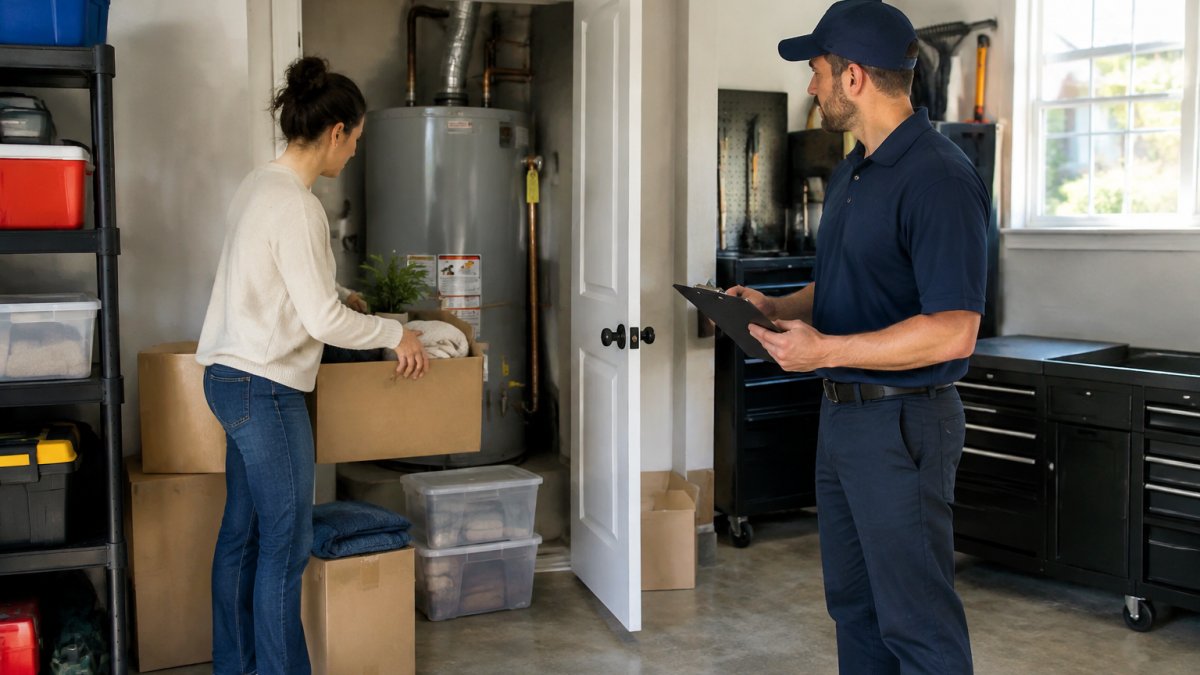
Clear a path to the water heater, electrical panel, furnace, or whatever needs attention. Move boxes, furniture, and stored items out of the way. If the problem is under a sink, empty the cabinet first.
Watch out: blocking the panel or the unit can delay the work, so clear the area before the visit.
A Repeatable Walk-Through Sequence
If the visit is about a symptom you have noticed, a crack, a sticking door, a damp spot, walk the house in the same order every time so nothing gets missed. A practical sequence:
- Exterior perimeter. Walk the foundation line and note soil that has pulled away, standing water, or cracked and flaking masonry.
- Basement or crawl space. Look at the foundation walls, floor slab, and any piers or posts for cracks, bowing, or efflorescence (the white powdery stain that signals moisture moving through concrete).
- Ground floor. Check floors for slope or bounce, doors and windows for sticking or gaps, and walls for cracks or bulges.
- Upper floors and ceilings. Look for cracks, sagging, water stains, and separation at wall-to-ceiling joints.
- Openings. Open and close every exterior door and window; note where they rub, jam, or fail to latch.
- Utility areas. Confirm clear access to the panel, water heater, furnace, and shutoffs.
Write down what you see with the room name and a one-line description. That list becomes your briefing notes when the technician arrives.
Cosmetic Cracks vs. Cracks Worth Flagging
You are not diagnosing anything, only deciding what to point out. A few observable differences help:
- Hairline cracks in drywall, often at corners of doors and windows, are commonly cosmetic and tied to settling or humidity.
- Diagonal cracks running from the corner of a door or window toward the ceiling are more often associated with movement and are worth flagging.
- Horizontal cracks in a foundation wall, especially with bowing, are the pattern most practitioners treat as a prompt for professional assessment.
Visual checks cannot confirm whether a crack is structural. Use them to decide what to show the technician, not to rule anything in or out.
Pets, Parking, and Who Should Be Home
Secure pets in a closed room before the tech arrives. Even a friendly dog can get underfoot near tools and open panels.
An adult should be home to answer questions and unlock doors. If you cannot be there, arrange access in advance and leave a phone number.
Walk the house in this order the night before so nothing gets missed.
| Area | What to check |
|---|---|
| Exterior perimeter | Soil pulled away, standing water, cracked masonry |
| Basement or crawl space | Cracks, bowing, efflorescence on walls and slab |
| Ground floor | Floor slope or bounce, sticking doors, wall cracks |
| Upper floors and ceilings | Cracks, sagging, water stains, joint separation |
| Openings | Doors and windows that rub, jam, or fail to latch |
| Utility areas | Clear access to panel, water heater, furnace, shutoffs |
How to Prepare for a Contractor Visit When the Job Is Bigger Than a Quick Fix
Bigger jobs need more prep. If the work involves a wall, a floor, or a system you don't fully understand, do a quick check before you call. Not every problem needs a pro, and knowing the difference saves you a visit fee. Our guide on when to call a professional for home repairs helps you sort a cosmetic issue from one that needs expert eyes.
Sort the Symptom by Urgency
Before you book, decide which bucket the symptom falls into. This shapes how fast you act.
- Monitor. A hairline drywall crack, a door that sticks in humid weather, or a single small stain with no growth. Photograph it with a date reference and check again in a few weeks.
- Prompt professional assessment. A crack that has widened, a floor that has developed a noticeable slope, a door or window that no longer latches, or soil that has pulled away from the foundation. Book an assessment rather than waiting.
- Immediate safety action. A bulging or leaning wall, a chimney that has separated from the house, a sagging ceiling, or the smell of gas. Leave the area, and for gas or imminent collapse risk call 911 and the utility's emergency line.
Documenting changes over time can help you tell whether a symptom is worsening.
Document Changes Without Diagnosing Them
You do not need to know the cause, only to record what changed. A simple routine:
- Take dated photos of the same spot from the same angle each time.
- Note the date, the room, and a one-line description (for example, "diagonal crack above hall closet, widened since last photo").
- If a crack is accessible, hold a coin or a ruler against it in the photo for scale.
This record is what a contractor or engineer will ask for, and it is far more useful than a verbal description.
What Happens During a Professional Assessment
Knowing what to expect makes the visit more productive. A structural or systems assessment typically includes:
- A walk-through of the areas you flagged, plus adjacent rooms and the exterior.
- Measurements, floor slope, crack width, wall plumb, and notes on progression.
- Possible testing, such as moisture readings, a level survey, or in some cases a soil or drainage review.
Ask in advance whether the report is written, whether photos are included, and whether the assessor is independent of any repair company. An independent assessment is the cleanest starting point before you solicit repair bids.
Gather What the Contractor Will Ask For
Once you have booked, have this ready before the contractor arrives:
- The age of the home and any recent renovations
- Photos of the problem from a few angles, with dates
- A short list of what you have already tried
Have this ready before the contractor arrives. It shortens the assessment and helps them quote accurately.
Permits and Choosing a Qualified Professional
Repair work that touches structure, electrical, plumbing, or gas usually requires a permit, and the permit holder is typically the licensed contractor, not the homeowner. Ask who pulls the permit and confirm the license and insurance before work starts. Our contractor vetting checklist covers the questions to ask and how to verify credentials.
What to Tell a Repair Technician Before Work Starts
The first five minutes set the tone. Give the technician a short, clear briefing. Skip the long story and lead with the facts.
Tell them:
- What is wrong and when it started. "The upstairs faucet drips constantly, and it began about two weeks ago."
- What you have already tried. "I tightened the handle, but it didn't help."
- Where the shutoff valves are. Point them out, especially for water and gas.
- Any hazards. Loose floorboards, a reactive pet, a tricky crawl space, or old wiring.
Before you let anyone work, confirm they are properly vetted. Our contractor vetting checklist covers what to check, the questions to ask, and how to verify credentials. A few minutes of screening protects your home and your budget.
Questions to Ask a Home Service Provider Before They Leave
The visit isn't over when the tools go back in the truck. Ask a few questions while the technician is still standing there. You'll get clearer answers face to face.
Ask these before they leave:
- What exactly did you find, and what caused it?
- What did you fix today, and what still needs attention?
- Is this covered under any warranty or service plan?
That last one matters. A written record of what was done and what was found prevents disputes later. Learn more about digital service reports for contractor management and why they keep everyone accountable.
Common Mistakes Homeowners Make Before a Service Visit
Most problems before a visit trace back to a handful of avoidable mistakes. Here are the ones we see most.
- Waiting until the last minute to clear access. Then the tech stands around while you move furniture.
- Leaving pets loose. It slows the work and creates a safety risk for everyone.
- Giving a vague description. "It's broken" forces the tech to guess and pack the wrong parts.
Avoid these and the visit runs smoother from start to finish.
Book Your Next Service Visit With a Team That Shows Up Prepared
A well-prepared home gets a faster, cleaner repair. But the other half of the equation is the team on the other side of the door.
Our membership handles the juggling for you. One trusted team coordinates all your maintenance and vendor services, so you are not chasing down separate contractors.
Ready to stop managing repairs yourself? See how to book professional home maintenance with a vetted provider, or review the full range of services we offer to find the right fit.
Frequently Asked Questions
What should I do before a home service appointment?
Clear a path to the work area, move fragile items and pets out of the way, and write down the symptoms you have noticed. Note when a problem started, whether it comes and goes, and anything you have already tried. Have your gate code, alarm code, and Wi-Fi password ready if the technician needs them. A short list of concerns saves diagnostic time and keeps the visit focused on the actual repair instead of moving furniture.
Do I need to be home during a service visit?
For most repairs, an adult should be present at least at the start so you can point out the problem and confirm the scope. If you cannot stay, arrange for a trusted neighbor or family member to let the technician in and stay reachable by phone. Never leave a contractor alone in a home without a clear point of contact. A membership service with confirmed appointments and digital service reports makes remote coordination easier.
Should I clean before a service professional visits?
You do not need a spotless house. What matters is safe, clear access: move laundry, boxes, and furniture away from the furnace, water heater, or electrical panel, and clear counter space near the sink or appliance being repaired. Wipe up standing water and secure pets. A tidy work zone reduces trip hazards and lets the technician diagnose the issue faster instead of asking you to move things mid-job.
What questions should I ask a home service provider before work begins?
Ask for a written scope of work, a flat-rate or itemized quote, and who is responsible if something goes wrong after the visit. Confirm whether permits are required for the job and who pulls them. Ask how long the work will take and whether the technician carries insurance. Finally, request a service report or invoice that documents what was inspected, what was repaired, and what to watch for next season.