 how-to
Prevent Small Problems From Becoming Expensive Issues
Table of Contents
- Why Small Problems Become Expensive Issues
- Build a Home Maintenance Checklist That Catches Problems Early
- Set a Home Maintenance Schedule You Will Actually Follow
- Home Repair Budgeting: Fund the Fix Before It Becomes a Crisis
- Contractor Coordination That Prevents Scope Creep and Delays
- Escalation Workflows: When to Call, Who to Call, and By When
- Contingency Planning With Measurable Triggers
- Conclusion
- Frequently Asked Questions
Last Updated: October 20, 2026
Why Small Problems Become Expensive Issues
A slow drip under the kitchen sink costs a few dollars to fix today.
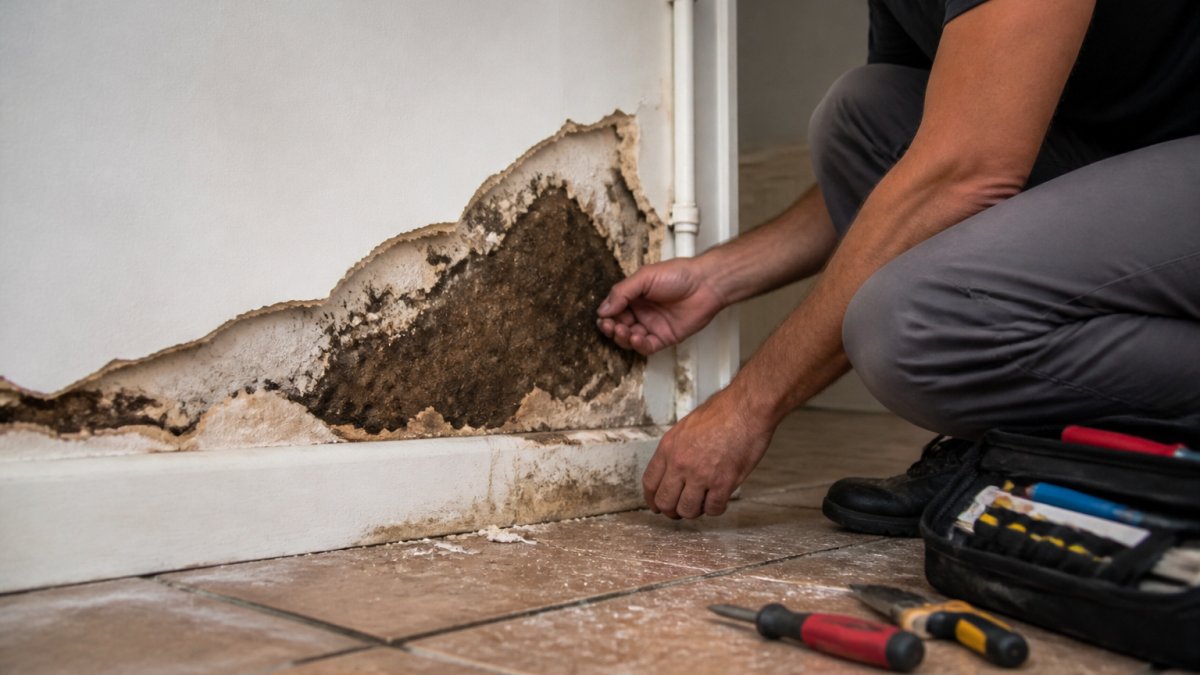
That pattern repeats across every home we service. The expensive part of a repair is rarely the original fault; it is the damage that piled up while nobody was watching.
At Lone Eagle Home Services, we see the same handful of failures over and over: a loose toilet flange, a clogged condensate line, a cracked caulk line behind a tub. Each is minor on day one.
The gap between a minor issue and a crisis is usually time, not complexity. A $15 part becomes a $1,500 repair because it sat unnoticed for six months.
Build a Home Maintenance Checklist That Catches Problems Early
A home maintenance checklist is a written list of inspections and small fixes, organized by season, run on a set schedule. It turns vague good intentions into specific tasks with a date attached.
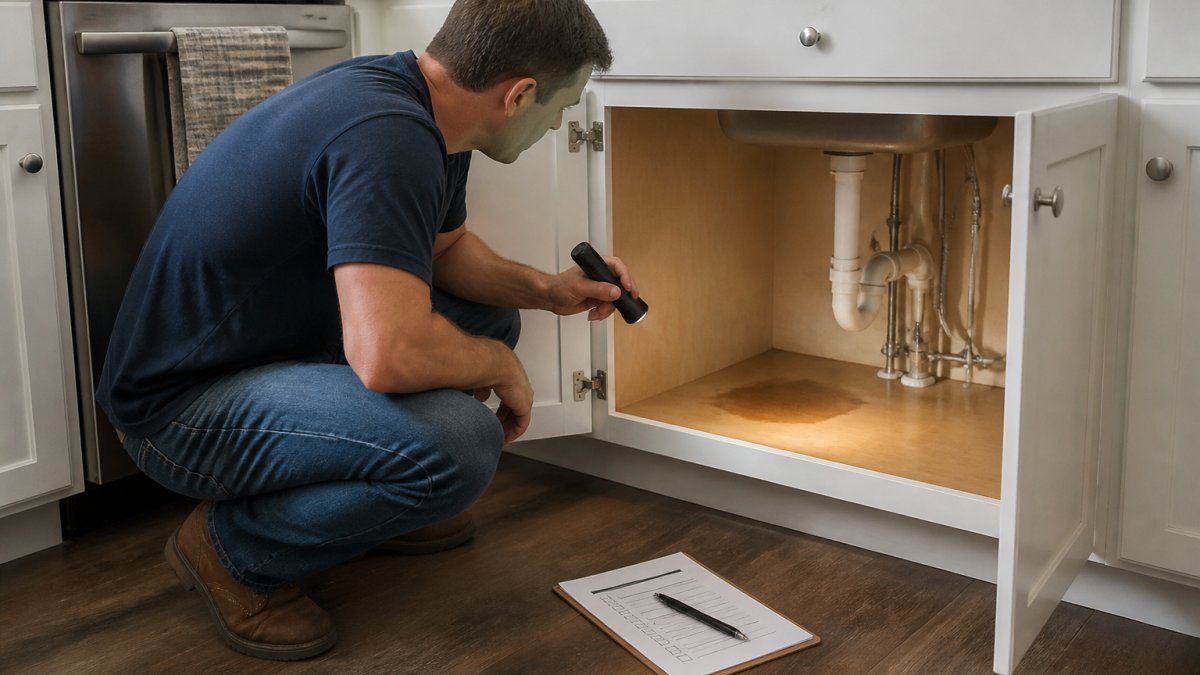
The best checklists are short and physical. You walk the house with a clipboard and a flashlight, not a phone.
Build yours around these zones, and pair each zone with the early warning sign that tells you a small issue is starting to compound:
- Water: under every sink, around the water heater, behind the washing machine. Warning signs: a faint musty smell, a soft spot in the cabinet floor, a water bill that creeps up two months in a row without a change in use.
- Roof and gutters: missing shingles, sagging lines, debris dams. Warning signs: granules collecting at downspout outlets, a shingle tab in the yard after a windy day, a gutter that overflows in a light rain.
- Exterior: caulk joints, window seals, foundation cracks, grading. Warning signs: a hairline crack that widens by a credit-card thickness over a season, daylight visible at a window frame, soil that slopes back toward the foundation.
- Systems: furnace filter, HVAC condensate line, sump pump float. Warning signs: a condensate line that drips instead of draining, a sump pump that cycles in dry weather, a furnace that short-cycles before the house reaches setpoint.
- Safety: smoke and carbon monoxide detectors, dryer vent, GFCI outlets. Warning signs: a detector that chirps after a fresh battery, lint visible at the exterior dryer vent flap, a GFCI that trips more than once a month.
A common mistake is building a 60-item checklist you abandon by week two. Keep it to 15 items you will actually check, each with a pass/fail threshold.
Run the checklist on a fixed cadence, quarterly for most homes, monthly for older properties with known weak spots, and log results in one place.
Set a Home Maintenance Schedule You Will Actually Follow
A home maintenance schedule is a calendar of recurring inspections and tune-ups tied to the seasons. The schedule matters more than the checklist; a perfect list you never open is worthless.
Most homeowners fail here because they schedule maintenance by memory, and memory loses to a busy week every time.
Anchor tasks to triggers instead of dates:
- First cold snap: furnace filter, exterior caulk, hose bibs
- First warm week: AC service, roof inspection, gutter cleaning
- Before any trip away: water shutoff check, sump pump test
- After any major storm: roof, gutters, grading, basement
Quarterly is the practical rhythm for most homes. Monthly is better for older properties with known weak spots.
This is where a membership model earns its keep. Lone Eagle Home Services runs seasonal tune-ups on a confirmed schedule, so the work happens whether or not you remember it. Members get a digital service report after every visit that becomes your maintenance history.
Home Repair Budgeting: Fund the Fix Before It Becomes a Crisis
Home repair budgeting means setting aside a fixed amount each month for maintenance and repairs, so a failed water heater is an inconvenience rather than an emergency. The number matters less than the habit.
A practical approach many homeowners use: separate your budget into two buckets.
| Bucket | What It Covers | How to Fund It |
|---|---|---|
| Routine maintenance | Filters, caulk, tune-ups, seasonal checks | Small monthly set-aside |
| Emergency reserve | Water heater, HVAC, roof, plumbing failures | Larger monthly set-aside |
The routine bucket prevents the emergencies. The reserve bucket pays for what slips through anyway.
Two rules keep this honest. First, spend the routine bucket every year, even when nothing seems wrong. Unspent maintenance money is not savings, it is deferred cost. Second, never pull from the reserve for cosmetic work.
Contractor Coordination That Prevents Scope Creep and Delays
Contractor coordination means defining scope, sequencing trades, and confirming decisions before work starts.
Scope creep rarely arrives as one big change. It shows up as a series of small verbal yeses.
- "While you're in there, can you also..."
- "We'll just swap that fixture, no paperwork needed."
- "The owner said go ahead" with nothing in writing
Each feels harmless; together they wreck the budget and push the schedule.
A practical change-order process has four steps, and every step has a deadline:
- Log the request. Any change, a fixture swap, an added outlet, a different tile, gets written into a single change log with the date, the requester, and a one-line description. No log entry, no change.
- Price it before approving it. The contractor returns a written price and a schedule impact within a set window, typically two business days for small items and five for anything that touches multiple trades. A change with no price is not approved.
- Approve in writing. The homeowner signs or replies in writing with a clear yes or no. "Sounds good" in a hallway is not approval. A written approval protects both sides if the scope is later disputed.
- Update the schedule and the budget. The approved change goes into the project schedule and the budget-versus-actual report the same week. If it does not show up in both, it will surprise someone later.
Set decision thresholds so small changes do not stall the job.
A common mistake is hiring trades in the wrong order.
Homeowner-facing reporting closes the loop. A weekly update listing open issues, approved changes, upcoming decisions, and budget-versus-actual keeps small problems visible before they compound.
Coordinating multiple contractors is the part most homeowners underestimate.
Escalation Workflows: When to Call, Who to Call, and By When
An escalation workflow is a simple rule set for which problems you handle yourself, which need a professional, and how fast to act. Write it down before you need it.
Use decision thresholds like these:
- Handle it yourself: cosmetic issues, filters, tight screws, minor caulk
- Call within the week: slow drains, running toilets, a furnace making new noise
- Call same day: active water leaks, no heat in freezing weather, burning smells, tripped main breaker
- Call immediately: gas smell, sewage backup, water pouring near electrical panels
The deadline is the part people skip. "Call a plumber sometime" becomes next month. "Call today if the leak is active" gets acted on.
For homeowners away part of the year, this matters more, not less. A vacant house hides problems until they are large; a defined escalation path with a single trusted contact solves that.
Contingency Planning With Measurable Triggers
Contingency planning means deciding in advance what you will do, and spend, when a specific problem crosses a specific line. Measurable triggers turn a vague worry into a decision already made.
Vague triggers fail. "If the roof gets bad, we'll deal with it" is not a plan. These are:
- Trigger: two or more missing shingles after a storm → schedule a roof inspection within 14 days
- Trigger: water heater age passes 10 years → budget for replacement this year, before failure
- Trigger: any ceiling stain → open the drywall and find the source within one week
- Trigger: sump pump runs constantly in dry weather → call for a diagnosis same week
- Trigger: a repair quote exceeds your reserve balance → pause, get a second scope, decide within 48 hours
Each trigger has a number and a deadline. That is what makes it work.
This is the same discipline professional project managers apply to construction budgets and project costs: they set thresholds and act when one is crossed. Homeowners can run the same playbook on a smaller scale.
One honest note on cost: flat-rate pricing offers predictability, as the number is agreed before the work starts. Lone Eagle Home Services publishes plan pricing on its site, so you can see the membership cost before you commit.
Conclusion
The hard part of home ownership is not the big repair. It is the small problem you did not notice until it got expensive. Checklists, schedules, budgets, and escalation rules all exist to catch that problem early.
That is the work Lone Eagle Home Services was built for. Our membership gives you one trusted team for seasonal tune-ups and on-demand repairs, vendor coordination so you stop juggling contractors, and flat-rate pricing with a digital report after every visit. Licensed, insured, and backed by 5.0 Google reviews.
See Plans and let one team handle the small stuff before it turns into the expensive kind.
Frequently Asked Questions
Can you give me an example of a cost overrun caused by a small issue?
A slow drip under a kitchen sink is a common example. A $15 supply line washer that goes unnoticed for a few months can rot the cabinet floor, warp nearby flooring, and feed mold inside the wall cavity. What started as a minor plumbing fix turns into cabinet replacement, subfloor repair, and mold remediation, which can run into the thousands. The pattern repeats across roofing, grading, and HVAC: the repair is cheap early and expensive late. Catching it on a routine inspection is the whole game.
How often should homeowners inspect their property for maintenance issues?
Walk the property monthly for visible issues like caulk gaps, water stains, and loose hardware, and schedule deeper seasonal checks four times a year. Spring and fall are the highest-value windows: gutters, roof flashing, and grading before heavy rain, and heating, seals, and exterior paint before winter. Any home with mature trees, a basement, or a sump pump deserves a monthly look at those specific systems. A written home maintenance schedule turns this from good intentions into a routine you actually keep.
How can homeowners prioritize repairs when several issues need attention?
Rank by water, structure, and safety first, then aesthetics. Anything actively leaking, anything affecting the roof, foundation, or electrical panel, and anything that creates a hazard gets fixed immediately. Next come items that will worsen with weather, like exterior caulk or a failing sump pump. Cosmetic items wait. A simple triage rule works: if the issue can cause damage within 30 days, it moves to the top of the list. Home repair budgeting should reserve funds for that top tier before anything else.
What should a home maintenance plan include?
A workable plan has four parts: a checklist of systems and their inspection points, a calendar that assigns each check to a month, a budget line for routine and emergency repairs, and a list of trusted contractors for each trade. Add a communication rule so every issue gets documented with photos and a deadline. Contractor coordination works best when one person owns the schedule and holds vendors to confirmed appointments. Lone Eagle Home Services builds this into a membership with digital service reports after every visit.