 listicle
What Are the Most Common Home Repair Emergencies?
Last Updated: November 4, 2026
Quick Summary
The most common home repair emergencies are burst pipes and plumbing failures, HVAC breakdowns, electrical hazards, roof leaks, and water heater malfunctions. Plumbing is the most reported home repair need in the country, with 27.94% of homeowners reporting a plumbing system repair in 2026. Knowing your main water shut-off valve and shutting off power at the breaker limits damage while you wait for help.
- A burst pipe can release hundreds of gallons before anyone notices, so know your main shut-off valve.
- Shut power at the breaker, not the fixture, and never reset a tripping breaker more than once.
- A clogged HVAC filter is the most common cause of a no-heat or no-cool call.
- Photograph damage wide, then close, then detail before you clean for insurance claims.
- The Morris Habitat for Humanity home repair program caps eligible projects at $10,000.
Table of Contents
- The Most Common Home Repair Emergencies and How to Spot Them
- How Much Do Home Repair Emergencies Cost?
- Temporary Mitigation: What to Do While You Wait for Help
- Finding a Handyman Near Me Within 5 Mi During a Crisis
- Documenting Damage for Insurance Claims
- Your Preventative Home Maintenance Checklist
- Seasonal Emergency Preparedness for Morris County Homes
- See Lone Eagle Home Services Plans
- Frequently Asked Questions
The Most Common Home Repair Emergencies and How to Spot Them
At Lone Eagle Home Services, we see the same pattern across Morris County: most emergencies start as small, ignored symptoms.
Spotting early warning signs matters more than reacting fast, because a small repair today often prevents a much larger one later.
Below, we break down each emergency type, its warning signs, and the steps that limit damage.
Burst Pipes and Plumbing Failures
Plumbing problems are the most reported home repair need in the country. According to ConsumerAffairs home repair statistics, 27.94% of homeowners reported a plumbing system repair in 2026.
Watch for these warning signs:
- Water stains on ceilings or walls
- A water meter that ticks up with no fixtures running
- Dripping sounds behind walls
A burst pipe can release hundreds of gallons before anyone notices. Know where your main water shut-off valve sits before you need it.
HVAC System Failures
Air conditioning repairs are also a frequent source of emergency calls. In Morris County, a failed furnace in January or a dead AC unit in July turns a comfort problem into a health and safety issue fast.
Symptoms that signal trouble:
- Weak airflow from vents
- Strange banging or squealing on startup
- Ice on the outdoor unit
Annual HVAC maintenance guidance from the Department of Energy helps catch failing components before peak season, when repair queues run longest.
Electrical Hazards and Power Outages
Electrical emergencies carry the highest safety risk of anything on this list.
Storm damage and downed power lines are a real concern here. The 2026 Morris County risk report from Advanced DRI counts 13 FEMA disaster declarations since 2000, many tied to flooding and storms.
Treat any downed line as live. Call the utility first, then arrange an electrical panel inspection once power returns.
Roof and Flashing Leaks
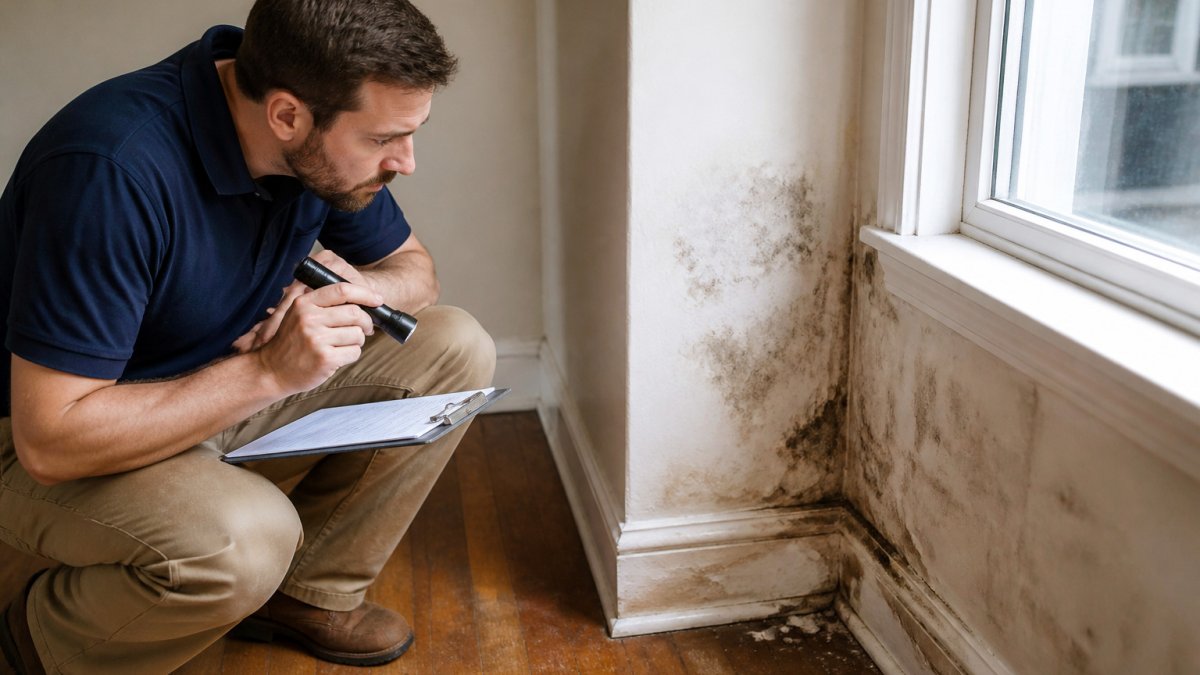
Roof leaks rarely announce themselves. Most homeowners discover them as a brown ring on the ceiling after heavy rain, by which point water has soaked insulation and framing.
Check for missing shingles, cracked flashing around chimneys, and granules collecting in gutters. Flashing repair is one of the cheapest fixes in home maintenance and one of the most skipped.
Water Heater Malfunctions and Structural Instability
A failing water heater shows up as rusty hot water, popping sounds, or a puddle at the base. Left alone, a tank rupture floods whatever sits below it.
Structural instability is the rarer but more serious outcome. Repeated leaks rot subfloors and framing, and Lone Eagle's proactive home care guide notes that small leaks left alone lead to rotted subfloors and mold growth.
How Much Do Home Repair Emergencies Cost?
Emergency repairs often cost more than scheduled ones because after-hours and same-day rates may apply.
| Emergency | Typical Warning Sign | First Action | Cost Driver |
|---|---|---|---|
| Burst pipe | Water stain, meter creep | Shut off main valve | Water damage mitigation |
| HVAC failure | Weak airflow, odd noises | Switch off, call for service | After-hours emergency rate |
| Electrical hazard | Burning smell, warm outlets | Cut power at breaker | Licensed electrician labor |
| Roof leak | Ceiling ring after rain | Bucket, tarp, call roofer | Flashing repair, decking |
| Water heater failure | Rusty water, base puddle | Shut off gas or power | Tank replacement |
The cheapest emergency is the one you prevented.
Temporary Mitigation: What to Do While You Wait for Help
Many guides tell you to call a professional and stop there. What you do in the first minutes before help arrives can determine whether a problem stays contained. The rule: stop the source, contain the spread, protect people, then document. Do those in that order.
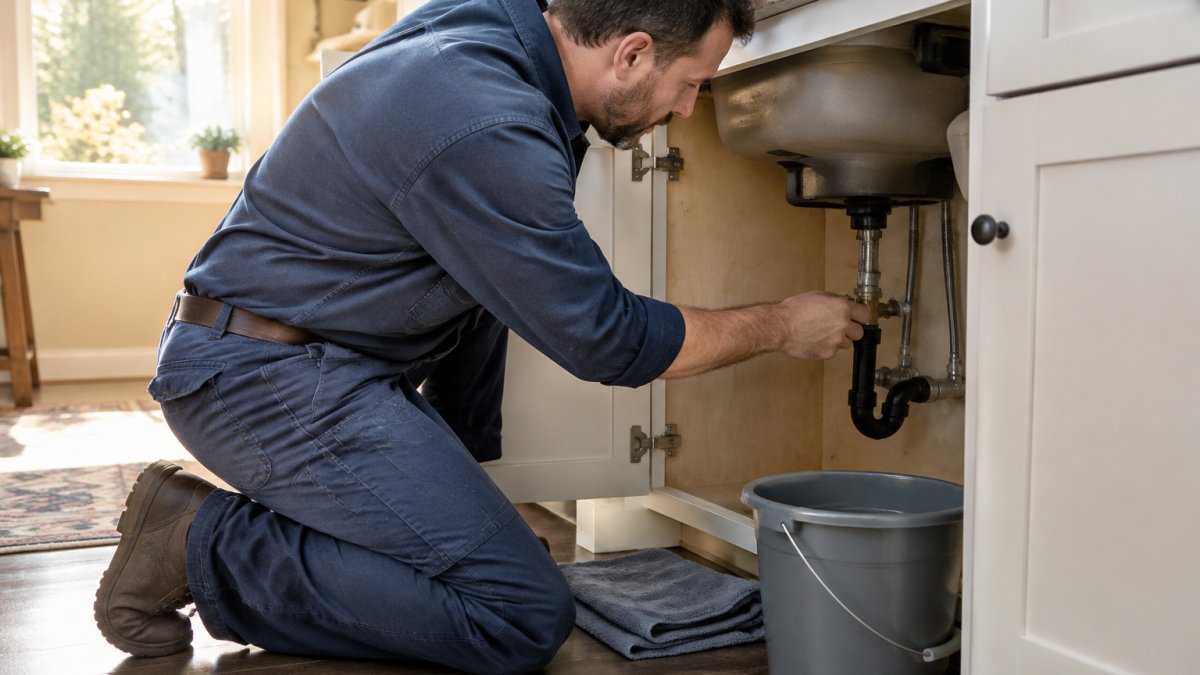
Water: burst pipe or supply-line failure
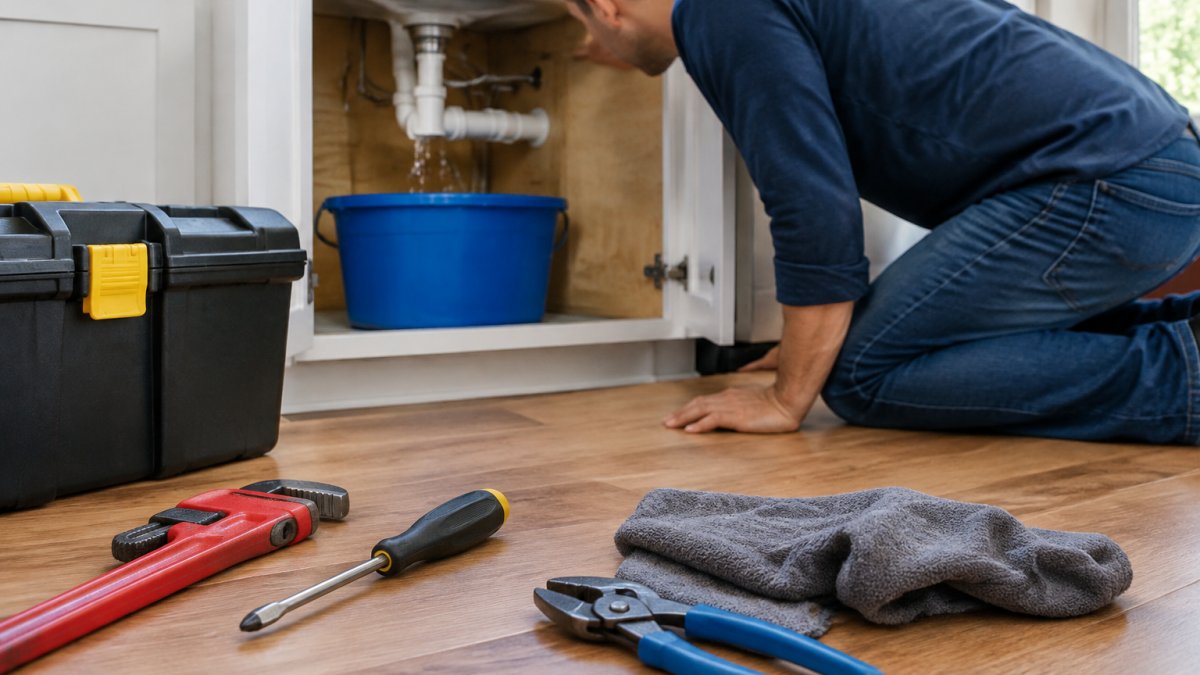
Find the main shut-off valve first. In most homes it sits near the water meter, basement, crawlspace, utility closet, or a curb-stop box at the street. Turn it clockwise until it stops.
Watch out: never stand in standing water near outlets, appliances, or a panel while the power is on, shut the breaker to the affected area first if you can reach it safely from a dry spot.
Electrical: burning smell, warm outlet, or sparking
Cut power at the breaker, not at the fixture. If you cannot identify the right breaker, shut the main. Do not touch a warm outlet, a discolored faceplate, or a cord that is hot to the touch. If you see smoke or flames, leave the home and call 911 first.
HVAC: furnace or AC failure
Switch the system off at the thermostat and the service switch, then check the air filter, a clogged filter is the most common cause of a no-heat or no-cool call and the cheapest to rule out. For a gas furnace, if you smell gas, leave the home and call the utility's emergency line from outside; do not flip switches or use a phone inside.
Roof leak during a storm
Do not climb onto a wet roof. From inside, place a bucket under the drip, move electronics and furniture clear, and if the ceiling is bulging, puncture it carefully over the bucket to release trapped water, a controlled release beats a collapse. A tarp can be tied off from the ground or a ladder only if it is safe; otherwise wait for the roofer.
Water heater
Shut off the gas valve or the breaker, then close the cold-water inlet valve on top of the tank. Do not drain the tank yourself unless a plumber instructs you to, a full drain on a corroded tank can worsen the leak or scald you.
What not to do
Do not tape over a wet ceiling and call it fixed. Do not run a wet/dry shop vac near standing water with live power. Do not use a space heater to dry a water-damaged room without ventilation.
Our guide on how to handle home repair emergencies walks through hazard-specific triage steps for each system.
Finding a Handyman Near Me Within 5 Mi During a Crisis
Start with a search for a handyman near me within 5 mi, but vet before you book. During an emergency, proximity matters less than response time and licensing.
Run this checklist before anyone enters your home:
- Confirm the license and insurance certificate
- Ask for a flat-rate quote in writing
- Verify the address is a real local business
For water and electrical work, a licensed contractor is generally advisable.
Our page on finding a reliable handyman near you covers vetting questions in more detail.
Documenting Damage for Insurance Claims
None of the top-ranking guides explain how to document an emergency so the claim survives review. Insurers deny or reduce claims when homeowners cannot show the pre-repair condition, cannot prove the damage was sudden rather than neglected, or cannot document mitigation costs. A phone full of timestamped photos and a written timeline is your best protection, and it costs nothing to build.
Photograph before you clean
Shoot wide, then close, then detail. Start with a wide shot of each affected room, then a mid-range shot of the damage area, then close-ups of the failed part, the split pipe, the cracked tank, the scorched outlet. Include a coin, ruler, or tape measure in at least one close-up so scale is clear.
Capture the cause, not just the result
Adjusters distinguish sudden failures from long-term neglect. Photograph the failed component, the surrounding area, and any maintenance records, filter change dates, service receipts, inspection reports. If a pipe froze, photograph the insulation gap. If a roof leaked, photograph the missing shingles or cracked flashing.
Keep every mitigation receipt
Emergency mitigation, a tarp, a wet/dry vac, a dehumidifier rental, a hotel night if the home is uninhabitable, is often reimbursable under the mitigation portion of a policy. Keep itemized receipts, not just credit-card statements. Photograph the receipt before it fades.
Build a written timeline
Record when you noticed the problem, who you called, when they arrived, and what they did. Note the date and time of the storm or event. A simple notes-app log is enough. Neglect affects claims, so the record matters, and a timeline written the same day is far more credible than one reconstructed a week later.
Notify the insurer early, but do not wait to mitigate
Most policies require prompt notice and require you to prevent further damage. Call the claims line as soon as the emergency is contained, and tell the adjuster what you did to stop the damage. Do not sign a repair contract or authorize permanent repairs before the adjuster inspects, unless the work is emergency mitigation, and say so when you call.
What to hand the adjuster
Have ready: the photo set, the timeline, mitigation receipts, your policy number, and any contractor estimates. Ask for the claim number and the adjuster's direct contact in writing. If the insurer disputes cause, a licensed contractor's written opinion on the failure mechanism is often the deciding document.
Our article on whether homeowners insurance covers preventative maintenance explains where coverage usually stops.
Your Preventative Home Maintenance Checklist
A preventative home maintenance checklist turns most of these emergencies into routine appointments. Here is the schedule we use with members:
| Task | Frequency | Prevents |
|---|---|---|
| Inspect under sinks and supply lines | Monthly | Burst pipe, mold growth |
| Replace HVAC filters | Every 1-3 months | System failure, costly repairs |
| Clear gutters and check flashing | Spring and fall | Roof leaks, water damage |
| Test sump pump and shut-off valves | Quarterly | Flooding, storm damage |
| Flush water heater | Annually | Tank failure, appliance failure |
| Electrical panel inspection | Every 2-3 years | Home safety hazards |
Small habits beat big repairs. A five-minute monthly walkthrough catches most of what turns into an emergency call.
Seasonal Emergency Preparedness for Morris County Homes
Flooding and storm damage drive most seasonal risk in Morris County. Updated flood insurance rate maps released in 2026 help residents plan for water-related damage, according to the Morris County flood mapping resources.
Build a simple seasonal routine:
- Spring: clear gutters, inspect the roof, test the sump pump
- Summer: service the AC, check outdoor outlets
- Fall: furnace tune-up, drain outdoor lines, seal gaps
Local assistance exists too. The Morris Habitat for Humanity home repair program caps eligible projects at $10,000 for qualifying homeowners.
See Lone Eagle Home Services Plans
The pattern across every emergency on this list is the same: small symptoms ignored until they become expensive failures. Lone Eagle Home Services exists to break that cycle for Morris County homeowners.
Our membership model gives you one trusted team instead of a rotating cast of contractors.
We built this for homeowners who are tired of juggling vendors and want accountability in writing. You can see the home maintenance plans Morris County homeowners use and find the fit for your property.
Frequently Asked Questions
How can I tell if a home repair is an emergency?
A repair is an emergency when it threatens safety, causes active damage, or makes the home uninhabitable. Active water leaks, gas odors, sparking outlets, and roof breaches during storms all qualify. Many homeowners face at least one repair emergency in a given year, with plumbing failures among the most common. If you can safely wait until morning without further damage, it is urgent but not an emergency.
What is the biggest red flag in a home inspection?
Structural issues top the list: foundation cracks wider than a quarter inch, sagging floors, and water intrusion in the basement. These signal problems that compound over time. Plumbing and electrical defects also rank high because they cause silent damage. A professional assessment before closing can reveal these issues, and catching them early is far cheaper than reactive repairs after a failure.
How much should I budget for the cost of emergency home repairs?
Many homeowners have limited savings for unexpected repairs. Setting aside a regular maintenance budget can help. Emergency rates run higher than scheduled work, especially after hours. A membership with flat-rate pricing, like Lone Eagle Home Services, removes the surprise factor by locking in costs before work begins.
When should I hire a professional handyman versus doing it myself?
Call a professional for anything involving electrical panels, gas lines, structural work, or permits. These require licensed contractors under local code. DIY makes sense for cosmetic fixes and simple maintenance. Know your limits before attempting repairs. For recurring needs, a handyman near me within 5 mi search often surfaces membership services that handle both routine and emergency work.
Can you live in a house while foundation repair is done?
In most cases, yes. Minor foundation work like crack injection or pier installation usually allows occupancy, though noise and dust are common. Major structural work may require temporary relocation for safety. Your contractor should outline the schedule and any access restrictions upfront. Document the process for insurance purposes and confirm the contractor carries liability coverage before work starts.
Your home will need work this year. The only question is whether it happens on your schedule or at 2 a.m. on a holiday weekend. Get started with Lone Eagle Home Services and turn reactive repairs into a plan you control.